
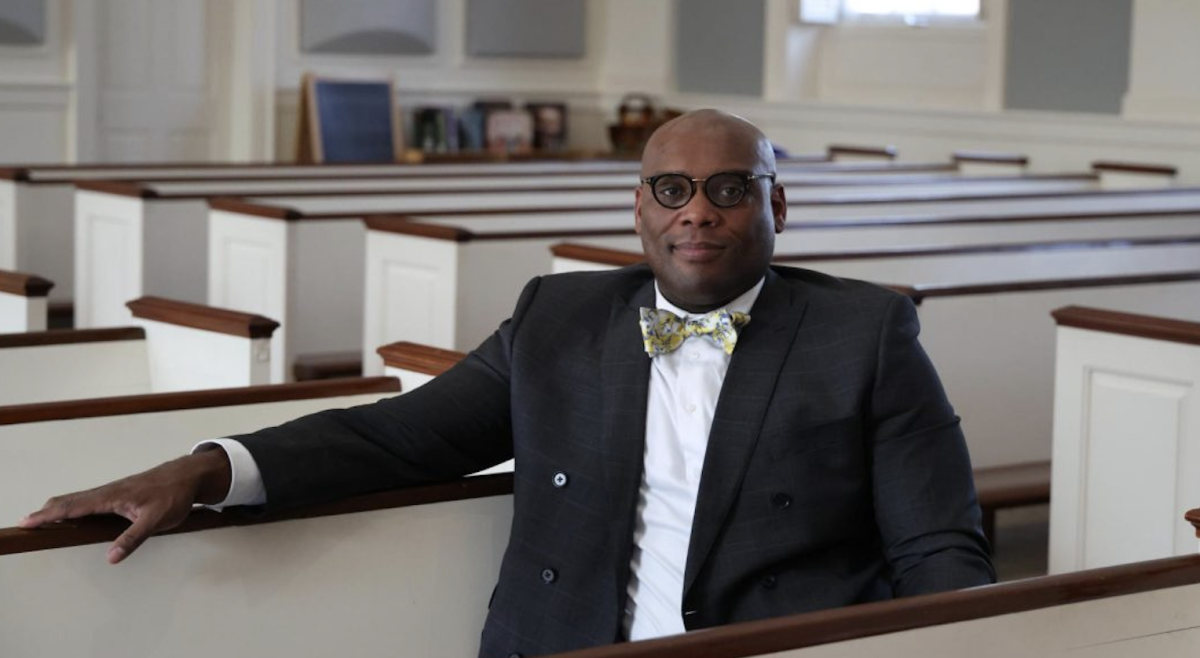
An infrequent churchgoer in his youth, Rev. Eric Jackson never expected to be where he is today.
“I became what I said I wasn’t going to become,” Jackson said.
Jackson, the minister at Eliot Church in Newton, was met with the decision to enter ministry as a teenager when his role model and pastor faced death.
“He had five strokes, and I felt this call to ministry,” Jackson said.
What Jackson initially expected to be a “mundane” job was transformed for him by prominent civil rights activist and Rev. Martin Luther King Jr.’s Chief of Staff, Rev. Wyatt Tee Walker, who was Jackson’s pastor at the Canaan Baptist Church of Christ in Harlem, New York.
“I was going to be an academic,” Jackson said. “[Walker] had a strong commitment to social justice and for the church to actually be able to live its witness in principles of justice in the world, so that was the impetus for me to believe in the strong connection between faith and social action.”
Jackson has a storied, 17-year career in ministry, serving at five different congregations before landing his role at Eliot in November 2024. He is also on the National Board of Directors of the United Church of Christ (UCC), a Protestant denomination formed in 1957 known for its progressive and inclusive theology, as well as its commitment to social justice.
Jackson sought out Eliot for its evolving nature and ideology.
“I really wanted to have a church that I could walk alongside with,” Jackson said. “They have a very, very rich history at Eliot of inclusion and social justice.”
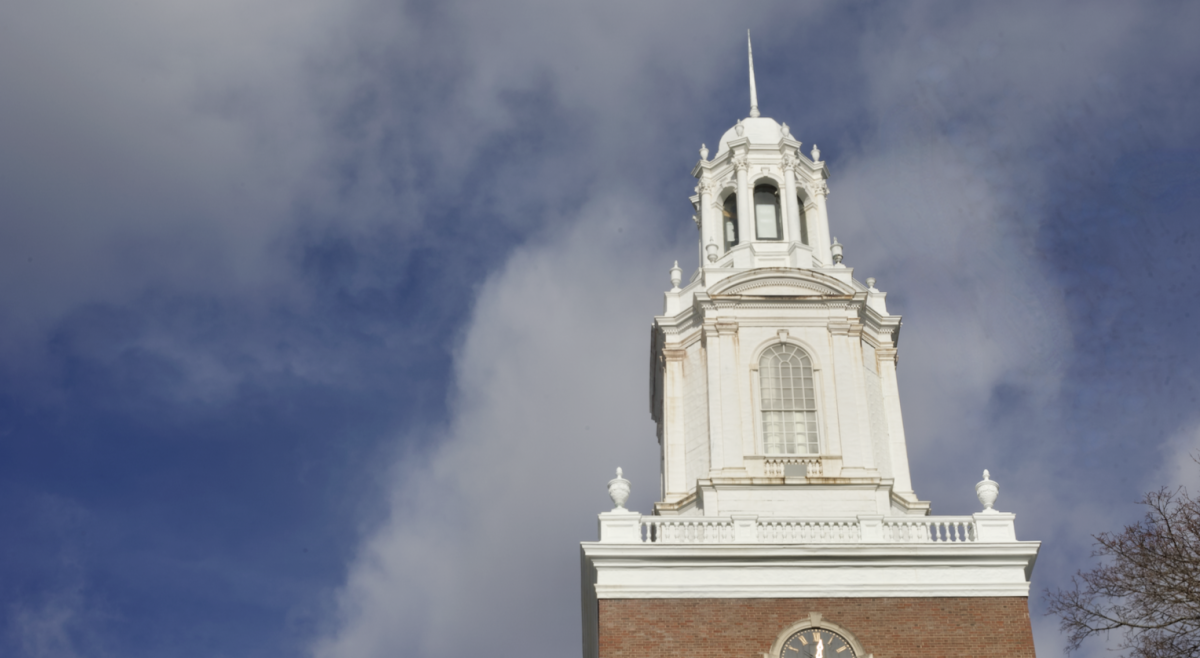
Eliot Church, founded in 1845 by abolitionists, has a legacy rooted in social justice and advocacy. After a vote in 2003, the church joined the UCC and became one of the first “Open and Affirming” congregations in the Southern New England Conference.
Despite Eliot and Newton’s apparent inclusivity, Josephine McNeil, a prominent Newton leader and co-chair of the Mission and Social Justice Commission, said that she was initially concerned about how Jackson would fit in as an African American minister in a predominantly white church and city.
“There aren’t that many African Americans in Newton, and there certainly aren’t that many African Americans who are ministers of predominantly white churches,” McNeil said. “My first thought was, ‘How is this going to be received?’ And it turns out that it really has not been an issue. People—when they meet him—like him.”
Jackson and Eliot pair nicely, explained Yonder Gillihan, Boston College associate theology professor and chair of Eliot’s Spiritual Life Commission, who was on the search committee for Jackson’s current role as a full-time pastor.
“He was by far the most qualified of the candidates that we looked at,” Gillihan said. “He has this very dynamic personality and a really beautiful way of presenting the gospel in terms of his own experiences and in terms of a vision that he discerns with the congregation.”

Jackson uses his sermons to examine sacred texts from a myriad of perspectives in order to deconstruct harmful religious ideas.
“It’s not so cut and dry,” Jackson said. “For example, the story of Sodom and Gomorrah. It had nothing to do with same gender loving couples. Really. It was about a lack of hospitality.”
Jackson digs into his extensive academic background to inform his sermons and to reach out to his congregants.
“I try to take four branches of theology that would be life-giving, and speak to the needs of people who are religiously traumatized or religiously harmed, and try to make use of language that bridges the gap,” Jackson said. “We get caught up in the actual words, but really, it’s what’s behind the words—the essence of the words.”
Jackson earned a degree in political science from The City College of New York, a Master of Divinity from Drew University, a Doctor of Ministry from Hartford Seminary, and is currently pursuing a Ph.D. in African American preaching and sacred rhetoric at Christian Theological Seminary.
The African American tradition helps Jackson articulate how to apply sacred texts to the present day, balancing faith with the current political climate. In examining the current political sphere, Jackson makes a conscientious effort not to use polarizing language.
“I never focus on the candidates,” Jackson said. “I don’t even know if I remember using Trump’s name … Because when you look at this stuff, it’s really systems. It’s not individuals.”
Gillihan explained that this approach to spirituality is a particularly alluring aspect of Jackson’s preaching.
“He’s not willing to demonize anybody, or to treat other people as though they’re completely lost or just beyond hope,” Gillihan said. “In a community that is allied with progressive causes, [they are] often tempted by those causes to pick teams. And you know, in those teams, you really make yourself feel good by talking about how bad the other team is. And I don’t see him doing that. In fact, I see subtle ways in which he resists that.”
Both McNeil and Gillihan elaborated on the humanistic approach that defines Jackson’s leadership at Eliot Church.
“He invites people to come and visit him personally,” Gillihan said. “He shows up to these Wednesday boys’ nights out—guys in the congregation who just really like to get together at a bar and have some drinks and talk for a little while—and Pastor Jackson shows up, just to hang out.”
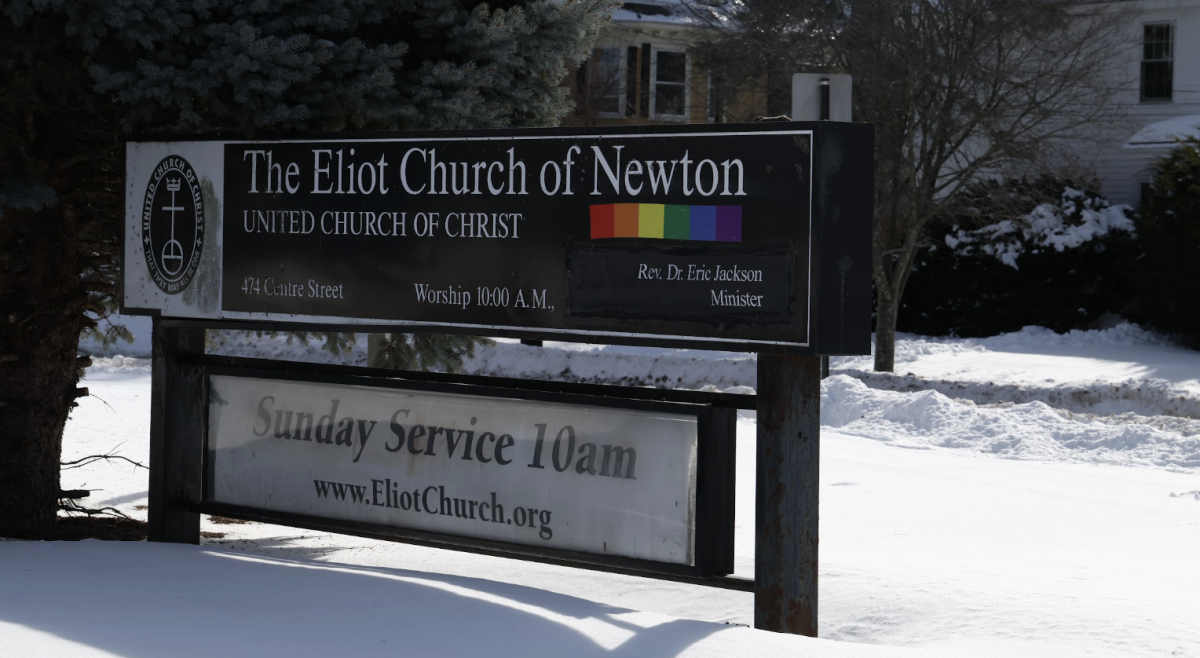
McNeil said she was surprised at how quickly Jackson was able to make strides in the Newton community, especially since he was just recently asked to be the keynote speaker at Newton’s MLK celebration.
“I’ve really been surprised at how quickly he has been recognized,” McNeil said.
Gillihan noted that with this recognition, Eliot Church will have to hold on to Jackson for as long as they can.
“I recognize that we don’t necessarily have him forever, and so during the time that he’s with us, I hope that we can take advantage of what he offers as much as possible,” Gillihan said.
Jackson said that it’s the people at Eliot and his mission to spread God’s love that get him out of bed every morning.
“I want people to know that God loves them, that they’re cared for,” Jackson said. “That no matter who you are, where you are on this journey of life, God loves you and sees you. See hope in light of what’s going on in life. No matter how bad it may be, love does win. Love does triumph in the end.”
This conviction echoes the prophetic optimism of MLK, whom witnesses like Gillihan see reflected in Jackson’s compassionate leadership.
“The vision of Martin Luther King is living strongly in Pastor Jackson’s own ministry,” Gillihan said.