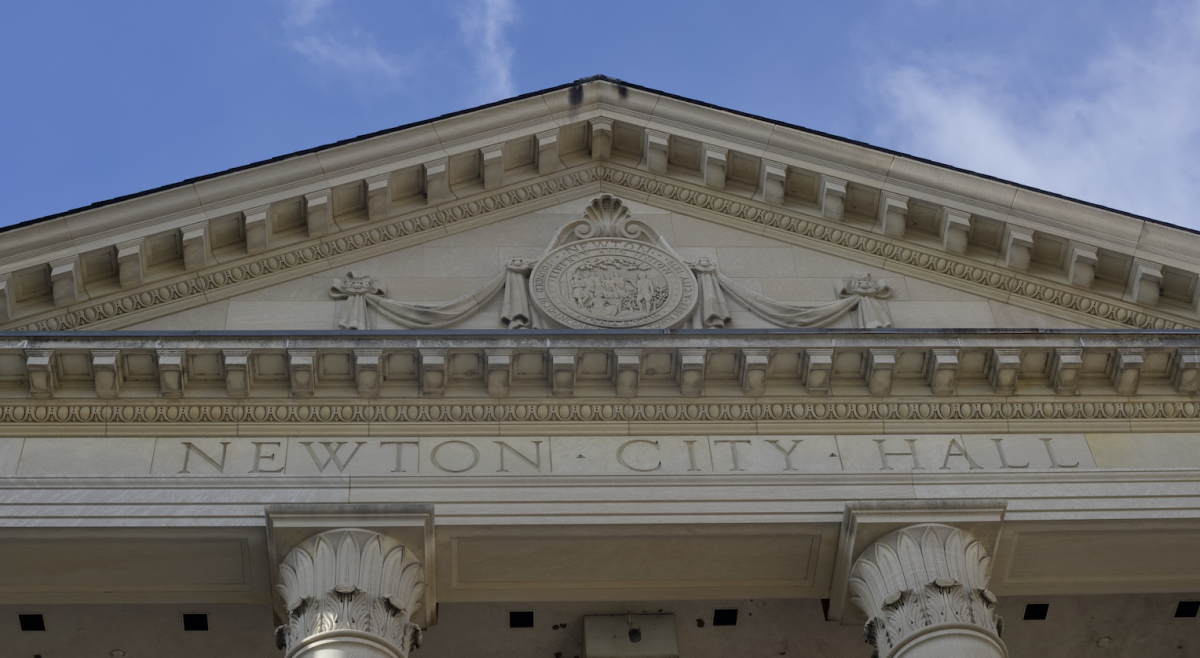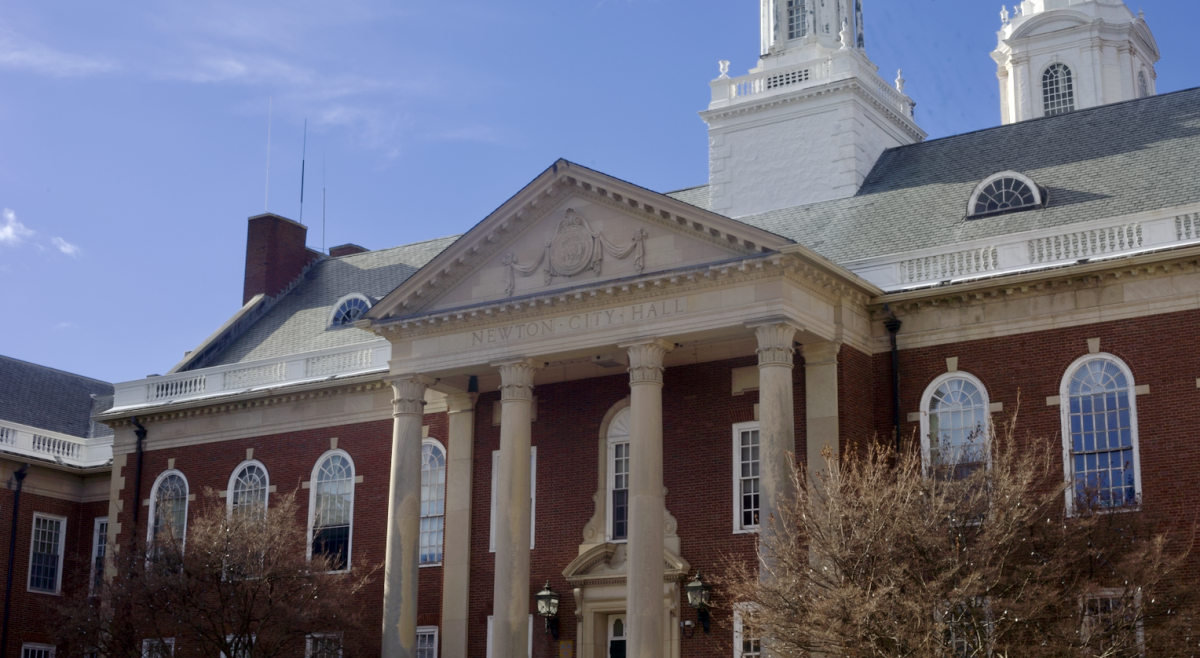

In 1988, Newton Mayor Theodore D. Mann looked at his city and saw it changing—new faces, new languages, and new faiths finding their footing in a community that, for most of its history, had looked quite different from them. His response was not a new policy or piece of legislation.
It was a phone call. Then another. And another.
37 years later, the organization born from those phone calls—Newton’s Foundation for Racial, Ethnic, and Religious Harmony, known simply as The Harmony Foundation—serves as one of the city’s most influential organizations.
“He just tapped people on the shoulder,” said Tony Logalbo, president of the Harmony Foundation and its last original board member. “He said, ‘I need you to think about putting this kind of an organization together.’”
While small in budget and staff, the organization’s presence leaves an immense impact on Newton’s community.
That impact comes partially through two annual signature events—the Martin Luther King Jr. Day Celebration, which draws up to 500 attendees each year, and the Mayor’s Community Breakfast, which fills a room with government officials and prominent people in the community.
“It’s a small nonprofit community organization in Newton, which was the brainchild of the then-mayor in 1988, recognizing the changes in the community,” Logalbo said. “It was to be a place to sponsor and support relations, understanding communication between various populations that were reflected in a changing city around racial, ethnic, and religious dimensions.”
The foundation’s five-person board, though small, has never been more motivated to create the change they wish to see in the city.
“I would love to see Newton continue to do work around this area,” said Harmony Foundation board member Rev. Devlin Scott. “I would love to see a lot of what we conceptualize in our heads travel to action … that’s why I stay involved. Because, you know, I don’t want to just say it from the corner that this is what needs to happen. I’m going to try to be a part of making it happen.”
Born From a Changing City
Newton in 1988 was not the city it is today, Logalbo explained. With millions of people immigrating to the United States, the city’s demographics were changing and evolving in a way Mann hadn’t seen before.
“Over the years, we’ve had waves of immigration from many places—immigration from the South, from within our own country, immigration from the breakup of the Soviet Union, immigration from Asia, immigration from India,” Logalbo said. “So we’ve got lots of different communities now in Newton, so if you looked at Newton 50 years ago or 100 years ago, it looks quite different.”
Mann saw the changes in Newton’s demographics and wanted to put an institution in place to meet them.
“The mayor asked me [to help start it]—no particular background, I’m not a pastor,” Logalbo said. “[I’m a] white male. So that’s pretty much my diversity. But the mayor had some rabbis and pastors, some people of different racial and ethnic backgrounds, including communities that were new to the city.”
The foundation’s mission, developed in those early years, has remained consistent: to facilitate learning, interaction, understanding, and respect across racial, ethnic, and religious dimensions within the Newton community.
“Gosh, it’s a tall order,” Logalbo said. “And I can’t say we’ve achieved everything, but we keep trying.”
Two Signature Events
The annual MLK Day celebration is the oldest and largest of The Harmony Foundation’s two signature events. The tradition began almost immediately after King’s assassination and was originally hosted at West Newton’s Myrtle Baptist Church.
Today, 300-500 people gather to observe the life of King each year at various churches, synagogues, or schools across Newton.
“We try to involve lots of the congregations, including the Myrtle Baptist Church, the original congregation that observed it, and try to make it meaningful in terms of the content of the program and speaking to current issues,” Logalbo said.
The event’s tone has evolved over the years. Where it once leaned more towards honoring King, recent iterations have emphasized incorporating his ideas more into the city’s present-day community, explained Logalbo.
“It’s not simply looking back and saying, ‘Oh, wasn’t that wonderful, Martin Luther King did so much good work,’” Logalbo said. “It’s really trying to bring that work into the present day.”
The Theodore D. Mann Newton Community Mayor’s Breakfast, held annually in May, is more explicitly celebratory. The event fully encapsulates the true diversity of the city, according to Scott.
“The mayor’s breakfast has this vast array of police and fire and hospital representatives, bank representatives, like everybody’s in the room,” Scott said. “And it’s like one of the few events that the city sees, where you have such a diverse representation of the whole city, kind of in one space, and I think that’s really beautiful.”
For both events, teams of over 20 people form committees and spend up to four months in advance planning them.
“The planning committees for these events represent a broad spectrum of religious and ethnic communities and community organizations—from the YMCA to the families organized for racial justice, and everybody in between,” Logalbo said. “So that’s how we extend our reach and share the work.”
Empowerment Through Grants
The foundation also operates a grant program, where they distribute almost $20,000 annually in small awards to organizations and school programs whose work touches on racial, ethnic, or religious understanding, explained Logalbo.
“They’re typically small grants, $1,000, even some less than $1,000, but over the course of the year, in recent years, about $20,000 to various community projects or projects within the school system, and K-8 and high school,” Logalbo said.
According to Logalbo, funded programs include an African music residency that rotated through Newton elementary schools, support for the city’s Juneteenth celebration in the park, and contributions to the Iftar dinner hosted by Newton’s Muslim community.
The foundation doesn’t have much funding itself to work with. It receives limited funds from The Village Bank and a $4,000 grant from Boston College to distribute to about 20 community organizations throughout the city, Logalbo explained. Any additional funding comes from donations.
“We’re not giving a lot of money because we don’t have a lot of money,” Logalbo said. “But we’re giving enough money to help various people develop and execute their programs that we feel enrich the community.”
The Work Ahead
When asked about the biggest obstacles to achieving harmony in Newton, both Logalbo and Scott touched on the benefit of connecting with people from differing backgrounds.
“The obstacle, I suppose, remains that many of us still find most comfort in our own backyard,” Logalbo said. “And one of the things that I have valued about being involved with this at all is that I’ve met people from other backgrounds that I would not have been exposed to.”
Scott stressed that society has been structured in a way that makes it extremely difficult to foster harmony, and that’s something the foundation is trying to change.
“I think there’s a lot of misinformation in our society,” Scott said. “There’s a lot of rewriting of history. There’s a lot of personally advantageous narrative shifting that really makes it hard for us to understand how to move forward in harmony and in unity if we can’t at least agree on where we’ve been.”
Both emphasized that the job is far from complete.
“The work still needs to be done,” Scott said. “I don’t think the concept of doing a good job, in completing the job, is the same thing. I don’t know that we will ever, in our lifetime, fully reach that kind of harmony that is really sought after by all parties.”