
The harmful effects of the Department of Government Efficiency’s (DOGE) decision to shutter the U.S. Agency for International Development (USAID) will reverberate long into the future, according to political science professor Thibaud Marcessese.
“I don’t know whether you share my pessimism, but I don’t think we’re going to go back to the status quo next Sunday,” Marcesse said.
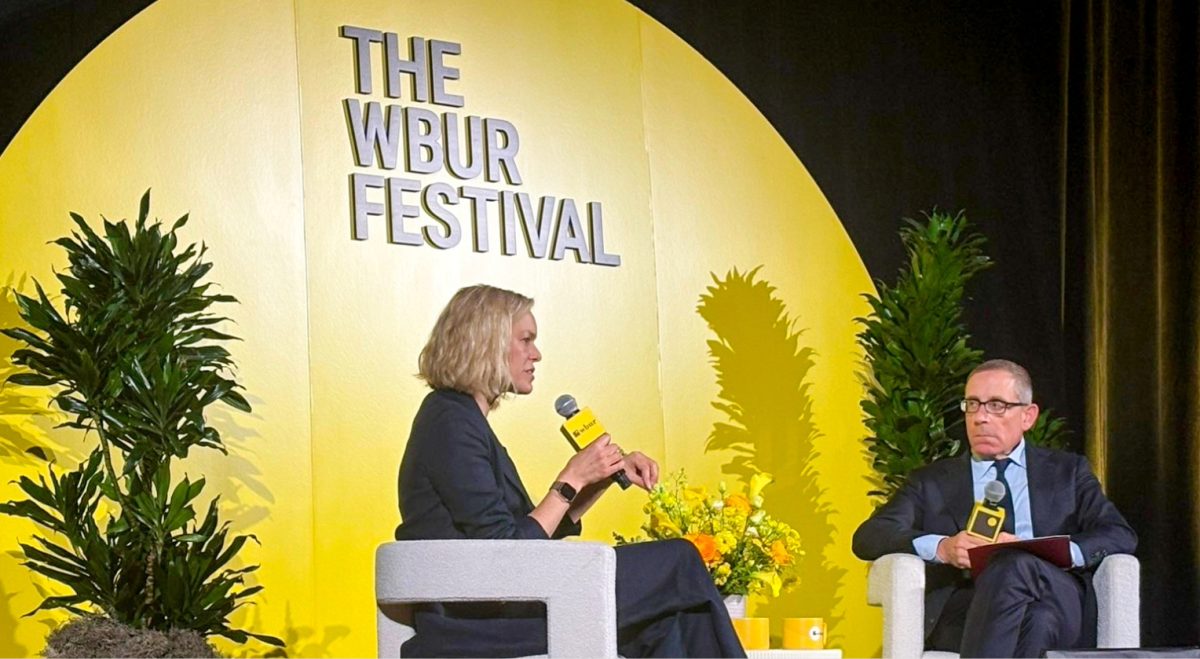
The Office of Global Education hosted a panel discussion Thursday evening on the significance and future of U.S. foreign aid. Thibaud Marcesse spoke alongside Thomas Crea, a professor and assistant dean for global programs in the School of Social Work.
The talk discussed recent cuts to cuts by the Trump administration, spearheaded by Elon Musk and the Department of Government Efficiency.
“There’s no debate that a lot of the projects funded by USAID were not immediately as effective as the people who came up with those projects that I wanted them to be,” Marcesse said.
Marcesse argued that waste was an inherent part of foreign aid in order to stabilize certain regions and protect U.S. national interests. Marcesse discussed his experience working for the Office of Transition Initiatives (OTI) within USAID, such as projects providing aid to Haiti after the January 2010 earthquake.
“The tolerance for waste was much higher because the agency was designed to work in environments that were very unstable, where the traditional sort of, like, guardrails of development projects were nowhere to be found,” Marcesse said.
Because Haiti was unstable and had an unreliable government, OTI had an understanding that some money would go to waste, according to Marcesse. However, this was the necessary tradeoff to prevent the total collapse of Haiti, which would have caused a disastrous refugee crisis in the south of the United States, Marcesse said.
“So the tolerance for waste varies right on, depends on the situation, depends on the project, depends on the goals of the project,” Marcesse said.
Crea also explored the necessity of USAID not only for international interest, but also for national ones. Crea worked on the McGovern-Dole Food for Education and Child Nutrition Project, a program that provided school meals for children worldwide. Not only did this program support individuals globally, but it also benefited American farmers.
“The food was coming from U.S. farmers, the surplus,” said Crea. “So the government would buy the surplus from the farmers, and they would send that then to Central America. They got rid of that…and that hurt the farmers.”
The elimination of USAID resulted in many people losing their jobs. Crea said he saw this consequence firsthand.
“I had dozens of former students lose their jobs overnight, and it was really hard,” said Crea.
The United States may even face more problems with public health now that the infrastructure to support international prevention measures has been eliminated, according to Crea.
“So you kind of were creating the perfect storm where we already have the conditions for proliferation of new and dangerous infectious diseases,” Crea said. “And now less of an ability to address that where it’s happening and to contain it, which puts the U.S. at risk.”
USAID infrastructure projects, from the development of vaccine programs to building better roads, not only support humanitarian efforts but also further diplomacy and national interests.
In the lens of a Jesuit university, foreign aid is critical to understand from both the diplomatic, domestic, and humanitarian perspectives. When asked why BC students should care about changes in U.S. foreign policy and aid, Crea invoked Jesuit thought.
“How do we see others, and how do we see others in need, and what is our responsibility to our fellow humans?” Crea asked.