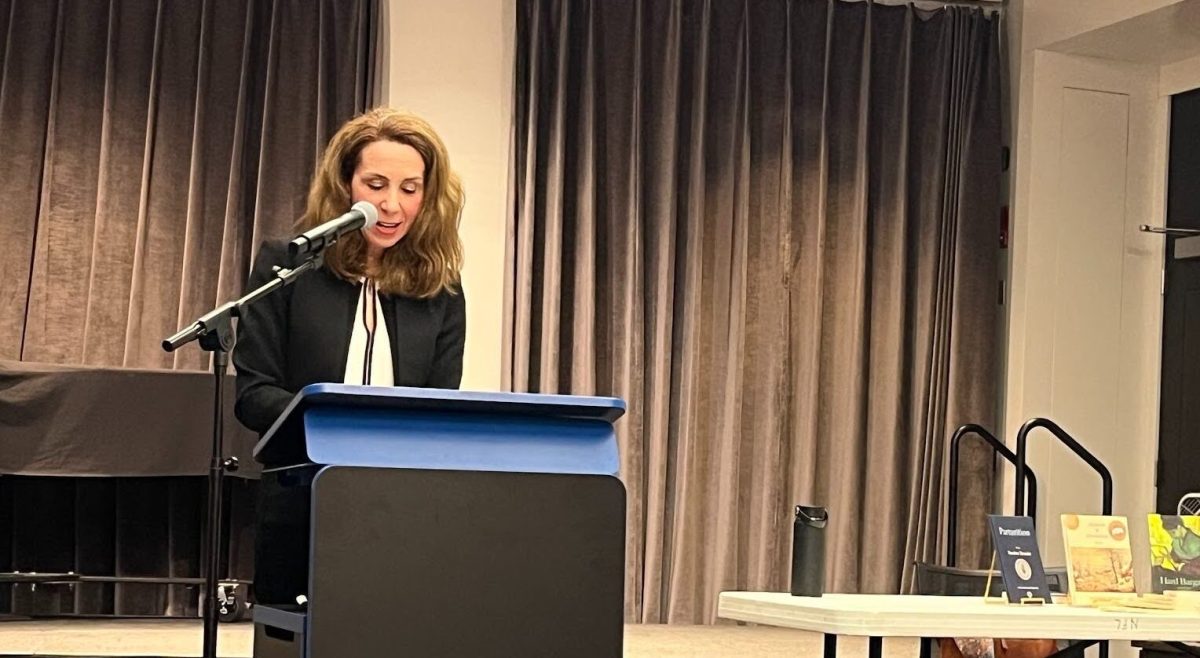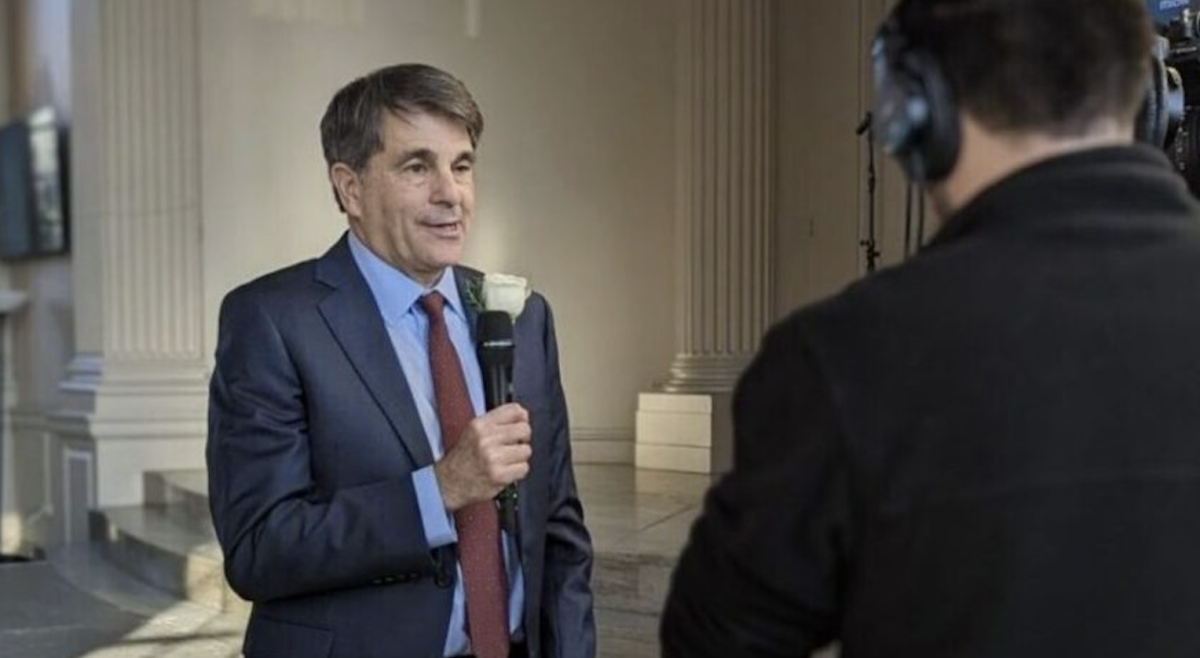
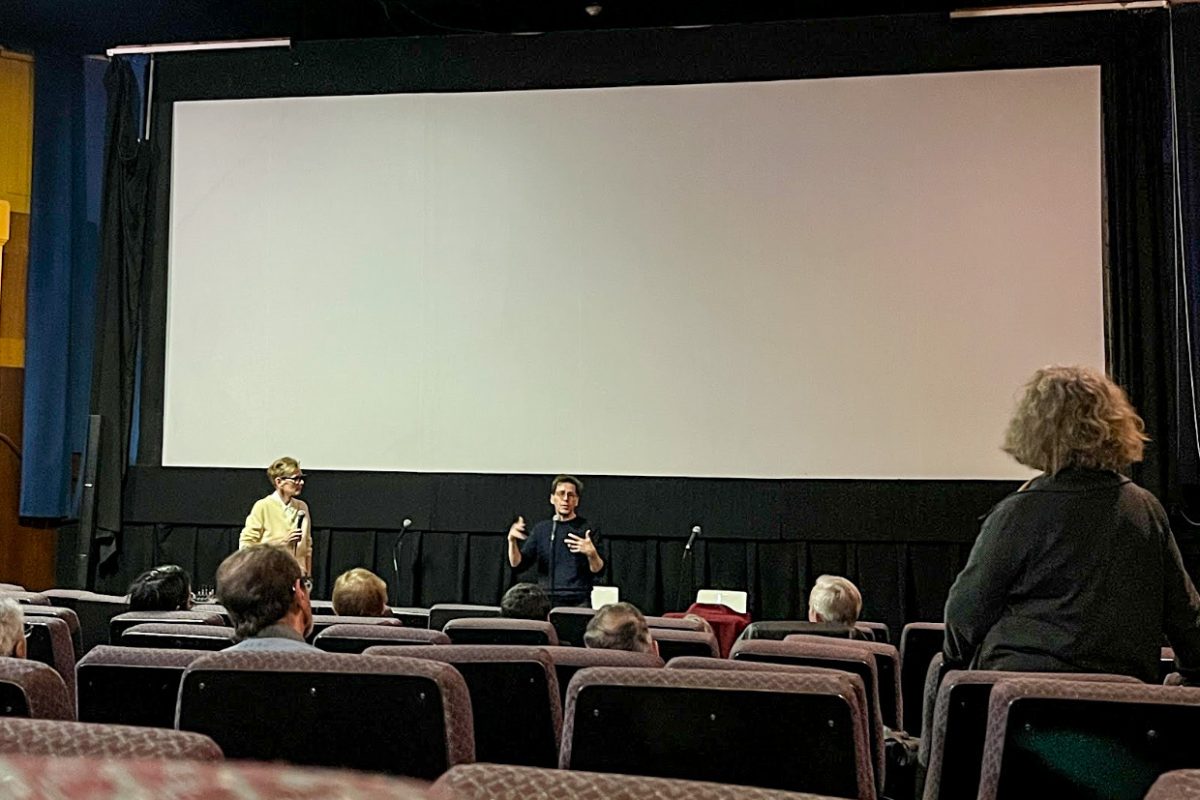
On Wednesday, West Newton Cinema screened Cosmic Coda for its local spotlight programming, followed by a discussion with filmmaker Mary Jane Doherty, associate professor emerita at Boston University, and Peter Fritschel, a senior research scientist at the Massachusetts Institute of Technology (MIT) Kavli Institute.
In 1985, MIT astrophysicist Rainer Weiss was filmed by Doherty in order to document the work being done to make gravitational wave antennae, creating the film Gravity. 32 years later, Doherty returned to that story in Cosmic Coda, stitching past and current gravitational research together through film.
The point of the film was, ‘What do you do in an astrophysics experiment?’” Doherty said. “You know: the lifeboat scenario for fiction films. You trap people in the lifeboat. It produces drama by definition. And I saw the lab as the lifeboat.”
After the first direct detection of gravitational waves in 2015, Doherty’s 1985 film Gravity took on historic importance, as it documented the early stages of making the prototypical antenna. It was then that Doherty realized she could return to the story.
During the post-screening discussion, Fritschel provided more context for current gravitational wave research.
“In terms of the sensitivity of the detectors, we’re about twice as sensitive as we were for the very first,” said Fritschel.
Gravitational waves are difficult to pinpoint because they’re tiny and move across three planes, so it is important to improve instrument precision by “squeezing” the laser—Doherty joked during the discussion that her explanation of squeezing in the film was crucial for that reason.
“I think I did a community service by explaining squeezing,” Doherty said.
Cosmic Coda showed maintenance workers using custom expensive vacuums, working to make the inside of the antenna tube mimic black holes for enhanced laser compression.
“Depending on the orientation of how [the black holes] are doing that and how it lines up with your detector, it can change the size of the signal, the same way that having it further away does,” said Fritschel.
It’s difficult to make theoretical physics accessible, but Doherty’s film style made that possible. Her dry humor shines through in narration, which accurately represents how she speaks in real life, and makes the content of the film feel more approachable.
Part of her filmmaking process relies on removing herself from the narrative.
“What happened?” Doherty said, when asked about how she approaches filmmaking. “Here’s my theory—and you can take it home with you—I think I’m invisible.”
The camera seems like a fly on the wall with trembling shots and ungraceful transitions to make the researchers’ lives and personalities shine in a more realistic way. Doherty explained that highlighting each researcher was an important part of her process.
“They’re human beings,” Doherty said. “How would you have a conversation with anybody you want to get to know? Just very basically, who are you and what’s up with you? And I care about them as grad students, because I was one.”
Many audience members at the event asked interesting questions, including Fritschel’s astrophysics grad students, who were in attendance.
To wrap the night up, Doherty took two photos as she does with her students: one normal photo, and another where audience members were asked to “act like this film changed your life.”
“I can see that this film did not change anyone’s life,” Doherty said, joking with the filmgoers.
But the film did command attention and presence at West Newton Cinema for its 87 minute run time. In Doherty’s own words from her voiceover: “It takes a lot to make the world stand still.”