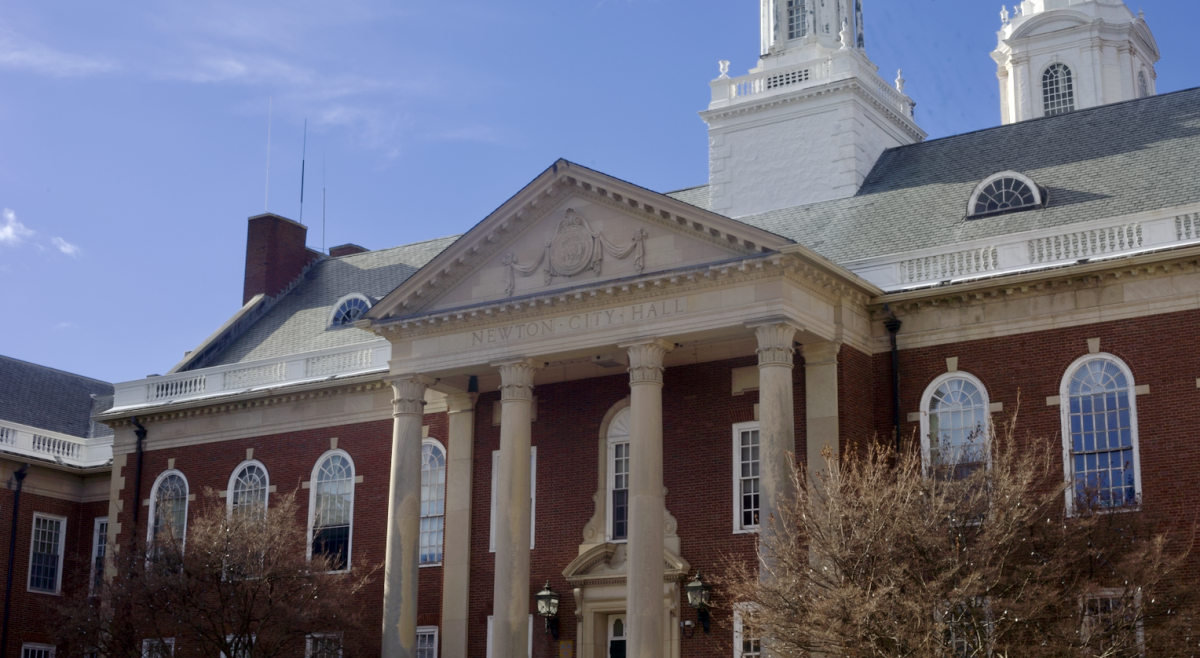

Since Newton seized Webster Woods from Boston College six years ago, BC and the city have been embroiled in a dispute over the value of a 14.8-acre parcel. The dispute took a new turn on Oct. 9, when lawyers for the state filed a claim that questioned whether the land should have ever left the state’s possession.
Outside the courtroom, Newton residents have been taking action to conserve Webster Woods. Among them is Katherine Howard, president of Newton Conservators, a group that advocated for Newton’s eminent domain taking in 2019.
For Howard, Webster Woods acts as a crucial anchor for Newton’s local ecosystem and resident community. Her organization’s advocacy was born out of a fear that BC would develop the forest. While the University never outlined explicit plans to do so when it held title over the land, it also never committed to conserving the woods.
“Webster Woods is extremely important to Newton Conservators, an all-volunteer nonprofit organization,” Howard said. “We helped to lead the campaign to save the woods when it became clear that it was likely to be developed.”
She described the forest’s unique ecological features, which play a crucial role in sustaining the well-being of natural habitats.
“One of the most significant features in Webster Woods is its large vernal pool, which provides critical habitat for many wildlife species,” Howard said. “The connectivity of Webster Woods to other open spaces around it—and across Hammond Pond Parkway—is another important feature that provides safe and diverse habitat for plants and animals as climate change continues.”
Similarly, Richard Primack, a Boston University biology professor and lifelong Newton resident, described Bare Pond, a quiet vernal pool hidden deep in the forest, as a reflection of the ecological richness that defines Webster Woods.
“It’s a place where spotted salamanders and other amphibians breed in the spring … one of those natural wonders that makes the woods so alive,” Primack said.
He points out that the space holds significance beyond its role as a wildlife habitat—it is also a special space for Newton residents.
“For the people of Newton, and myself personally, the Webster Woods is a wonderful place to go for a walk and relax,” Primack said. “It is also special because it is a place where everyone, especially young people from Newton, Boston College, and Boston University, can learn about the ecology of the plants and animals of New England.”
As the legal battle continues, Howard described the group’s aims to cement the city’s claim over the land through a legally enforceable agreement called a conservation restriction.
“When Newton’s Community Preservation Committee approved funding for the city to take the 14.8 acres of Webster Woods by eminent domain, Newton Conservators agreed to hold the conservation restriction for the property,” Howard said. “That conservation restriction is in process now and will detail the important steps for the continued preservation of the woods.”
Her organization continues to engage residents through education and by encouraging hands-on participation in conservation work.
“Newton Conservators continues to be actively involved in educating people about Webster Woods,” Howard said.
Part of the effort to maintain the natural features of the woods is done alongside EcoPledge, an environmentalist student organization at BC.
“[We have] conducted regular invasive removal sessions, some in conjunction with the Boston College EcoPledge team, in its edge habitats,” Howard said.
According to Primack, Newton residents have jumped into the effort to protect the forest by petitioning the government.
“The people of Newton advocated strongly for the protection of this land by organizing events, writing letters and articles, raising money, serving on committees, and speaking at hearings,” Primack said.
He also credited the city for its support in community-based conservation efforts. Mayor Ruthanne Fuller committed to conserving the woods when she was a first-time candidate for mayor in 2017, and has kept to her promise during her two years in office.
“The mayor and many city officials have been strong and consistent advocates for the protection of the woods,” Primack said. “This also includes management by city officials, allocating city funds, and work by citizen steward volunteers.”
In a newsletter from Oct. 9, Fuller assured Newton residents that the city remains committed to the conservation of Webster Woods, as well as mitigating the financial impacts of the decision for taxpayers.
“We believe it is in the public interest to resolve these complex legal issues and we are taking action to do exactly that,” said Fuller.
For the Newton Conservators, above all else, it is essential that Webster Woods stays unharmed—and undeveloped—for the sake of its ecosystem and for the enjoyment of Newton residents.
“Our greatest concern is for the land to remain undeveloped open space that provides ecological services and improves biodiversity and for the public to have access to its trails,” said Howard.