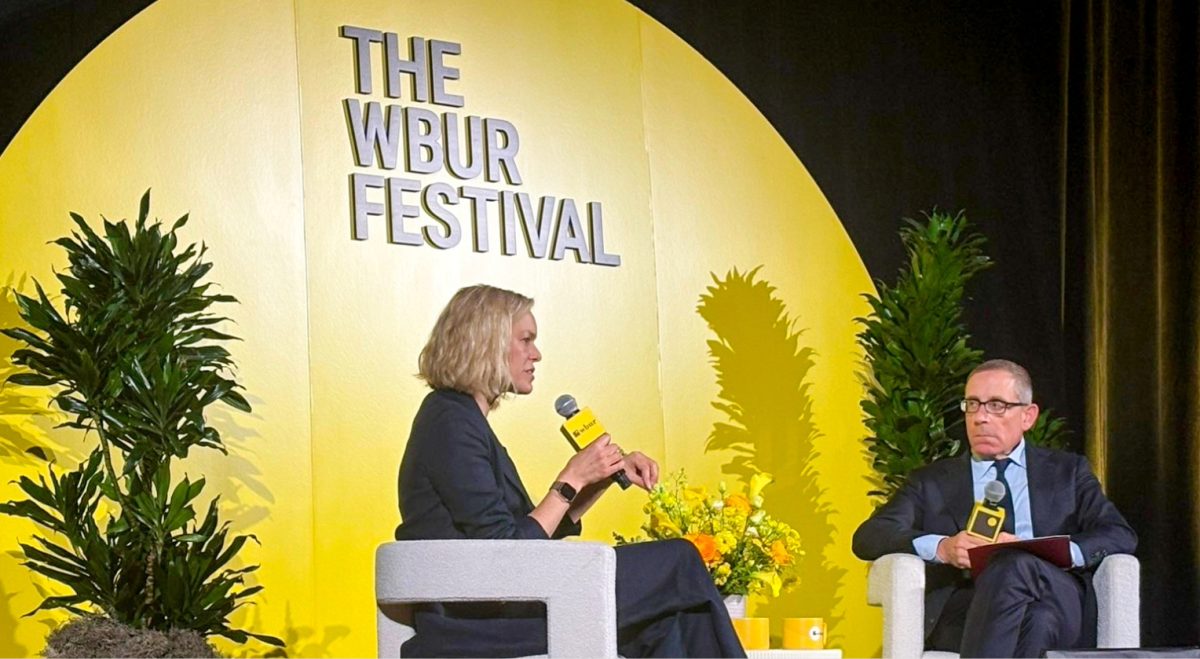
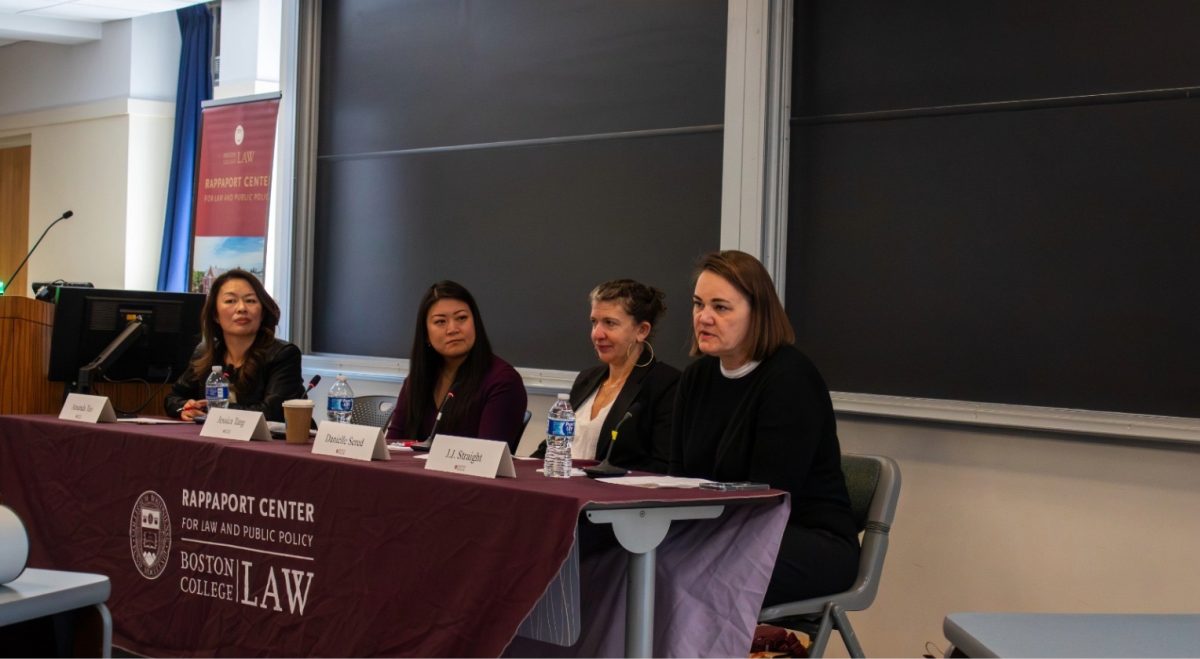
At a moment of deepening political unrest, speakers at the Rappaport Center for Law and Public Policy on Thursday stressed that student leadership, local organizing, and collective resistance are essential to achieving lasting social change.
“We have to talk to everyone who agrees with us and mobilize them to action,” Rappaport senior fellow Danielle Sered said. “Everyone who is already taking action has to take more courageous action. People who are not acting have to act. People who disagree with us have to move towards us.”
Sered, founder and executive director of Common Justice—a nationwide initiative focused on finding solutions to violence and advancing racial equity—emphasized that sustained solidarity is central to successful social movements.
“We can’t afford to let anyone go—we can’t let each other go,” she said. “The people who are most vulnerable, most endangered at this time, we have to link hands and refuse to be separated.”
When federal immigration agents fatally shot Alex Pretti in Minneapolis on Jan. 24, it marked the second killing of an American citizen by immigration enforcement in less than a month, intensifying nationwide protests against U.S. Immigration and Customs Enforcement and other federal agencies.
J.J. Straight, national campaigns director for reproductive rights at the American Civil Liberties Union, pointed to Minneapolis as an example of how community-based action can fill gaps left by institutional inaction.
“The really most compelling thing about Minneapolis is people are going outside,” Straight said. “They are going outside on their blocks and doing vigils. They are going outside and helping their neighbors.”
Such grassroots efforts, Straight argued, demonstrate how communities step in when systems fail to respond adequately to injustices.
“We need to provide support to one another that isn’t being provided in general,” she said.
As students navigate this period of unrest, panelists emphasized that they hold a unique capacity to slow harmful systems and help shape a more just future.
“Students really do matter,” said Jessica Tang, President of the American Federation of Teachers of Massachusetts, which represents over 25,000 workers across the state. “Every social movement, when students lead, is more successful.”
Tang added that resistance is a sustained, rather than momentary, effort.
“We have to slow things down before we can stop it,” she said. “[Meaningful change] is going to take us many years.”
Sered framed that collective commitment as the foundation of what she called “durable power.”
“When we practice things that are supposed to be impossible, when we change the stories and culture about who we are and who we are to each other, then we build durable power,” she said.