
A judge has issued an order in favor of a group of churches that sued the U.S. Department of Homeland Security (DHS) and former Secretary of Homeland Security Kristi Noem over U.S. Immigration and Customs Enforcement (ICE) raids occurring at houses of worship. The order bars the agency from going within 100 feet of the Newton churches whose denominations sued.
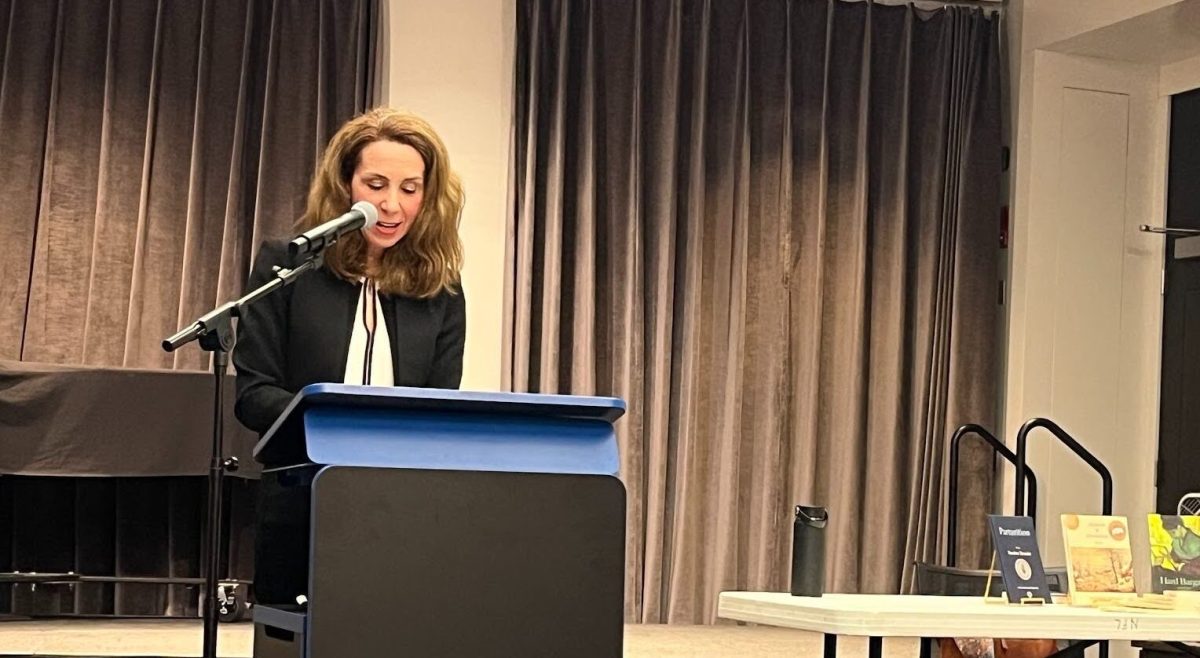
“The thought of the government having the power and the capacity to overreach to this extent … I think it is intentionally cruel and destabilizing, and it is designed to say ‘we have power, and we can go into your space, unless you are the kind of church we want you to be,’” said Pastor Kari Jo Verhulst of the Lutheran Church of the Newtons in an interview with The Heights.
On Feb. 13, Judge F. Dennis Saylor IV of the U.S. District Court of Massachusetts issued a preliminary injunction, agreeing with most of the plaintiffs, though he decided that three Quaker groups lacked enough evidence of harm caused by the defendants.
“The prospect that a street-level law enforcement agent—acting without a judicial warrant and with little or no supervisory control—could conduct a raid during a church service, or lie in wait to interrogate or seize congregants as they seek to enter a church, is profoundly troubling,” Saylor wrote.
Verhulst’s congregation is one of the five Newton churches represented in the lawsuit, which was filed last July by a variety of religious denominations. This includes five regional synods of the Evangelical Lutheran Church in America (ELCA) and a few small Quaker associations.
The plaintiffs argue that the ICE raids violate the First Amendment right to freely exercise religion and the Religious Freedom Restoration Act, a 1993 law that prevents the government from limiting a person’s exercise of religion.
“For over 30 years, the federal government restricted immigration enforcement at houses of worship and other ‘sensitive locations,’ recognizing that it could enforce immigration laws without, in its words, ‘denying … people of faith access to their places of worship,’” the lawsuit reads. “In many places of faith across the United States, the open joy and spiritual restoration of communal worship has been replaced by isolation, concealment, and fear.”
Along with many congregations facing steep attendance declines, some churches, such as Our Saviour’s Lutheran Church in East Boston, urged their members not to come to services for fear of ICE infringement.
“I think that for the most part, and I hope I’m right about this, there is a sense that the church would have their back [against ICE], but there’s also not a sense that the church is capable of defending them,” Verhulst said.
Verhulst, who has been following the progress of the case closely, said she was thrilled when she learned of Saylor’s order.
“I was really grateful that the judge saw that this is a huge overreach,” Verhulst said. “It’s almost like we’re in the middle of war [with ICE] and this is justified. And the judge saying no to that was a huge relief.”
The lawsuit hasn’t come without pushback, according to Verhulst. The regional bishop of her church, Rev. Nathan Pipho, was compelled to write a section advocating for the case in an email to the ELCA’s New England Synod after he received multiple objections to the case’s filing.
“We did not participate in this lawsuit because we hate the president or his policies,” Pipho wrote. “We participated because we love our Christian siblings impacted by these policies … Let me be clear: people here legally are hiding and living in fear of racial profiling and stereotyping leading to harassment and detention by ICE.”
When asked if she had a message for people who are currently afraid to go to church, Verhulst stressed that people shouldn’t hesitate to reach out for support.
“Reach out to people who can accompany you, and also know that so many churches are doing things quietly behind the scenes,” Verhulst said.