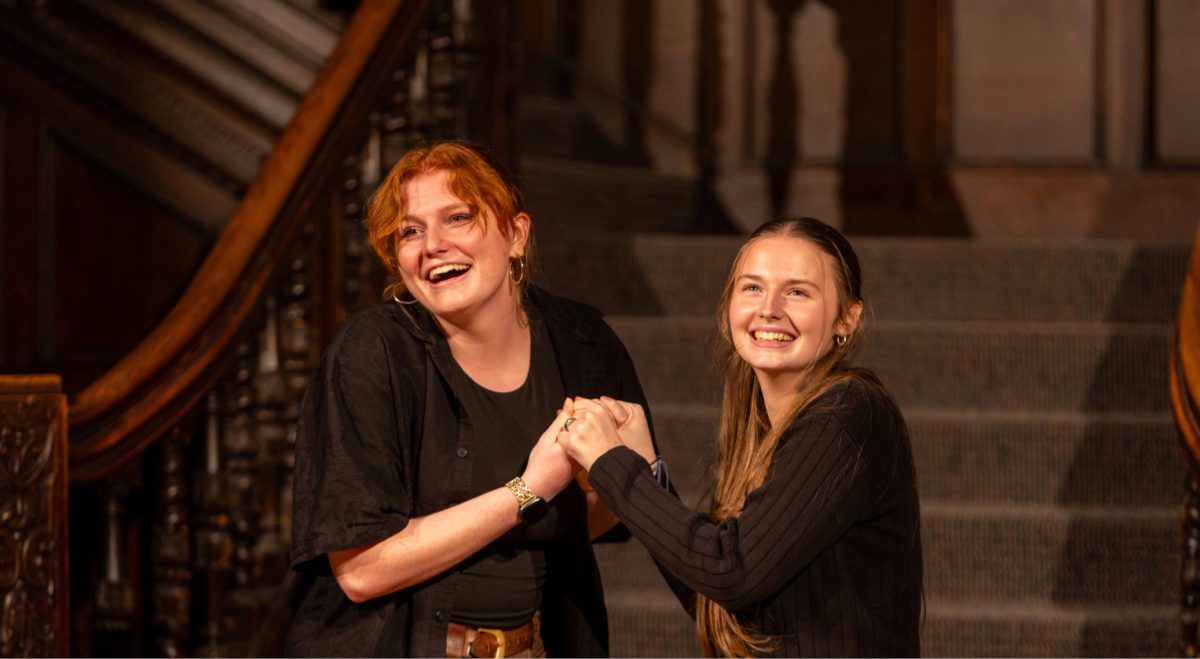
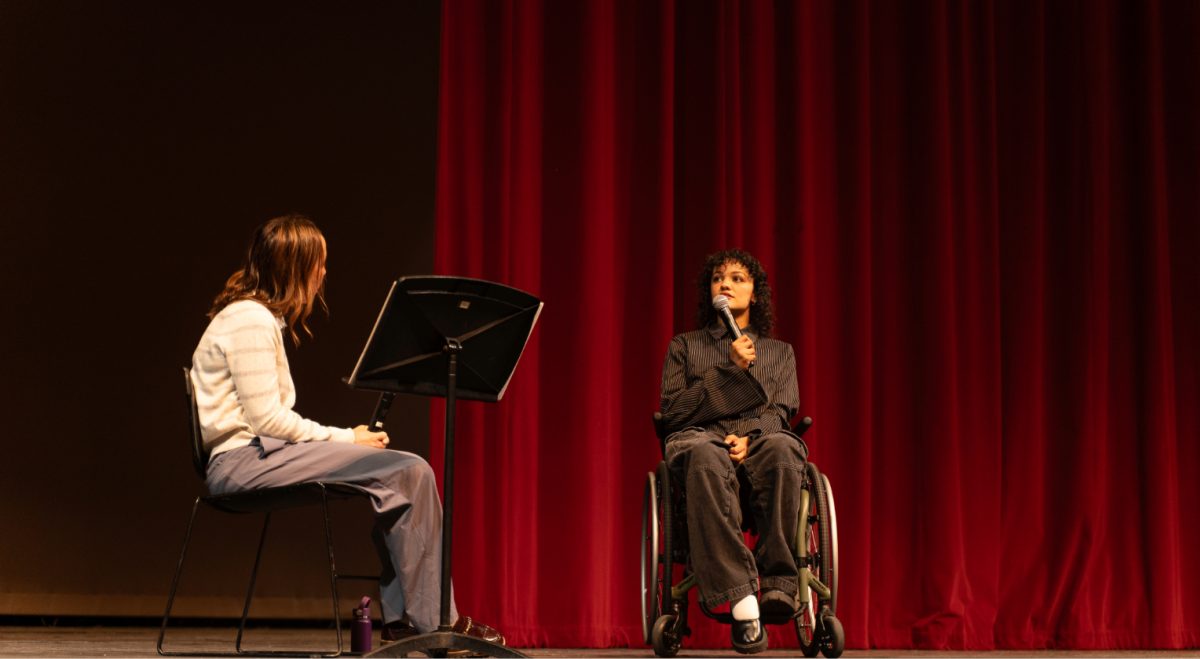
On Wednesday night, a crowd of Boston College students involved in the arts and interested in disability awareness assembled at Robsham Theater for a conversation with actress, artist, and advocate Marissa Bode. The event was presented by UGBC’s Council for Students with Disabilities and Student Initiatives.
Bode, who portrayed Nessarose in Wicked and Wicked: For Good—and was the first actress with a disability to take on the role—imparted wise insights regarding the importance of representation and visibility in Hollywood, as well as in everyday life.
The evening’s facilitator was Associate Professor of Theatre at BC Courtney Elkin Mohler, who opened the conversation by asking Bode about her background in theatre and how her role in the community changed after she was paralyzed at age eleven in a car accident.
“What changed was more so people’s perception of me, rather than my desires and what I actually wanted to do in terms of being on stage,” Bode responded.
She then continued to explain how she handled being patronized by comedically and assertively saying, “Guys, I’m the same person. I’m just sitting down.”
For Bode, disability advocacy extends far beyond the screen. She shared how meaningful it is when both theatrical and film productions actually create an inclusive and accessible environment behind the scenes, instead of just displaying one to audiences. Delving deeper into this concept, Mohler prompted Bode with a question regarding the accessibility on set while filming for Wicked and Wicked: For Good.
Bode shared that Wicked’s production went beyond just casting a disabled character for the sake of “checking a box.” Bode then proceeded to give examples of the equitable workplace features they provided to her, such as a disability coordinator who is also a wheelchair user and tailored adaptations to the set, costumes, and props.
“I had what I needed to be equitable to my peers,” Bode said.
Going beyond the making of the film, Mohler shifted the conversation to the character of Nessarose and how her story is impactful.
Bode expressed her respect and empathy for the journey of Nessarose, emphasizing that the character struggled to exercise her autonomy, as she was frequently coddled and controlled by her father and her sister. Bode also included a personal perspective that, as an actor with a disability, if “you truly want to feel like you have autonomy … a lot of the time that looks like separating yourself from [the characters you portray].”
Beyond movie sets, Bode shared that progress toward equity for disabled people involves “doing the work individually as people.” Simply, everyone in a community must put in their individual effort.
“Anybody can become disabled at any time—I definitely know that,” Bode said.
She used this idea to highlight that promoting visibility of disabilities should not just be done when it’s in extreme demand or only by the disabled community. The struggle is ongoing, and all society members have a responsibility to care and help.
The topic of conversation then transitioned into Bode’s career ambitions and advice to the audience for getting involved in disability advocacy.
The actress shared that she’s in the process of co-creating a satirical short film, titled Dead Wife Montage, as a submission to the Easterseals Disability Film Challenge. She also suggested watching films such as Crip Camp, Life After, and Deaf President Now! to learn more about the disability rights movement.
“Community is truly at the heart of how we all make the world,” Bode concluded.