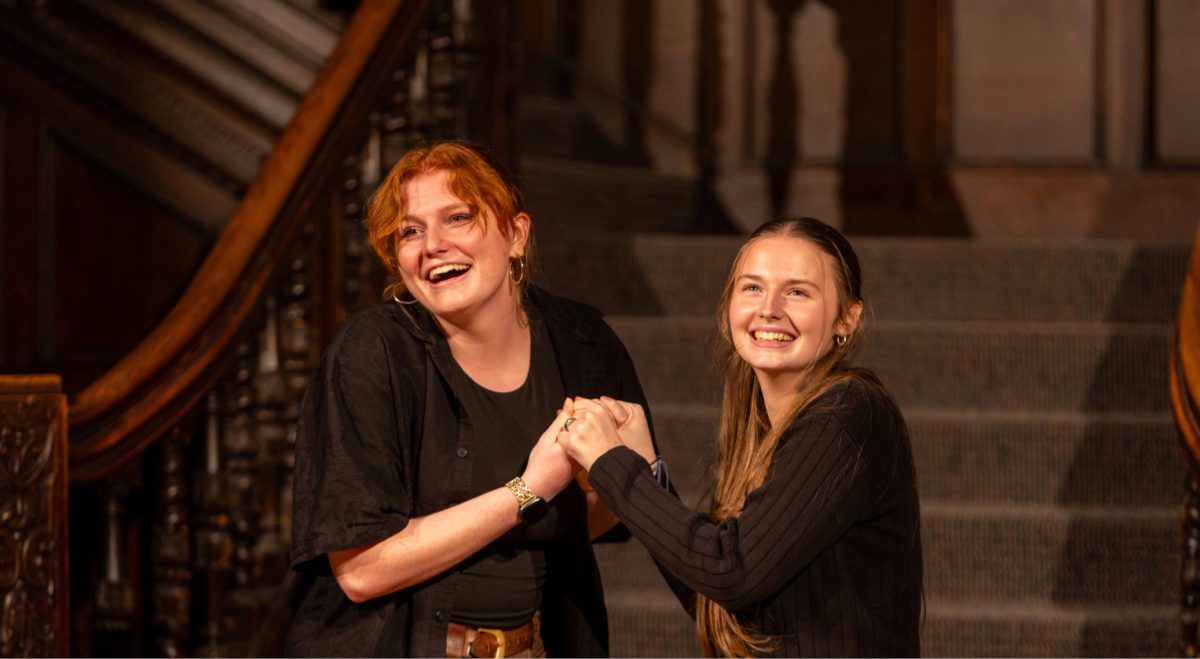

Every seat in the Bonn Studio Theater was filled on Thursday for the opening night of Eurydice. Audience members waited with bated breath to see what director Ava Maloco, LSEHD ’26, chose to do with the 2003 play written by Sarah Ruhl, and a night of love, loss, and song awaited them.
The play opens on Eurydice (Sloane Escobar, MCAS ’29) and Orpheus (Jordan Beicke, MCAS ’27) enjoying a relaxing day by the beach. Orpheus gestures to the sky, the ocean, the birds, and proclaims that everything is there just for her. Eurydice is flirtatious and full of energy, while Orpheus, a renowned musician, is much more subdued and quiet.
The actors wore bright gingham costumes reminiscent of 20th-century fashion. The play does not pin down a specific time period––instead, it blends fashions and references from across the century to create a timeless feel, much like the classic Greek myth of Orpheus and Eurydice.
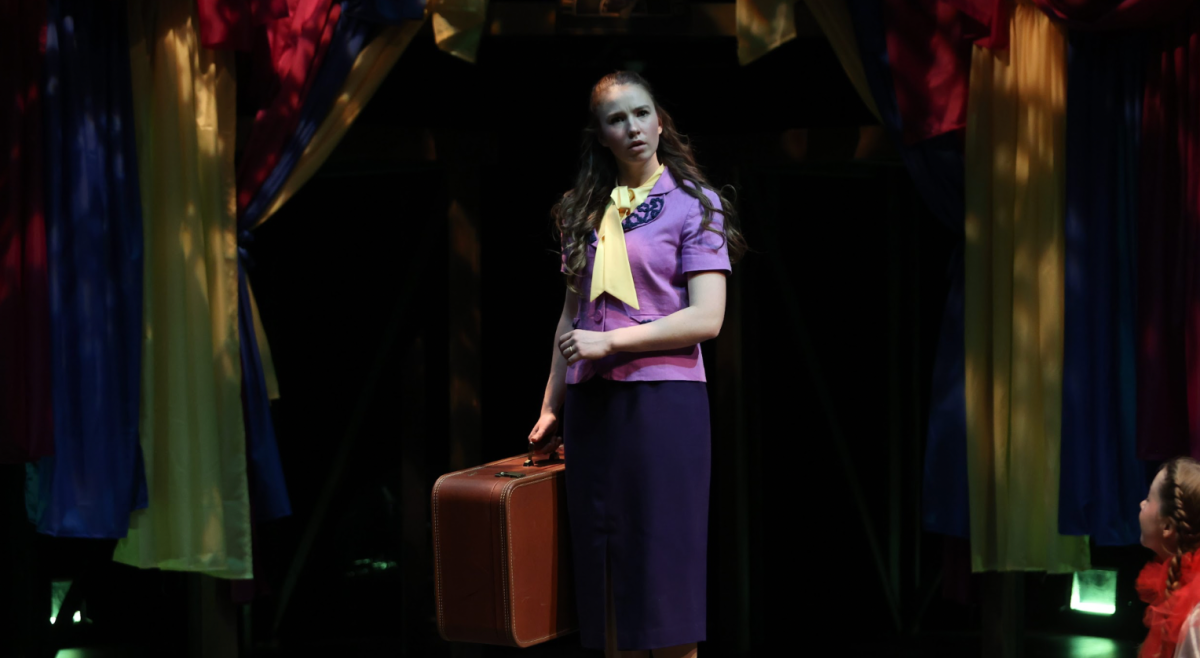
Orpheus professes his love for Eurydice and asks her to marry him, to which she says yes. The scene then transitions to Eurydice’s father (Courtney Driscoll, LSEHD ’26), who has died, reading a letter to her from the underworld. Hearing the news of her engagement, he laments that he cannot be there for her. He then throws the letter, saying that he hopes it will somehow find its way to her.
The scene changes again, and Eurydice, feeling warm at the party after the wedding, slips outside. There, she runs into a strange and mysterious man (Jack Deily, MCAS ’29) who claims he has found a letter from her father addressed to her.
Eurydice follows the strange man back to his apartment to get the letter. Upon arrival, he advances on her, claiming that Orpheus is not man enough and that she should be with him instead. In her haste to get away, she trips and falls down the stairs, dying.
From there, the play transforms from light and romantic into an amazingly absurd story of love and loss.
Eurydice wakes up in the underworld, confused and alone. Dipped in the River Lethe, she lost the memories of her life, including Orpheus’ name.
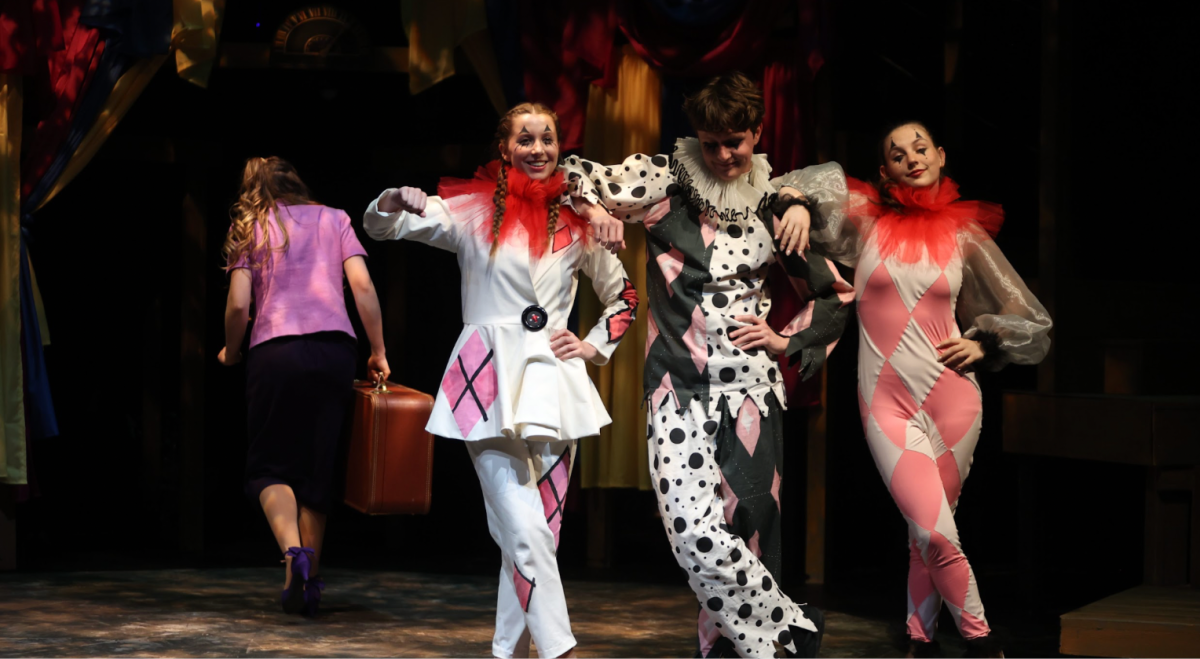
Three figures dressed as clowns appear and tell her they are the stones: Big Stone (Daniel O’Brien, an exchange student), Little Stone (Annabelle Havers, MCAS ’29), and Loud Stone (Saxon Moseley, MCAS ’29). They guide her through the underworld, constantly reforming themselves into various ridiculous trio positions while cracking jokes and rolling their eyes at Eurydice’s incessant chatter.
Eurydice finds her father in the underworld. Though she does not recognize him at first, he helps her remember, and they spend their days bonding and making up for their lost time. All the while, Orpheus is filled with sorrow and writes Eurydice letters claiming that he will stop at nothing to find her.
Eventually, Orpheus finds a way to get Eurydice back. He is told that he must walk home alone, and that she will be returned to her, with one caveat: he cannot look back. On that fateful night, Orpheus, with Eurydice following, is almost home, but she calls out to him, and forgetting the rule, looks back.
With this, Eurydice is thrust back to the underworld to find that her father has dipped himself in the river and forgotten her. Having lost everything, Eurydice also enters the river to escape the painful memories.
Although this myth has been retold and the ending is widely known, the theater was hushed as the lights dimmed on the bleak figures of Eurydice, her father, and Orpheus, all having forgotten one another.
Eurydice offers a look into her perspective on the myth, which, until this play, has centered on Orpheus. The actors portrayed the story’s sorrow and loss with incredible performances.
In the director’s note, Maloco explains her wish for the audience.
“I hope you’re leaving this show as disoriented as a person who recently dipped themselves in the river,” Maloco wrote. “I hope that the show and its many messages wash over you as you watch it and stick with you as you leave.”
Euridyce is set to run from March 19–22.