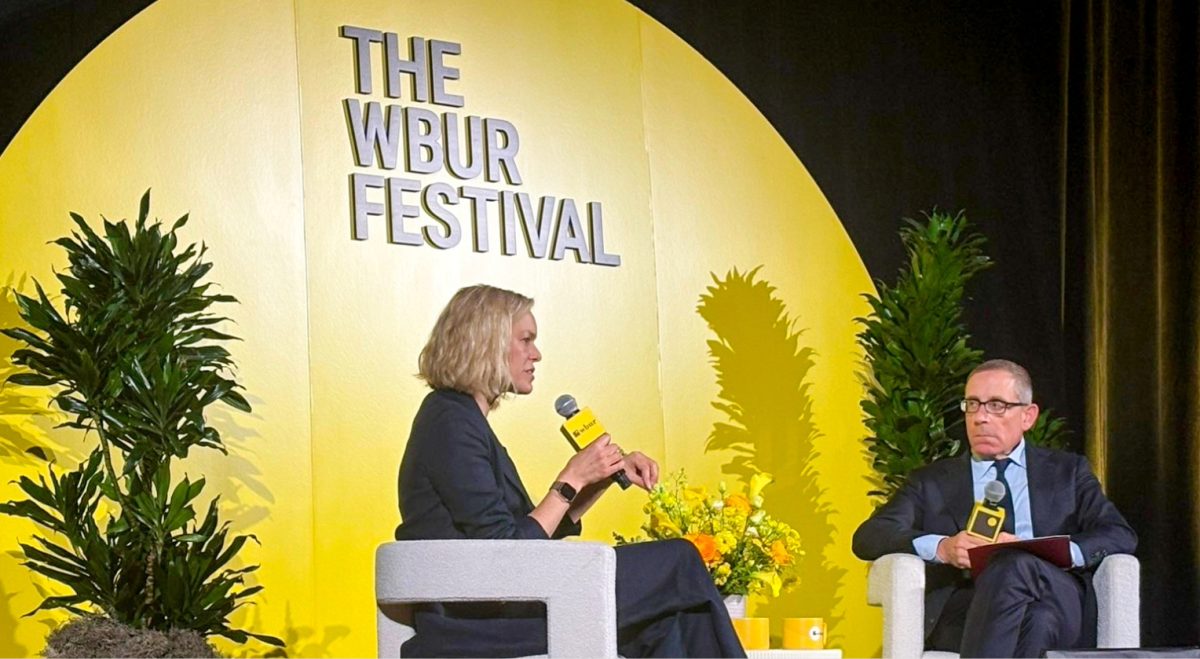

Amid escalating immigration crackdowns across the country, the United States finds itself at a defining moment in history where individual action has never been more consequential, according to Monique Tú Nguyen.
“Right now, our constitutional rights are in crisis,” Nguyen said. “We’re in crisis. People are losing purpose and meaning in this moment, and it’s all of our [jobs] to put the work into action and to bring life to what we believe in.”
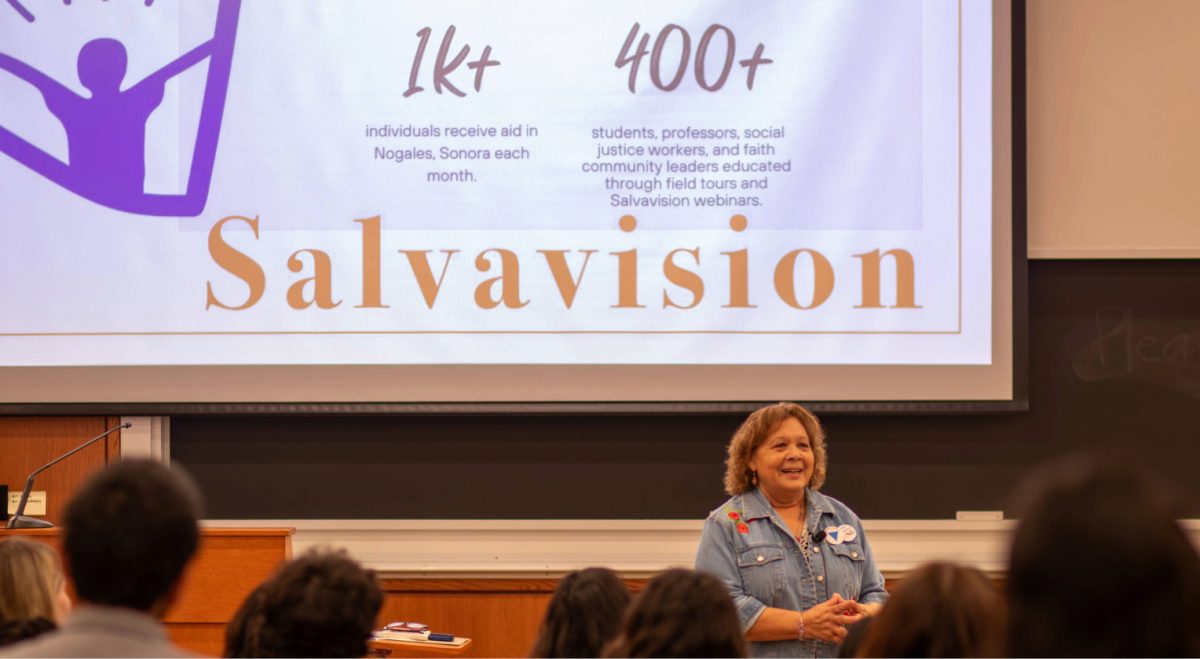
Nguyen, director of Boston Mayor Michelle Wu’s office of immigrant advancement, spoke at Boston College’s “Moral Courage in Defense of Migrants: A View from Boston” panel during day two of the “Law, Conscience, and Migration Today” speaker series. The two-day interdisciplinary conference examined the contemporary state of immigration in the United States.
Nguyen’s Friday morning session highlighted the city’s efforts to support migrants and the community’s role in fostering moral courage during what many describe as a watershed moment.
Nguyen’s presentation was introduced by Matthew Cuff, GMCAS ’30, who explained that organizers were inspired by the interplay of religions, politics, social services, and community organizations.
We wondered what might it look like to give [a] voice to that dynamism here on campus,” Cuff said. “What might we learn—from each other, academic discourse, community organizers, ecclesial leaders—and what actions might that learning inspire?”
Since President Donald Trump took office in 2025, immigration policy has undergone what Nguyen describes as a dramatic and deeply consequential transformation, the effects of which have reverberated in Boston.
“There were periods, and even weeks, we didn’t even have data about who in our city had been taken,” Nguyen said. “That’s something we’re still fighting for. Even this right of information is being challenged now.”
Nguyen rejected what she described as a false narrative that immigrants do not contribute to the economy, noting that 40 percent of Main Street businesses and 30 percent of health care workers in Boston are immigrants.
“The Boston Planning Department did a presentation about what the next 10 years could look like if Trump’s mass deportation plans were brought to fruition in total, and the [effects] were pretty devastating,” she said.
Nguyen attributed the immigration crackdown in part to the spread of misinformation and ignorance.
“Lack of education and exposure can and has led people to fear the unknown and believe these lies that create division and support oppression, allowing the current violence we are witnessing today,” she said.
Despite the hardship, Nguyen stressed that many people—both in Boston and across the country—are stepping up to help.
“I also try to look for these stories, because it gives me hope,” she said. “It reminds me of what I think Mr. Rogers would say, ‘Whenever you’re scared, look for the helpers.’ So always look for the helpers.”
Nguyen highlighted several of the current initiatives led by Wu’s office, including barring Immigration and Customs Enforcement agents’ use of city property without proper authorization, and expanded resources to help residents better understand their rights.
“We often feel small in the face of federal giants,” she said. “But we must remember that justice is not a spectator sport.”
Wu’s office also hosts an annual Citizenship Day, during which hundreds of volunteers come together to assist residents with the naturalization process. Despite growing immigration fears, the event maintains a 95 percent success rate.
Nguyen also emphasized that meaningful impact is not limited to government agencies or organizations—individuals can make a difference in their daily lives.
“You can’t underestimate how [important] it is to offer community in this time, because the isolation is what’s making people self-deport right now, making people want to give up their lives, and making people also take their lives, sadly,” she said.
The ability to create change, Nguyen said, begins with being properly informed.
“[Wu] really wants to make sure that we are the most educated in regards to our rights and the power to exercise them because we won’t have democracy if people don’t believe in the Constitution anymore,” she said.
Now, more than ever, it is important to engage in community-wide conversations, seek out information, and look to help immigrants in Boston and beyond, Nguyen urged.
“It’s a big cycle for us to reflect on who we are and who we want to become in the coming years,” Nugyen said. “We would not be successful if we did not cooperate with our community.”