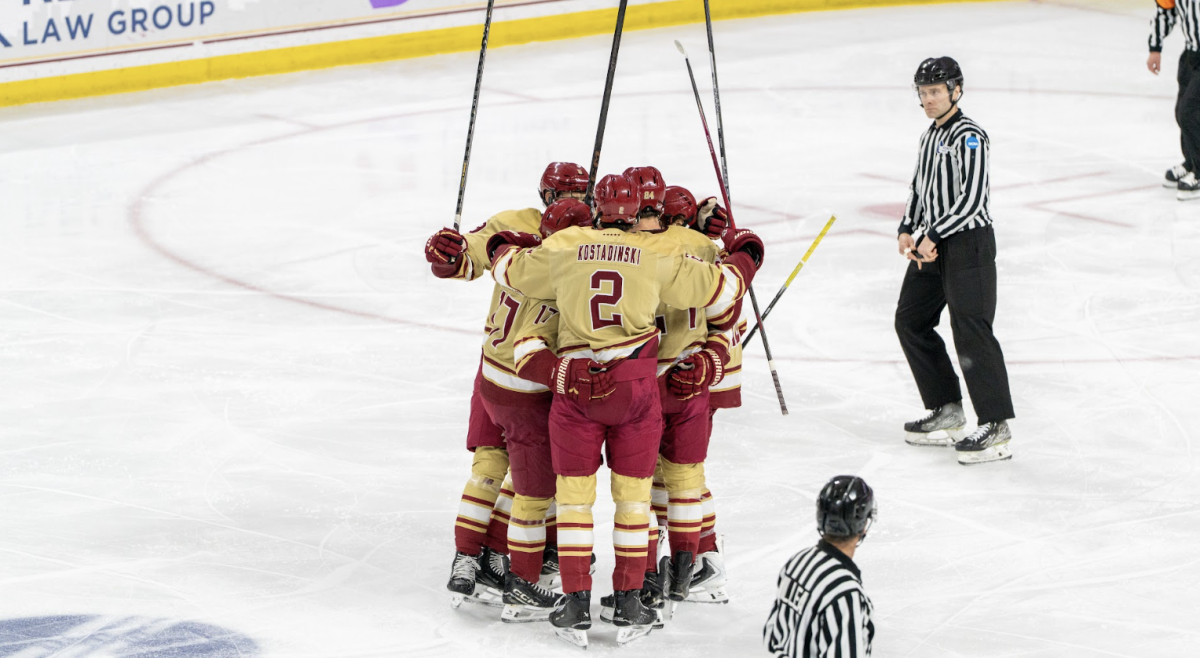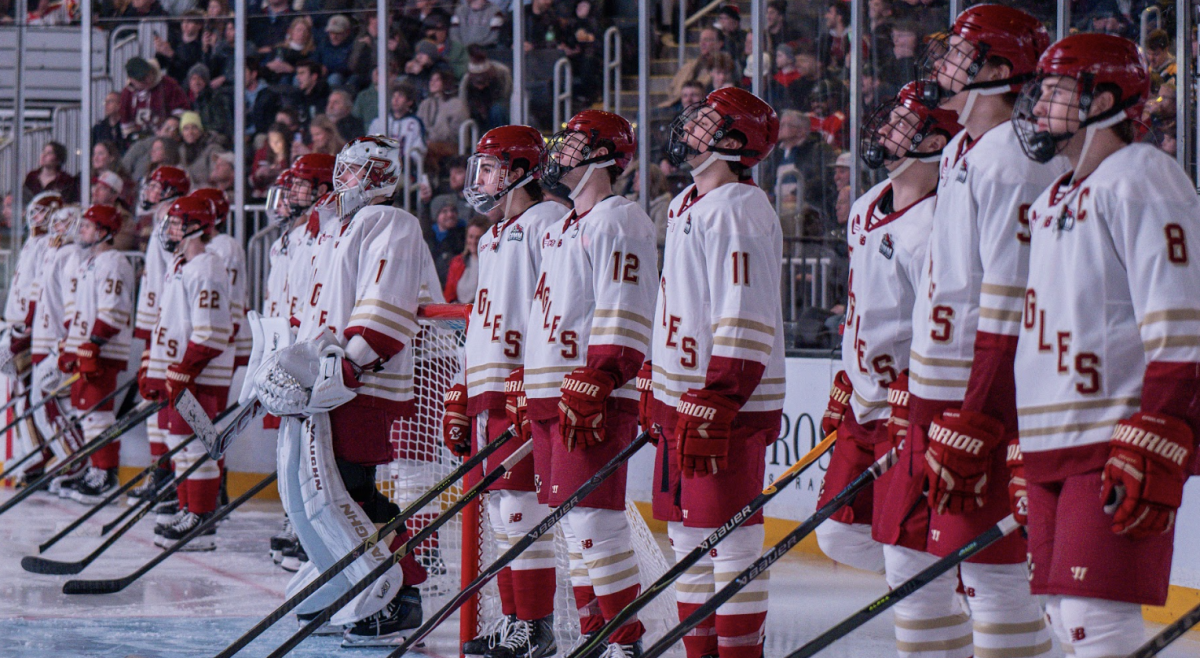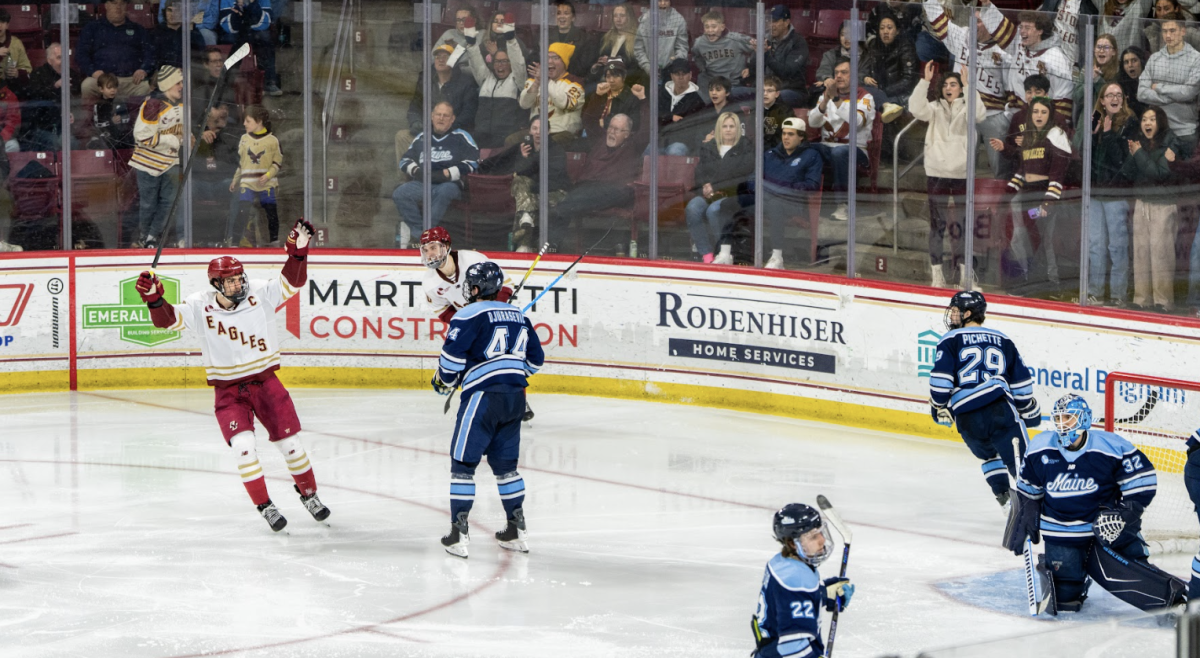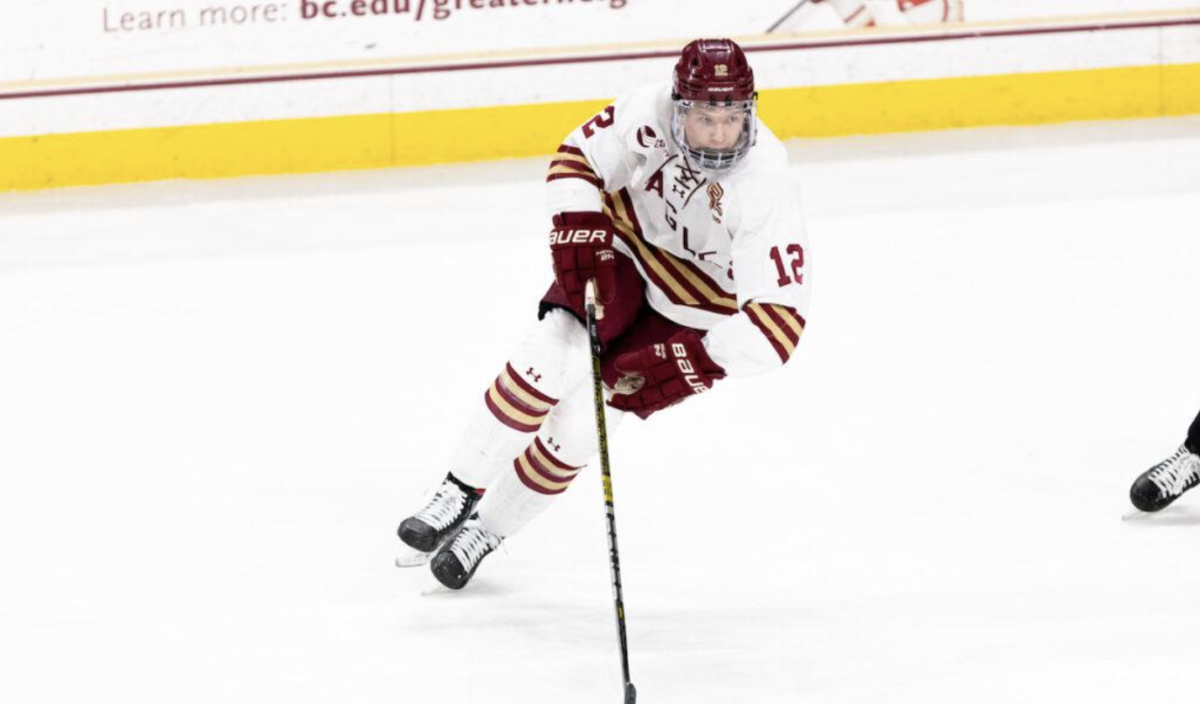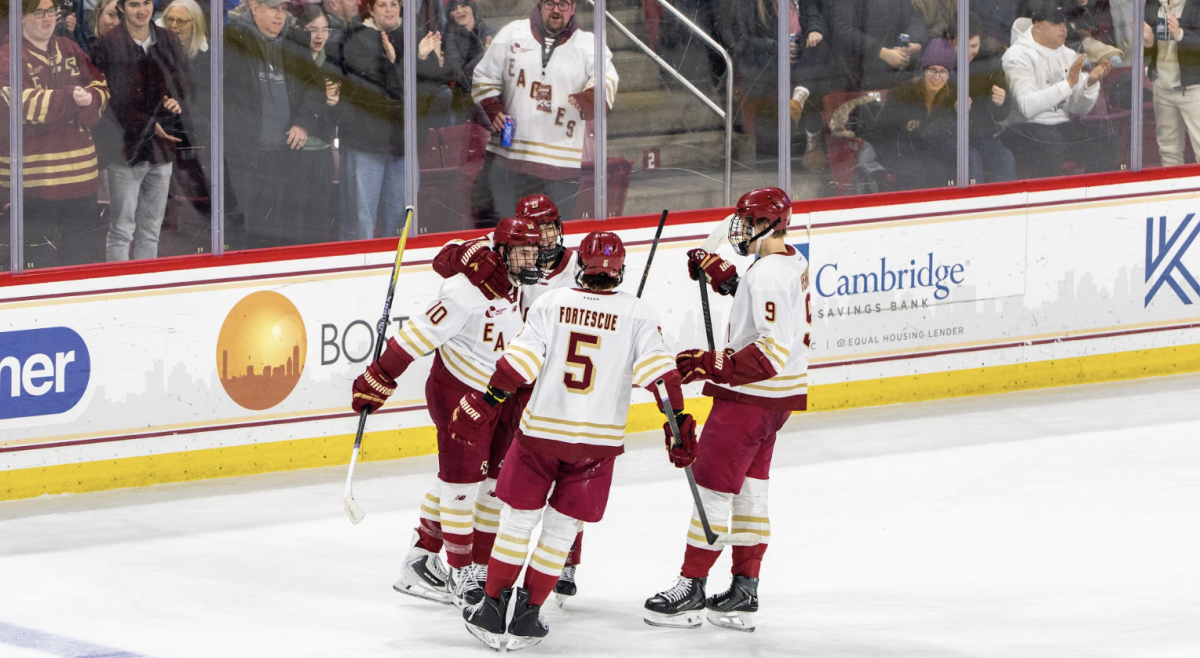

Entering this season, missing stars from the past few years and following a shaky home opener, many fans have already written off Boston College men’s hockey.
While I think it’s too early to make any sweeping judgments, the change in mindset around campus has been felt and noticed. It’s caused me to look forward to the professional potential of some of BC’s recent draftees.
BC is a school that attracts top-tier players, such as Ryan Leonard and Will Smith. Looking at the Eagles’ roster right now, there’s a lot of potential for more success stories.
Heights board member Sarah Vergura is breaking down BC hockey’s NHL draft picks, providing updated coverage about their progress and potential for success at the next level. Here’s the first installation of this column:
First Look at the Bruins’ Draft Picks
Of the 12 drafted players on the team, six were drafted to the Bruins.
But what is it that Andre Gasseau, James Hagens, Oskar Jellvik, Dean Letourneau, Kristian Kostadinski, and Will Moore could add to Boston’s pro team?
Looking at last season—especially in their elimination matchup against the Florida Panthers—the Bruins’ deepest issues were on special teams and in struggling to generate consistent pressure against Florida’s aggressive play.
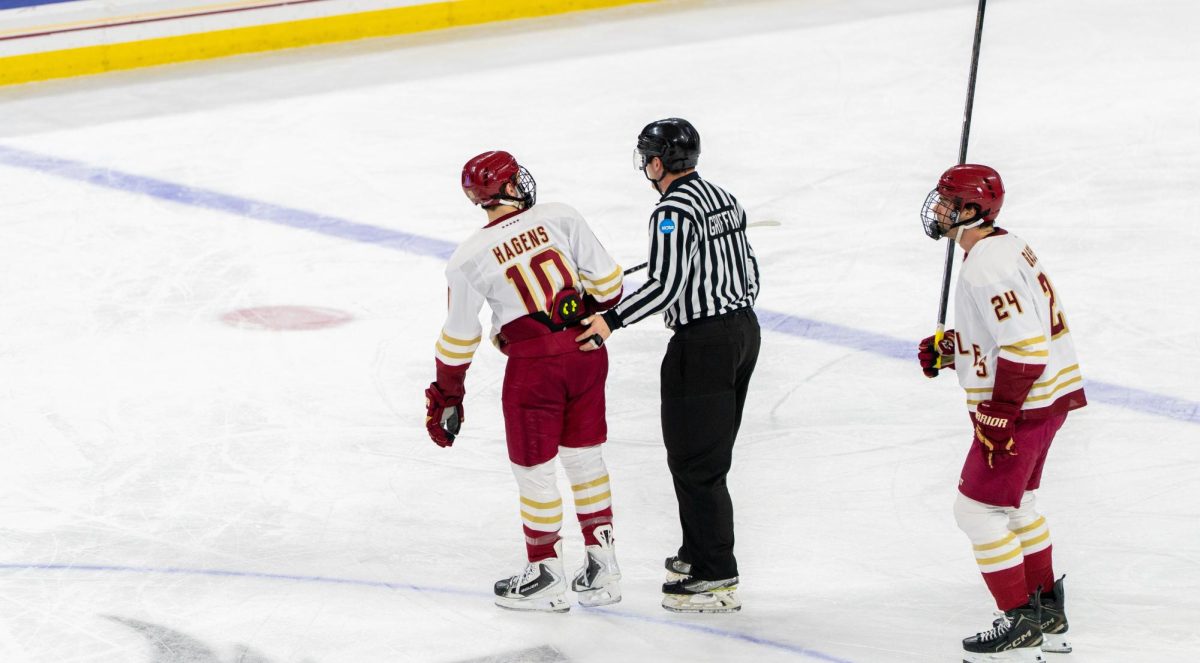
Hagens was one of BC’s most notable freshman players from last season, skating all 37 games and scoring 11 goals. But one has to wonder how much of that offensive dominance was due to Hagens’ linemates, Gabe Perreault and Ryan Leonard. This season, the next step is for him to take more of a leadership role on that top line.
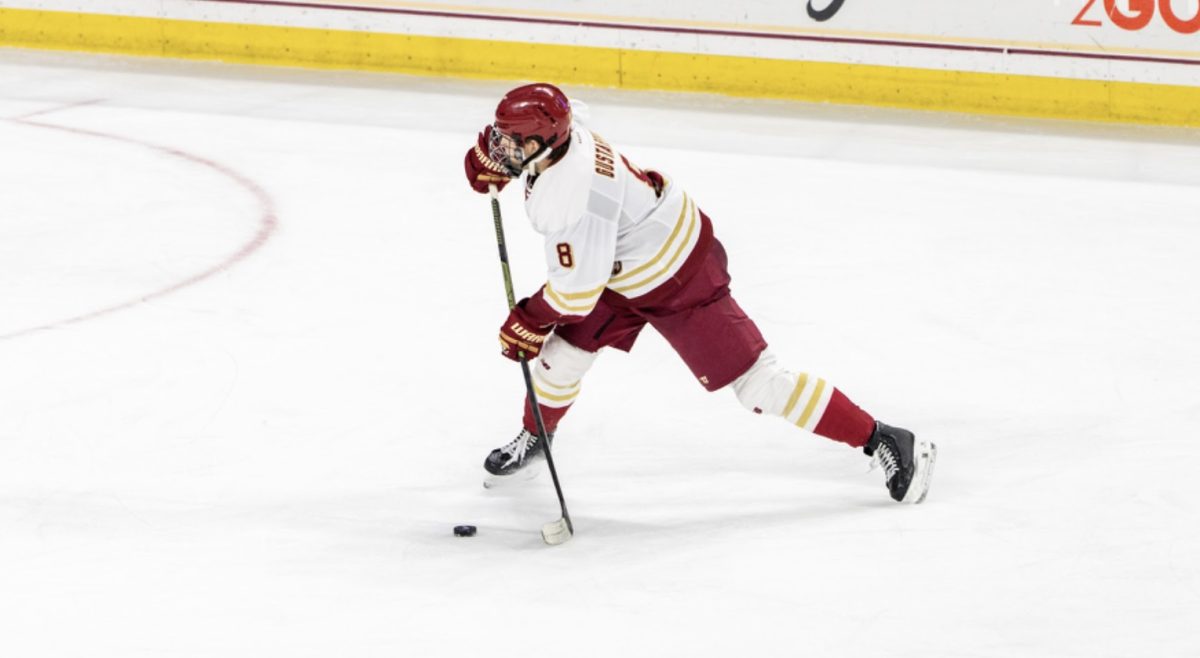
Although BC mirrored the Bruins’ struggles on the power play last season, Hagens was tied for the third-most power-play goals, coupled with Gasseau for four goals. This season, expect to see both Hagens and Gasseau take more advantage of the power play and be among BC’s leading goal scorers.

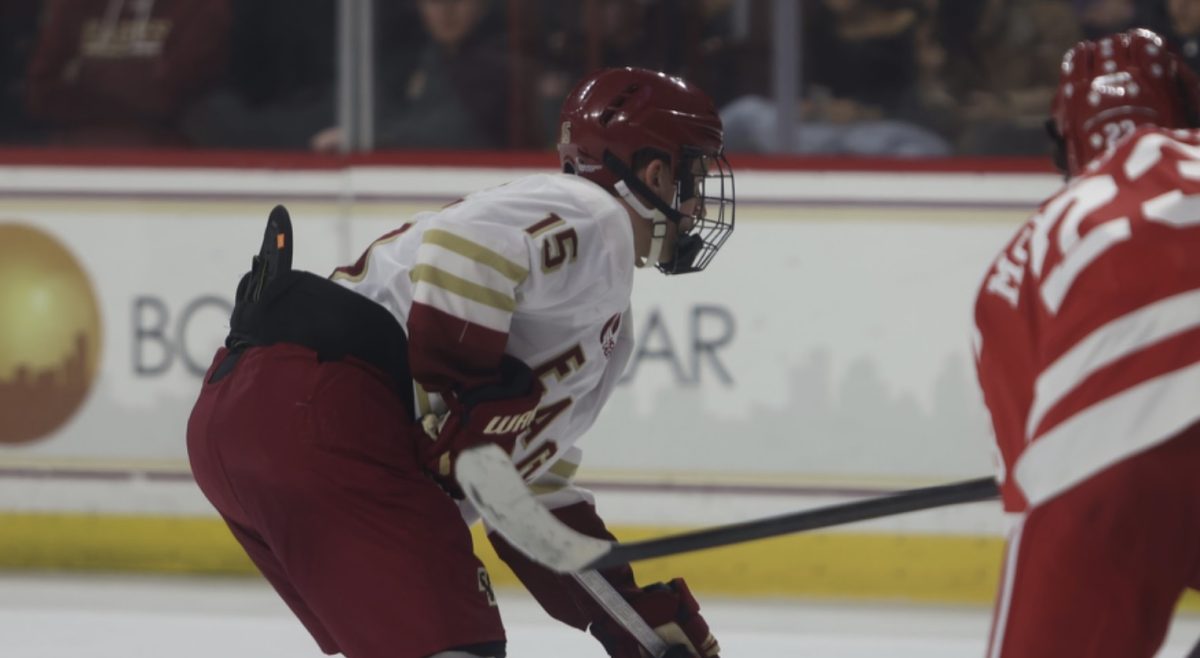
In terms of aggression, one would think 6-foot-7 Letourneau would be the first player to look at. But his passive freshman season disappointed many BC fans. He seems to be heating up this season, having tallied two goals through four games. Still, his play style leaves something to be desired.
Letourneau’s current resume for BC hockey—although progressing—may mean the Providence Bruins are a better fit for him, if he stays at the forward position.
But the Bruins’ inability to put up a stop to Florida last season forces me to wonder if his big frame could be of use on the defensive end. Looking at Marco Sturm’s new defensive scheme, Letourneau, with some more aggressive playing, could dominate in man-to-man coverage and perhaps give the Bruins the aggressive edge they’re missing.
Another hole in the Bruins’ game is their faceoff win percentage. After losing Patrice Bergeron and David Krejci, the Bruins have struggled to find a new center group, with younger players like Charlie Coyle and Pavel Zacha lacking in the circle.
Luckily for the Bs, Gasseau had the best faceoff percentage of BC’s centers last season, sitting at 55.3 percent. While college-to-NHL statistics are not directly comparable, the ability to consistently win faceoffs is an important skill that typically transfers well to professional play.
Although there’s much less to look at regarding Boston’s two freshman draft picks this year, we can predict where they might fit into the Bruins’ scheme.
Moore is exactly what the Bruins have been known to look for in their picks—a beautiful skater with excellent stick work.
This is what leads them to struggle against rougher teams such as Florida, though. This season, Moore will look to prove that he can handle himself against bigger guys and tougher play. That’s what will help him live up to his second-round potential.

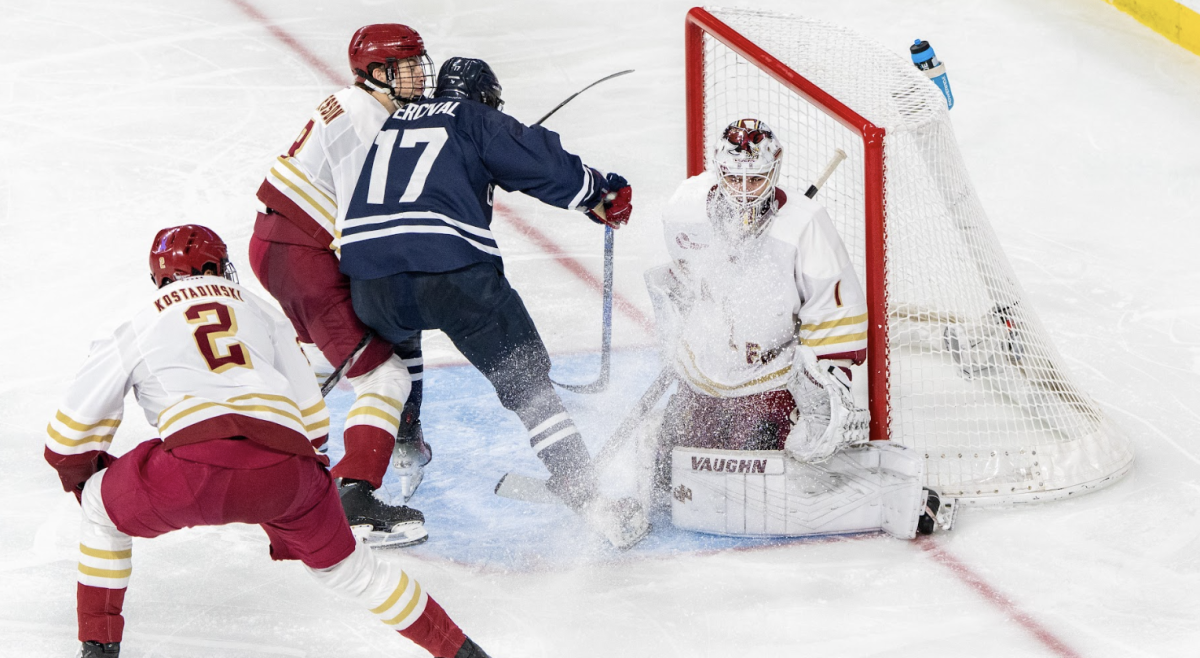
This is the exact opposite of seventh-round pick defenseman Kostadinski.
From his stats alone, it’s obvious how the Bruins plan to utilize this 6-foot-6, 235-lb defenseman. Kostadinski has proven in the Swedish pre-professional league that he can be more than just a defensive body on the ice, contributing to playmaking on the offensive end as well.
With all of that said, it’s obvious that there is a lot of Bruins potential just seven miles down the road from TD Garden.
With several potential future Bruins developing together, there’s a chance we could see a BC-dominated line in the NHL sometime in the near future.
For the Bs, this could mean some better faceoff chances and more power-play goals.
Many of these players still have a chip on their shoulder from their untimely end to last season.
Having something to prove will hopefully manifest in increased aggression—at BC this year, and perhaps in the pros sometime soon.