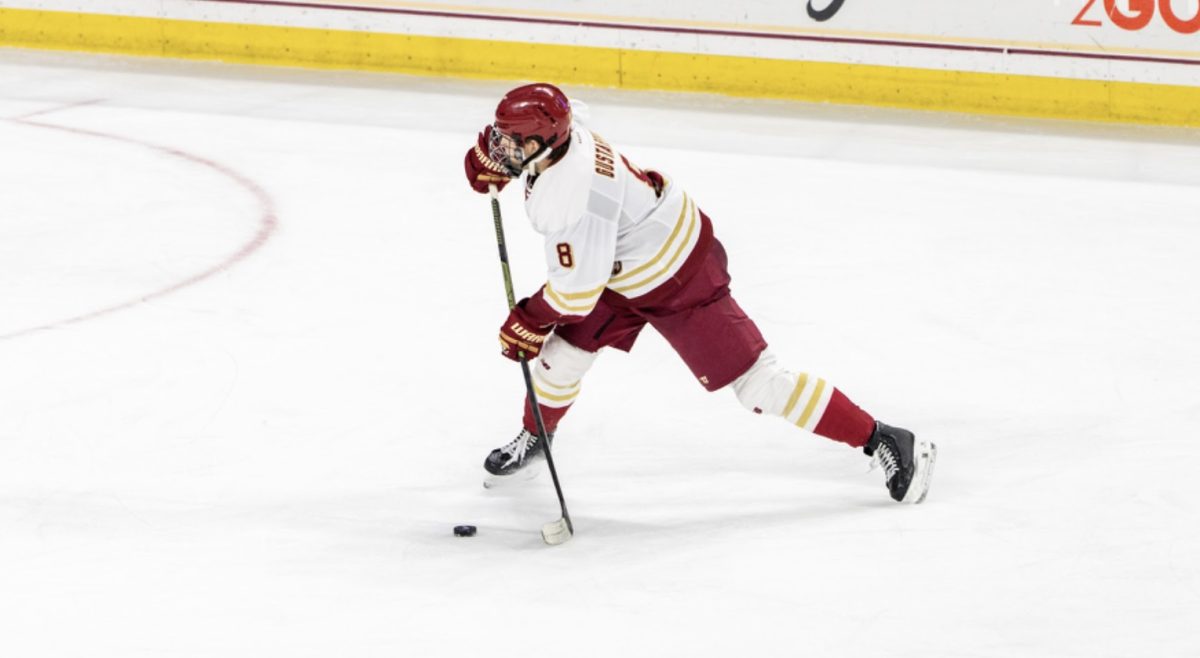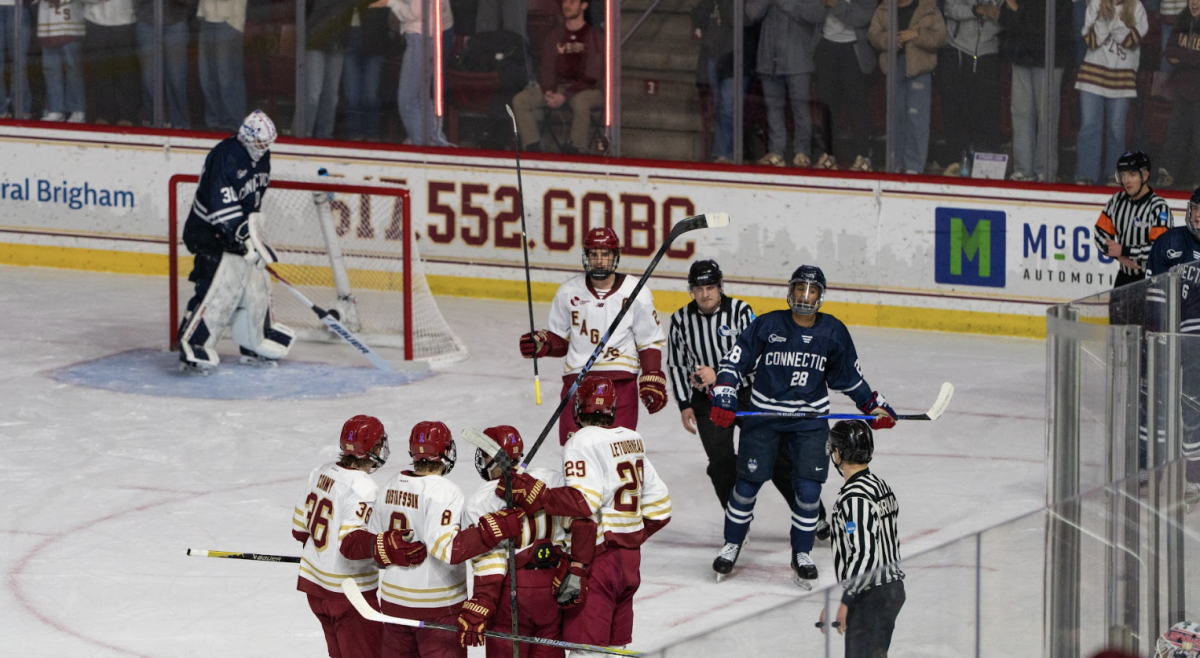
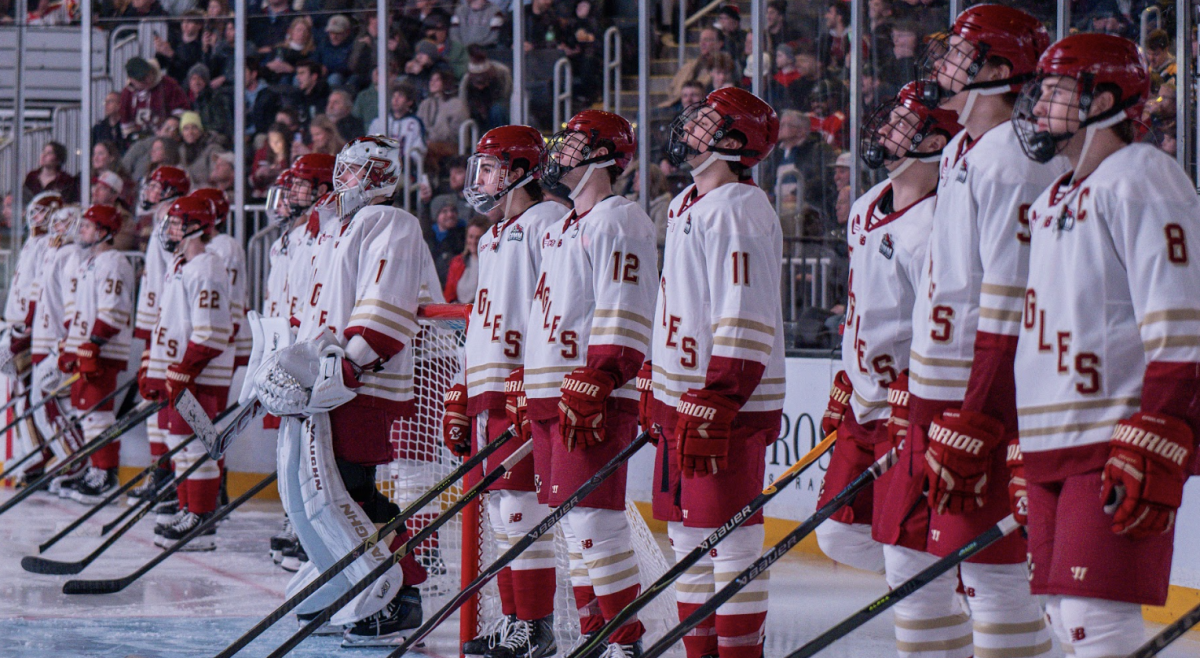
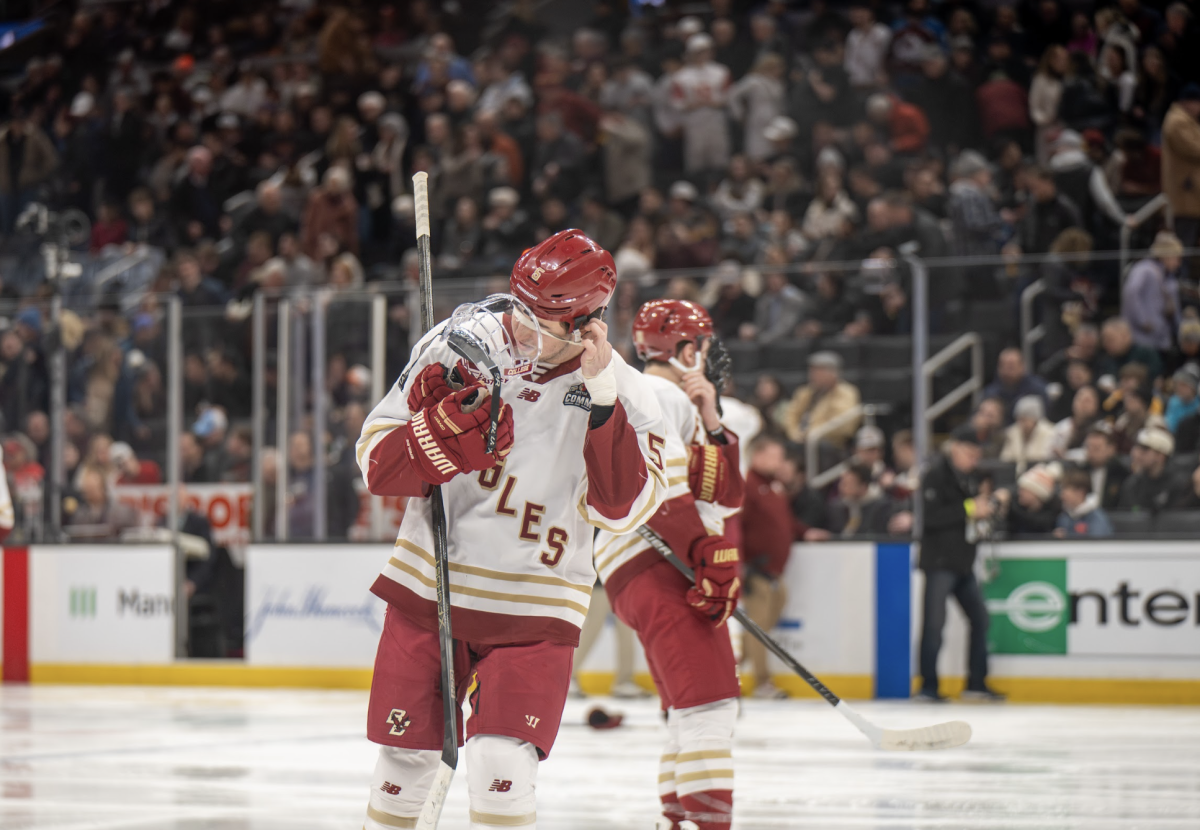
Captains Andre Gasseau and Lukas Gustafsson stood frozen in the tunnel leading to Boston College men’s hockey’s locker room at TD Garden.
They shared hugs with the juniors, sophomores, and freshmen who dawdled off the ice in what would be their last game of the season—for the captains and their fellow seniors, it was the last time they would sport the maroon and gold.
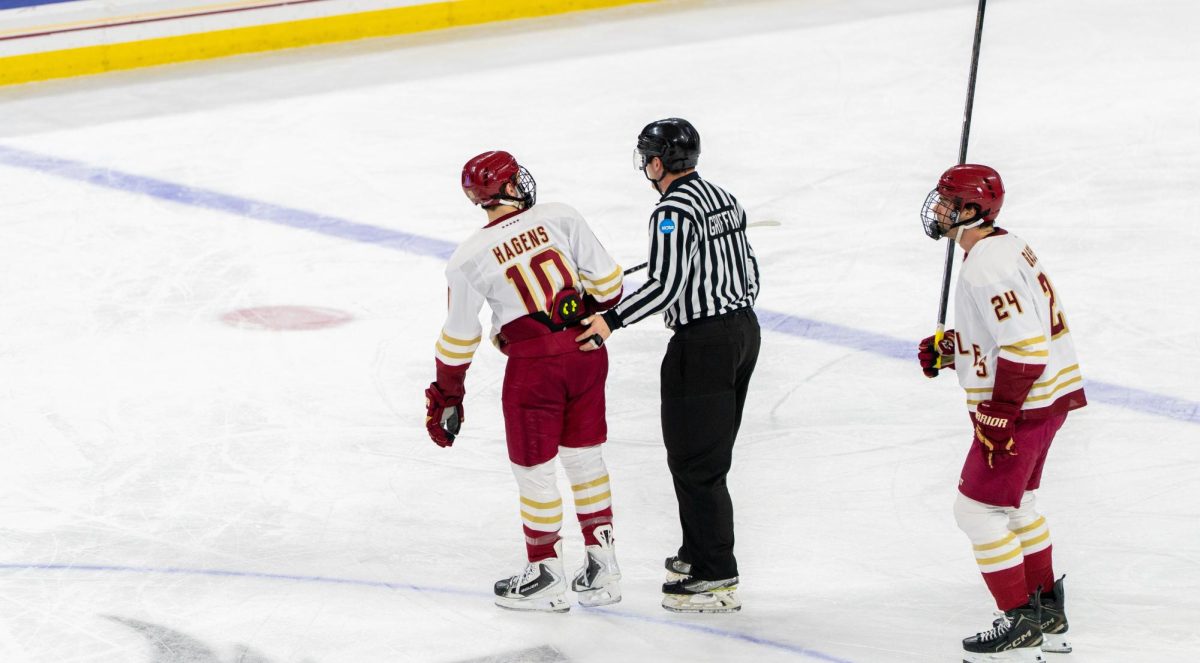
It was a heartbreaking overtime loss to UConn in the Hockey East Semifinals that ended BC’s hopes of an NCAA Tournament selection, as well as the careers of six seniors and Hobey Baker finalist James Hagens, who is rumored to be off to the NHL.
The Eagles entered the Hockey East Tournament with a win-or-go-home mentality because that was the simple but hard truth for them.
And now, the only ones they can blame are themselves.
End-of-Season Skid
After losing four straight games—three to non-tournament teams and two to squads that finished .500 or worse—the Eagles’ backs were against the wall.
After a 2–1 overtime win versus UConn that marked four wins in five games since its Beanpot title victory, the Eagles were ranked in the top 10 for the first time since October. They were set to top off their season with a weekend series versus Boston University and a matchup against Massachusetts—teams they hadn’t lost to all season—followed by a season finale against Northeastern, which swept them back in early November.
What could’ve been a clear-as-day route to a confirmed at-large bid instead transformed into the death of BC’s season.
It scored five goals across those 12 periods, and only two of those came during even strength. That could be a testament to BC’s season-long dominance on the power play—which finished first in Hockey East and fifth in the nation at 27.3 percent—but that’s not all it was. Its 5-on-5 play just could not find the back of the net.
There was no issue in generating quality chances, but a scoring bug had hit the offense at the worst time.
“When you’re not scoring, everything is magnified,” head coach Greg Brown said after a 2–1 loss to UMass. “We’ve got to find a way to finish off our chances.”
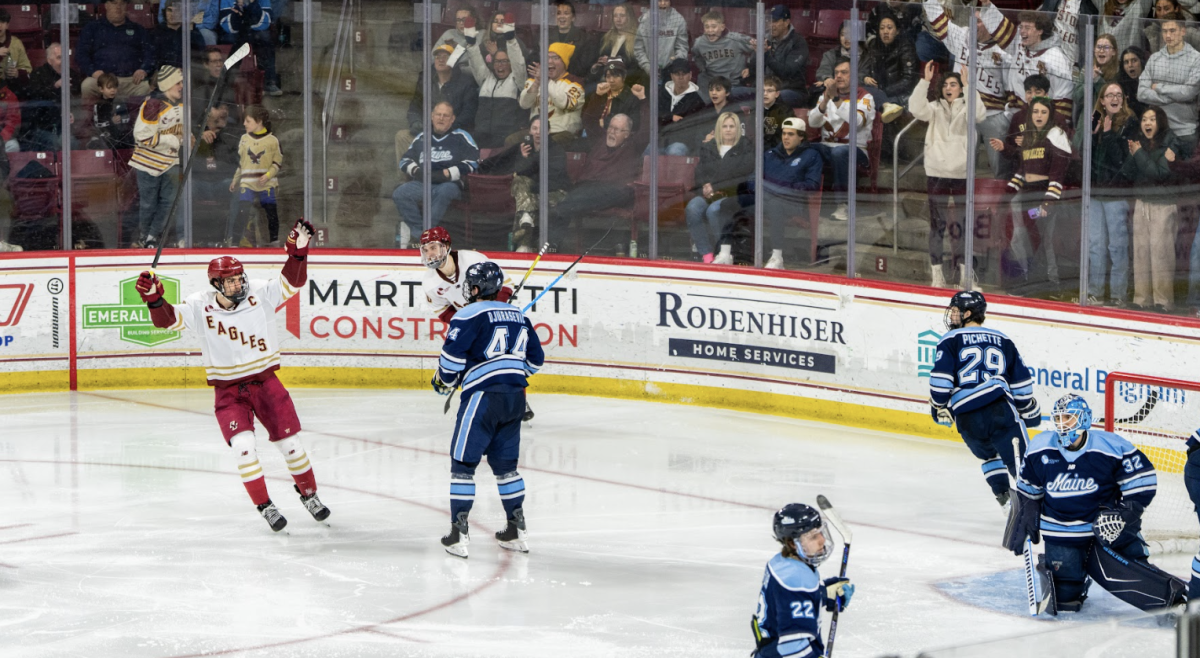
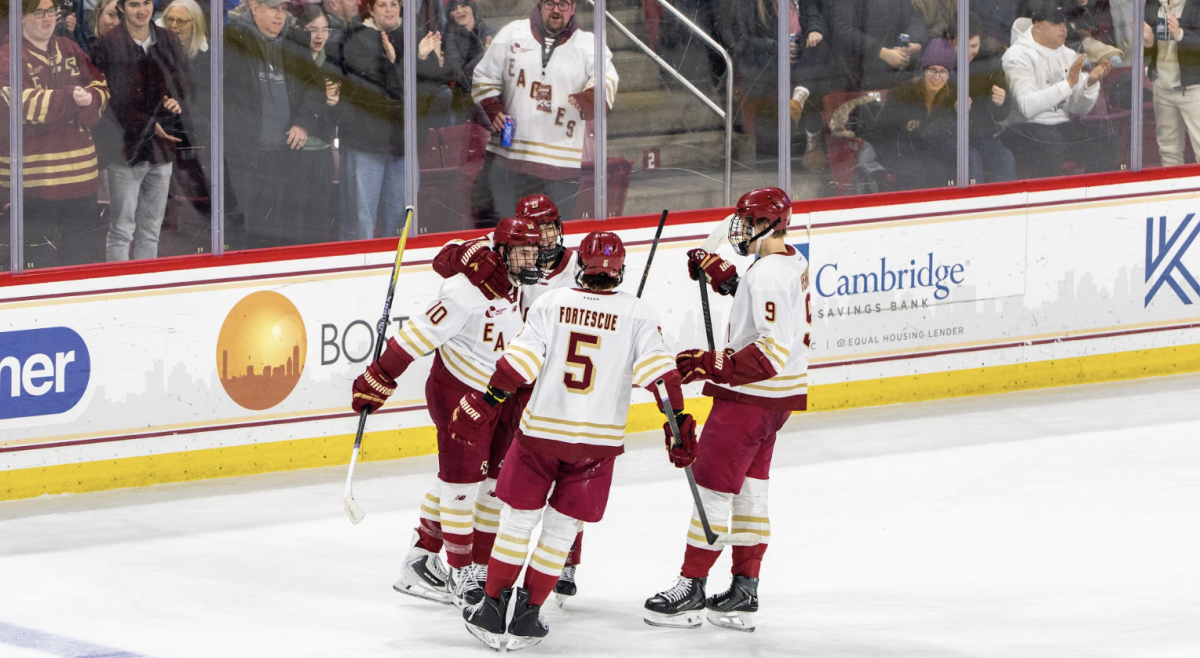
It would be easy to say that BC’s inability to score, coupled with dropping four games in a row, completely stole BC’s confidence. But its 5–0 win over Maine in the quarterfinals reignited an offense that had been rolling ever since a 2–4–1 beginning to the season.
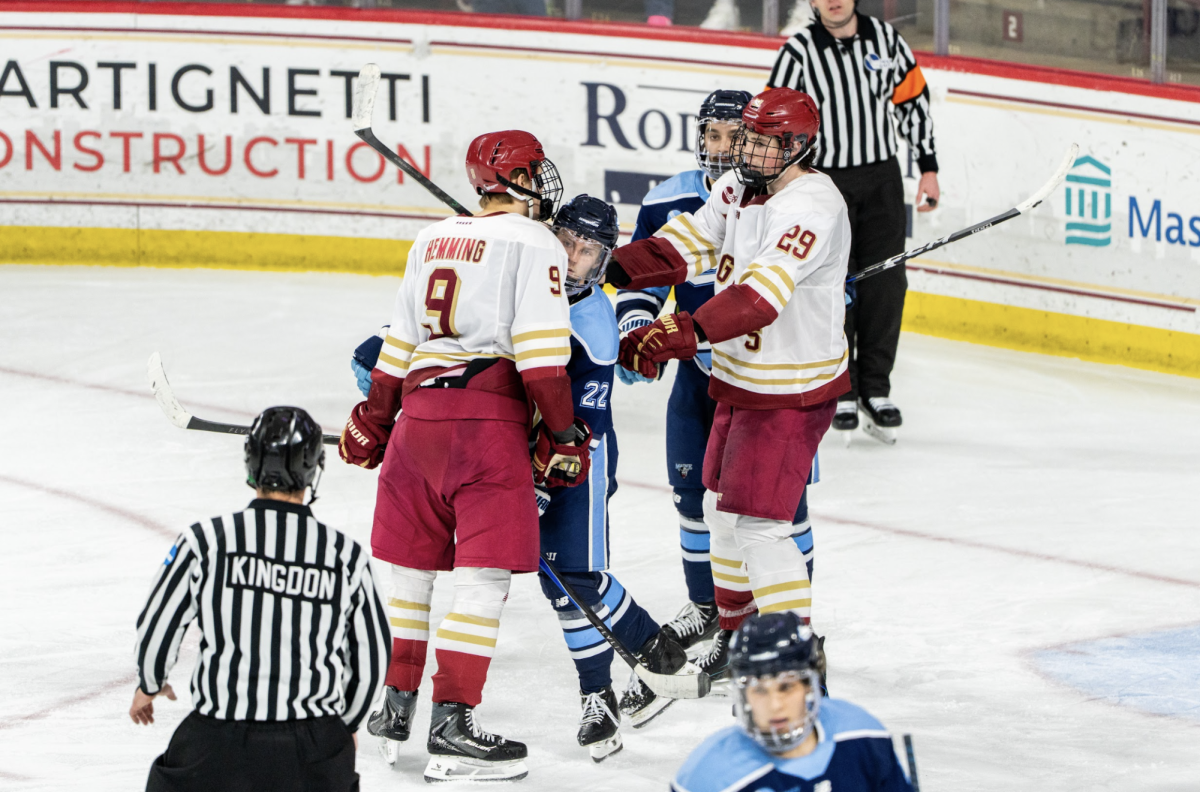
The Eagles killed its fanbase’s hopes in its loss to UConn. Fans were more than aware that the Eagles had to win three straight games, including the Hockey East title, to be selected to the NCAA bracket, and then win another four straight to win the NCAA Championship.
By the time the conference tournament came around, though, it seemed a lot of fans had lost faith after the four-game skid. That can kill a team’s confidence more than anything.
This may be an unpopular belief, but a loss in the Beanpot could’ve rerouted this season in a completely different direction.
With a loss to BU on the big stage, BC’s weekend series with them down the stretch would have panned out differently. And to make things clearer, a loss to BU on the big stage would have ignited a kind of fire in this offense that was missing in its closing games.
Did the Eagles get too complacent with their Beanpot win, like that was the high point of their season and they didn’t have much left to fight for?
Looking back, the Beanpot was the highlight of the season, so it feels ungrateful to complain about winning a meaningful game. But who knows if BC would’ve had something left in the tank if it had lost?
Brown’s Strategy
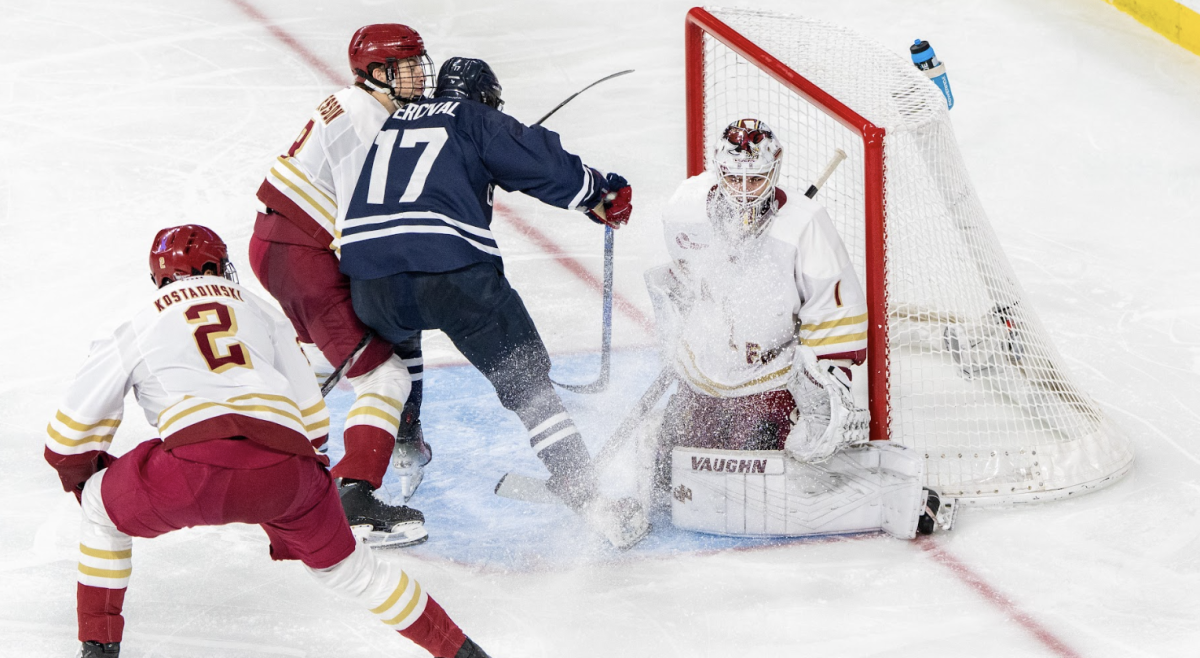
UConn’s senior line—a combination that has been together for four years—put BC’s season to bed with Tristan Fraser’s goal 1:18 into the overtime period.
Fraser and Tabor Heaslip attributed their semifinal win and the game-winning goal to their line’s chemistry.
“I don’t know if this is a fact or not, but between the three of us, we might have the most combined games in college hockey on a single line,” Heaslip said. “I think we don’t overcomplicate it. We kind of stick to our script. We know what our game is together and what we bring to the team.”
That is exactly where BC lacked.
From day one versus Quinnipiac, up until the heartbreak at TD Garden, Brown put together so many different line combinations that it would take far too long to calculate them.
While it does prove versatility and elite individual ability to consistently produce with any player at any given time, having even one line that sticks together for the majority of the season would have vastly improved the unit’s production and solidarity.
BC’s 2024 Frozen Four team had the “freshmen line,” consisting of Ryan Leonard, Will Smith, and Gabe Perreault. And yes, this year’s squad didn’t have the caliber of players to piece together that kind of talent on one line, but it still proves the success a cohesive trio can bring to a team.
During the final games, Hagens, Dean Letourneau, and Oscar Hemming were the closest we had to a top-heavy first line. But with Letourneau and Hagens being separated for a majority of the season and Hemming joining late, it was too late for them to produce at their fullest potential.
The missing spark was chemistry.
Injuries never help, either. Gasseau and Oskar Jellvik missed large chunks of their senior seasons. With Teddy Stiga also missing time and Hemming being a late addition, Brown never really had the chance to build a lasting lineup.
“You need to kind of get in a rhythm,” Brown said after the semifinal loss. “We had it at times, but we missed a lot of man games this year to injury. So we didn’t have a set lineup for very many games in a row … You get in a rhythm, and some years, it has to be a short time to turn that around and find it, and we did it for spurts, and then sometimes someone would get hurt or whatever.”
BC was at its best when it was never fully healthy. Once it got back to full strength, as the season came to a close, it seemed to lose some of that spark.
It’s not as though Jellvik and Gasseau were slowing down the offense—Jellvik potted two goals in six games, and Gasseau tallied seven assists in his final eight games.
There’s no single player to blame for getting injured or returning from injury. It’s an issue that had to be addressed by establishing a bit more consistency much earlier.
There’s no problem with shifting around the lines—every team does it at every level of hockey—but it felt like BC didn’t even have a duo on one line that could headline the team’s offensive production.