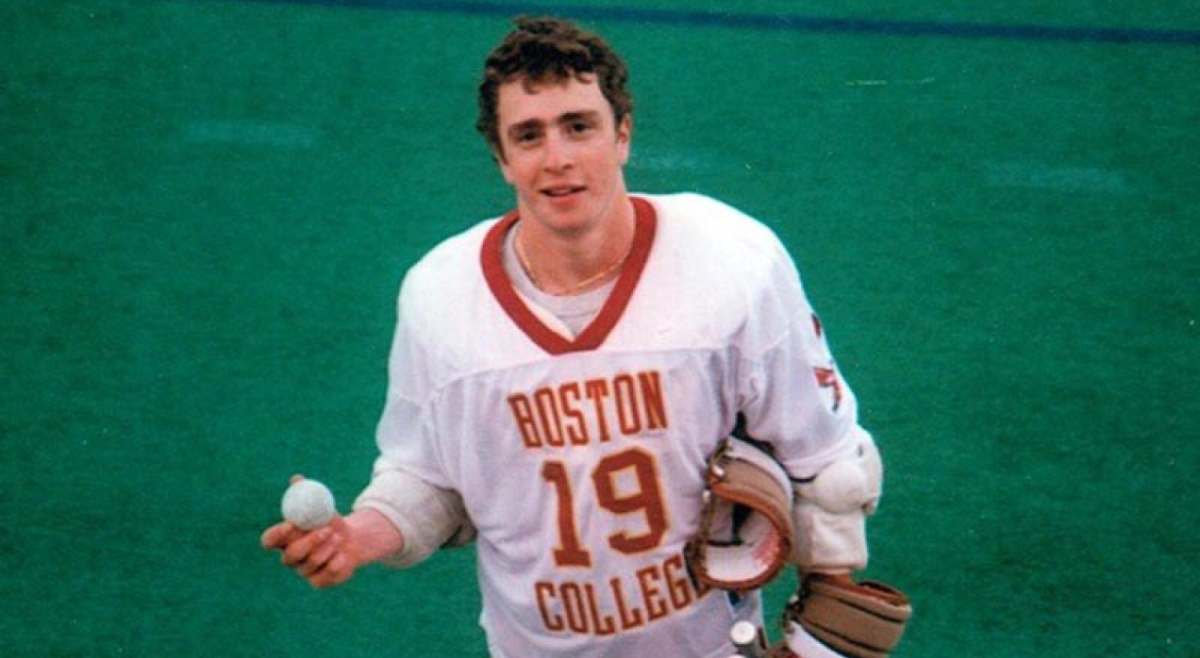

Shannon Kinney, BC ’20, never expected to take a college class about yoga, theology, and fine arts.
But by participating in one of Boston College’s first ever Enduring Questions courses, she explored the intersection of these disciplines in a way that still resonates 10 years later.
“It was one of the first times where I’ve been in the classroom setting where we were exploring questions, ideas, and themes that were not only academically rigorous, but I think more importantly, felt very personal and relevant to our lives as students and as young people,” Kinney said.
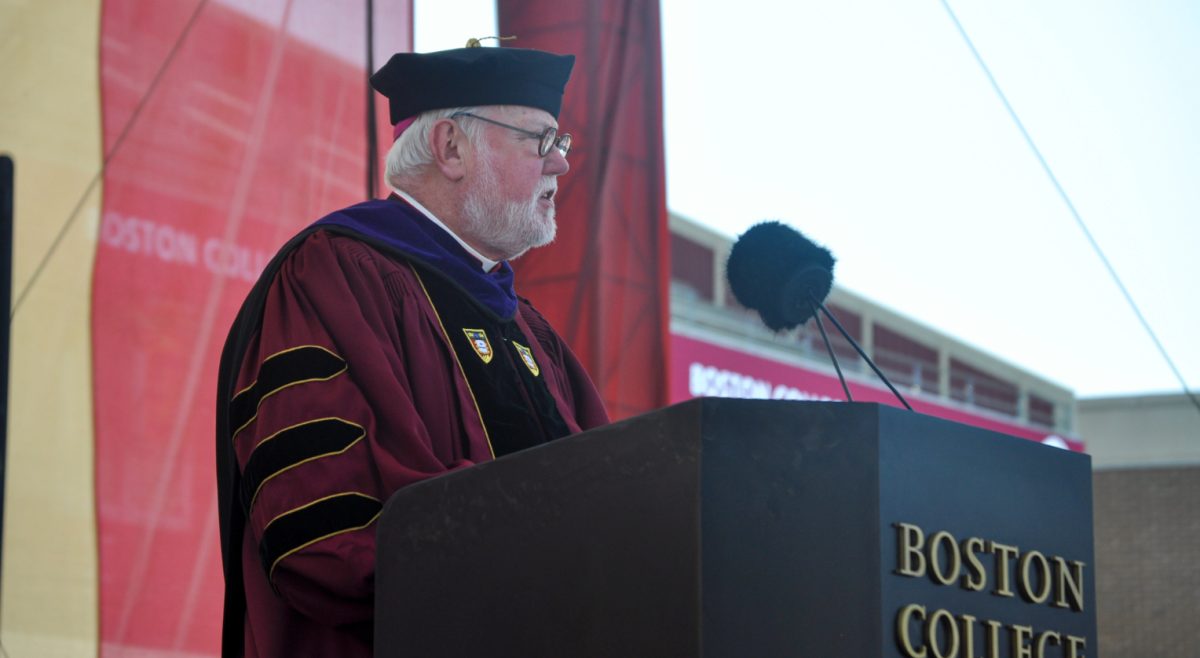
Kinney joined Anna Stephan, BC ’20, Brian Robinette, a professor of theology, and Daniel Callahan, an associate professor of music, to discuss the impact the Core Renewal she took freshman year had on her 10 years later in an event titled “The Course That Changed My Life: A Decade of Core Renewal.”
The talk commemorated the 10th anniversary of BC’s Core Renewal program, which began during the 2015–2016 academic year and restructured the University’s core curriculum to include two new types of courses open only to freshmen: Complex Problems and Enduring Questions.
“Our hope at the time was to create new core structures that really model integration, interdisciplinarity, reflection, formation, discernment—really trying to be faithful to the ideals of a Jesuit education, to really think about this process of who students are becoming, seeing knowledge in a more holistic way, more integrated way,” said Rev. Gregory Kalscheur, S.J., dean of the Morrissey College of Arts & Sciences, who opened the talk.
Complex Problems and Enduring Questions courses consist of two linked, three-credit classes, each taught by a faculty member from a different department. Registration is limited to 19 students, and classes meet once a week to reflect on how the material connects to their lives.
During the talk, Robinette and Callahan shared how they collaborated to create and teach one of the first Enduring Questions courses, Aesthetic and Spiritual Exercises, which linked Robinette’s theology background with Callahan’s fine arts expertise.
“As we were brainstorming about what it is that we wanted to do together, I think that the fundamental feature of the pairing had to do with this: How can we train for a life of beauty and a life of spiritual perception?” Robinette said. “We want our students to take on these skills and to experiment with these together for how they might actually contribute to a life well lived.”
Kinney and Stephan were both freshmen in the course’s inaugural class in 2015.
“This class is different from your other BC classes, because it is teaching you to question: ‘Who are you becoming? How are you going to live well? How are you going to live deliberately? How are you going to live freely, compassionately?’” Stephan said.
Both Stephan and Kinney emphasized how the professors wanted the course to induce a “quarter-life crisis” in its students.
“I think the meaning behind [the quarter-life crisis] is that I hope it gets you thinking,” Stephan said. “It gets you thinking about who you are and who you are in relationship to other people, what your gifts are, and how you can use those gifts to serve. And, as we like to say at BC, ‘To go set the world aflame.’”
The course featured an irregular structure, consisting of field trips and outdoor exercises, as a way to instill new methods of reflection in its students.
“These two courses—one about spiritual exercise, one about aesthetic exercises—turning to physical exercise and movement, and seeing how this idea of kind of the perfect pose is never completely achieved, but moved through, it’ll allow us to get outside, breathe differently, and kind of be embodied in our bodies and think about formation while standing on a yoga mat,” Callahan said.
Stephan and Kinney reiterated how much the course meant to them, recounting countless memories that differentiated it from the typical college class.
“I think one thing that stands out in my mind is the walking meditation we did around the labyrinth at BC,” said Kinney. “Even though we went through one by one, we were in total silence. The goal was just to walk very intentionally and to be aware of your feet on the ground and be aware of your thoughts and your awareness.”
Beyond the knowledge Stephan and Kinney gained from their course, they also highlighted the connection they developed with their professors in their first year.
“The passion that Professor Robinette and Professor Callahan brought to the classes is something that really made it stand out,” said Kinney. “In my mind, just to be able to witness two people who are so passionate and excited and very sincere about the material that they were teaching—I feel like it makes such a difference in the way that you absorb it.”