
Skip to Content
Categories:

A Year Under Pressure

How Trump’s Second-Term Policies Bore Down on Boston College
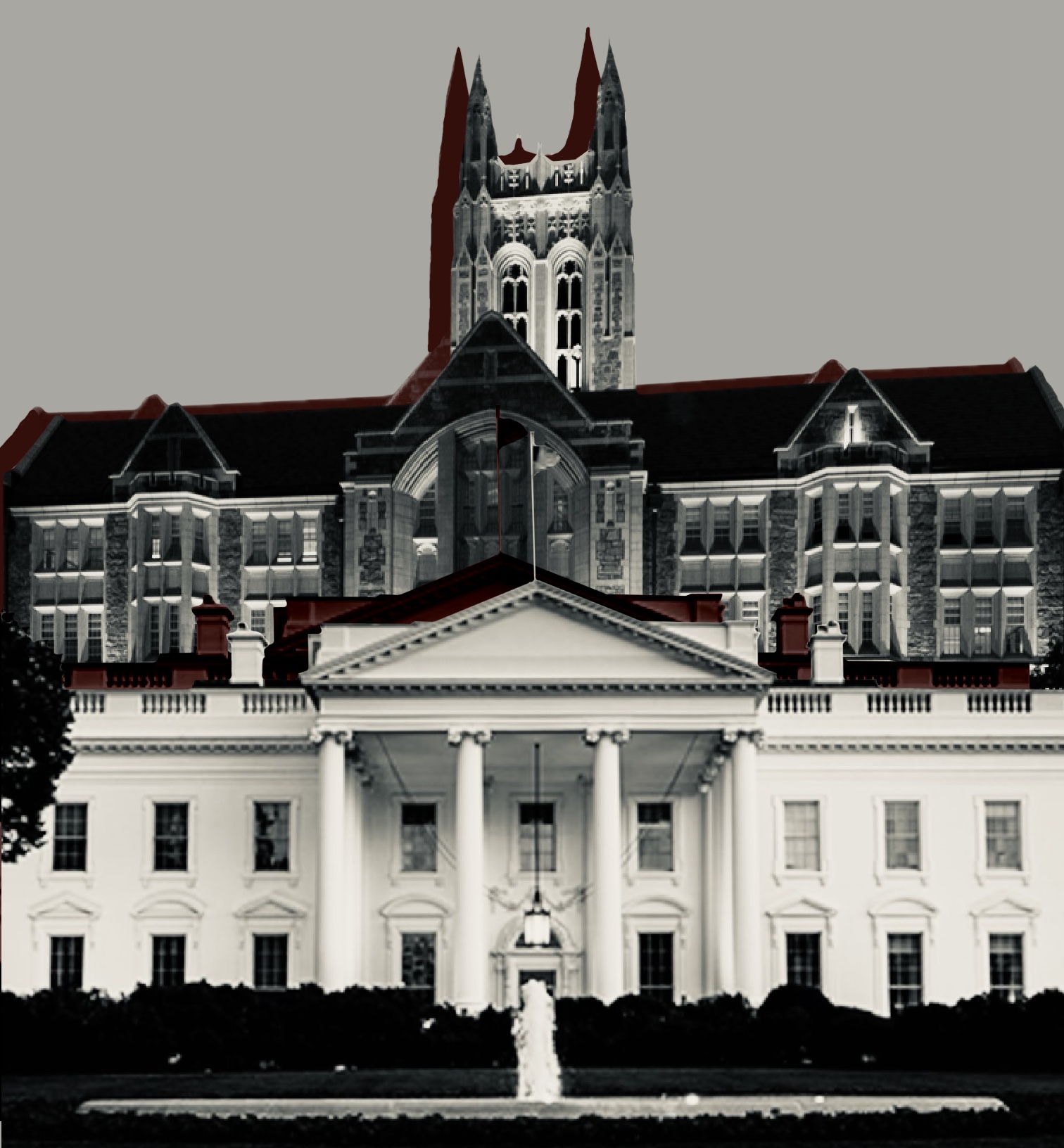
(Connor O'Brien / Heights Editor)
(Connor O’Brien / Heights Editor)

The first year of President Donald Trump’s second term sent shockwaves through American higher education. In just 12 months, the administration’s sweeping, ideologically-driven policies eliminated billions of dollars in research funding, revoked more than 8,000 student visas nationwide, and dismantled Civil Rights–era programs that sought to address decades of systemic inequities affecting Black and other marginalized communities.

While Boston College’s efforts to keep a low national profile helped the University avoid the harshest consequences of the administration’s agenda, it did not emerge unscathed.

The Heights compiled a timeline tracing the administration’s most consequential actions—and how they rippled through the BC community over the past year.

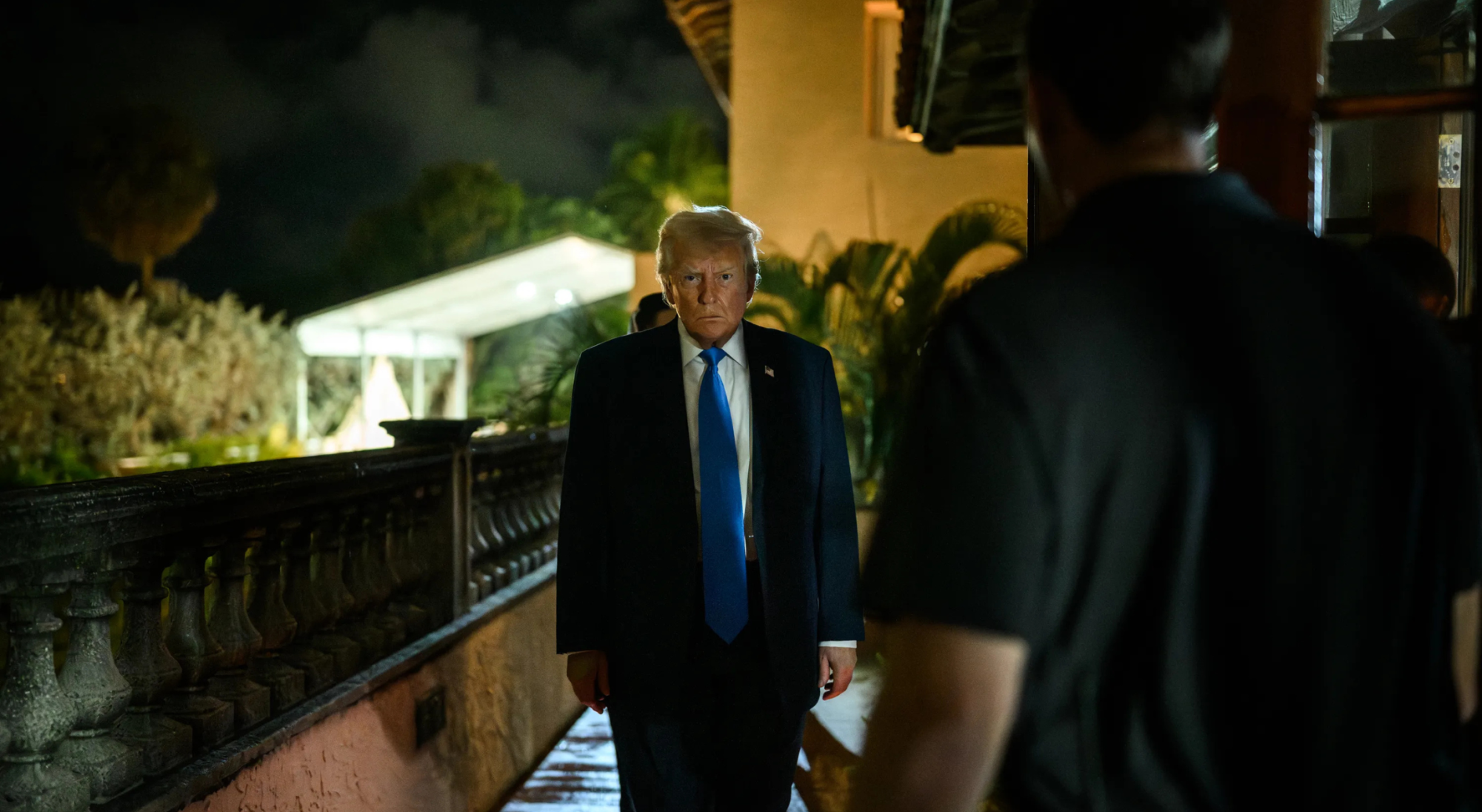
(Official White House Photo by Daniel Torok)

“Today, I will sign a series of historic executive orders. With these actions, we will begin the complete restoration of America and the revolution of common sense … We will forge a society that is colorblind and merit-based.”

– President Donald Trump, Second Inauguration, Jan. 20, 2025

(Official White House Photo by Daniel Torok)
January

Exactly four years after Trump left Capitol Hill, he returned to the White House on Jan. 20, 2025, with executive power again in hand. Hours after being sworn in, Trump reentered the Oval Office, sat at the Resolute Desk, and unleashed a barrage of executive orders.

Some reversed Biden-era policies. Others expanded immigration enforcement. Several targeted federally sponsored diversity, equity, and inclusion (DEI) programs.

While few orders directly referenced higher education, they laid the foundation for a cascade of administrative actions that would reshape academia.

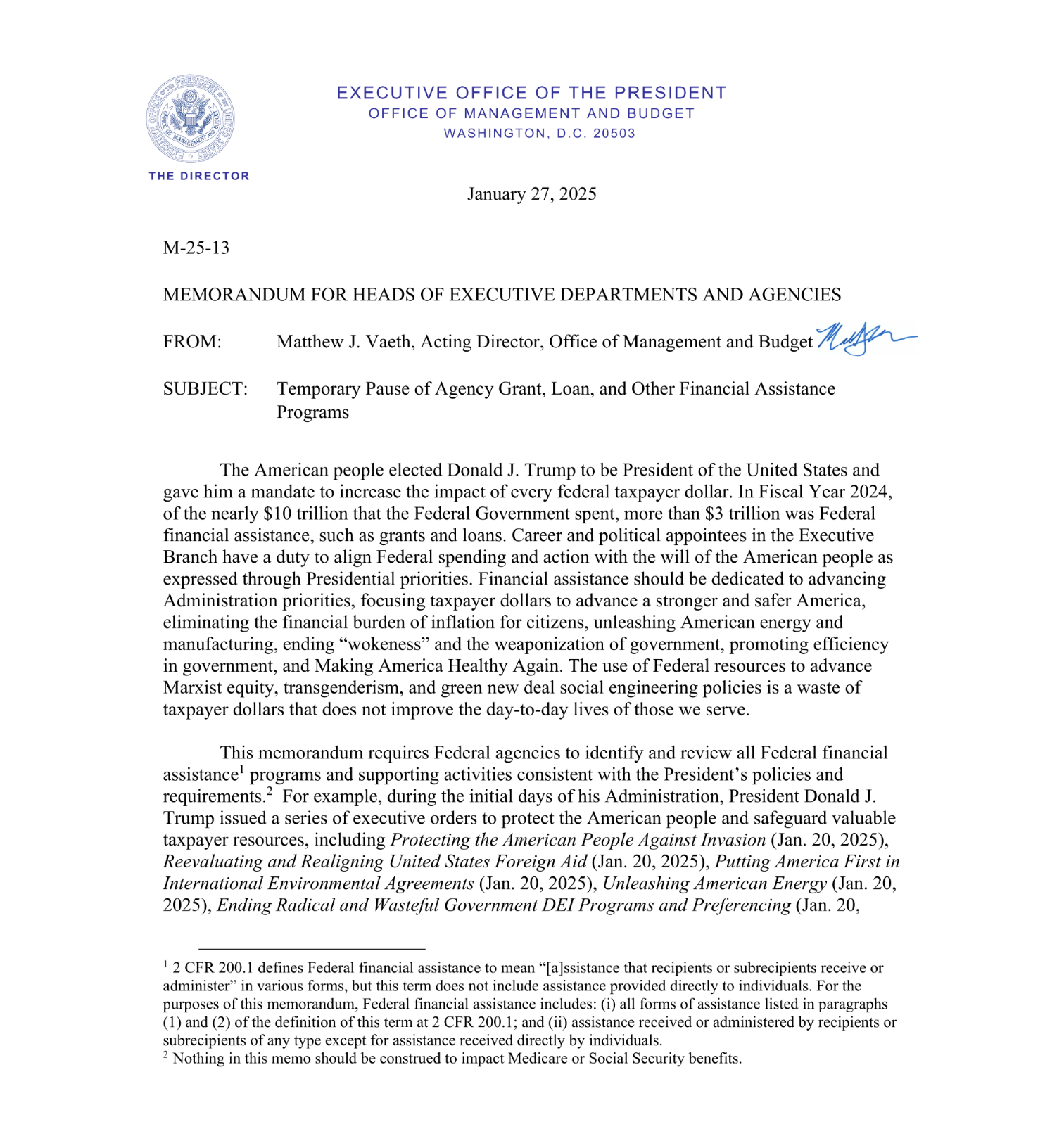
At the center of the early disruption was an order signed on Inauguration Day titled “Ending Radical And Wasteful Government DEI Programs And Preferencing.” It directed every federal agency to review and terminate “all ‘equity action plans,’ ‘equity’ actions, initiatives, or programs, [and] ‘equity-related’ grants or contracts.”

Seven days later, a late-night executive memo invoked the order to direct all federal agencies to indefinitely pause the disbursement of federal grants and loans.

The directive threw the financial futures of up to 13 million students nationwide into uncertainty. At BC, 67 percent of students received some form of financial aid during the 2024–25 academic year, according to the University, which also received $13,178,387 in federal funding in 2024.

Within hours, the Department of Education clarified that Pell Grants and federal loans would not be affected. Less than two days after that, two federal judges enjoined the order, and Trump rescinded the memo.

Later in the month, the National Science Foundation (NSF) temporarily paused the approval and distribution of new grants in accordance with the same Inauguration Day order. In 2024, BC received $96 million in NSF funding, raising concerns among faculty about stalled research and long-term financial stability.
February

As the administration’s campaign against DEI intensified, BC removed portions of the Office of Institutional Diversity (OID) website in early February. The University eliminated the office’s diversity and inclusion statement and edited out descriptions of its initiatives.

The changes came as the U.S. Attorney General reviewed whether institutions with endowments exceeding $1 billion—which would have included BC—were complying with a newly narrowed definition of permissible DEI programs. The executive order also sought to extend the Supreme Court’s affirmative action ruling beyond admissions and into other areas of campus policy.

Brock Dilworth, managing director of creative services for the Office of University Communications, told The Heights at the time that the OID would periodically take down pages for review.

“This page had generic definitions of diversity and inclusion—nothing related to BC’s specific approach to the topic,” Dilworth wrote. “They are reviewing, will revise, and later republish.” 

The original language, however, never returned, and the final version reflected a shift away from DEI terminology.

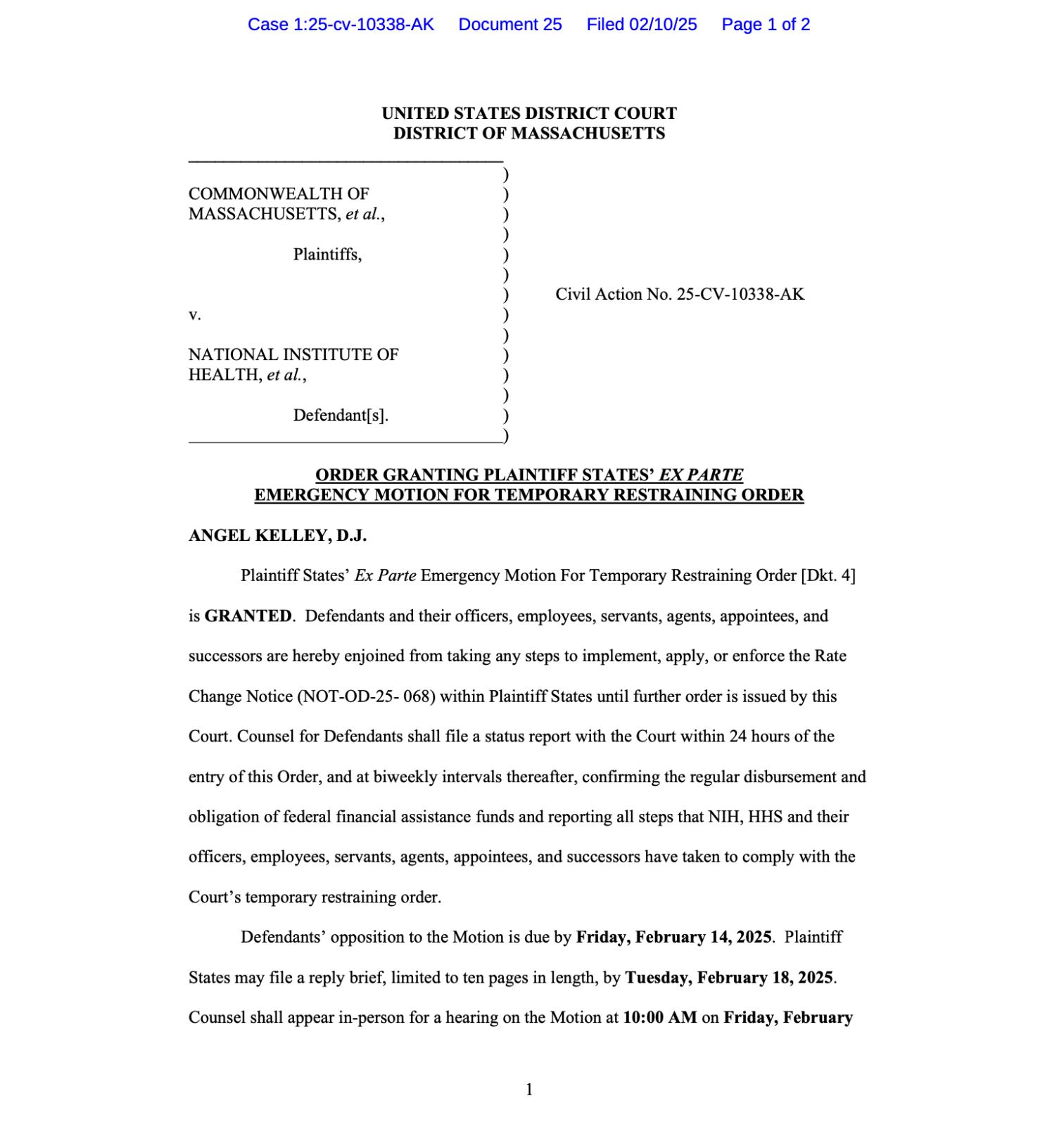
On Feb. 7, the administration announced a $4 billion cut to federal funding for medical research conducted through the National Institutes of Health.

BC faculty, some of whom receive funding through the National Institutes of Health, raised concerns about the feasibility of replacing the lost funding and the potential impact on ongoing and future projects.

Three days later, a federal judge in Massachusetts temporarily blocked the cuts. An appellate court would later permanently halt the move.

But the month delivered a lasting blow to BC’s research enterprise.

On Feb. 21, the Trump administration terminated the Retirement and Disability Research Consortium, which funded BC’s Center for Retirement Research. The University had been awarded $2.3 million in Social Security Administration funding for fiscal year 2025.

The center’s work included evaluating whether trained volunteers could supplement Social Security Administration staff in responding to public inquiries and examining how a Social Security caregiver credit could support parents.

In a statement to the Plan Sponsor Council of America, the University said it would pursue alternative funding, including outreach to the financial services industry.

The federal funding has not been restored.

March

The COVID-19 pandemic revealed stark disparities in public health outcomes. Latino communities—particularly individuals with mental illness—faced higher risks of infection and significantly higher rates of morbidity and mortality.

Kirsten Davison, associate dean for research in the School of Social Work, received $1,386,130 in federal grant funding to study a community-based intervention aimed at reducing vaccine hesitancy and increasing COVID-19 and influenza vaccination among Latino adults with mental illness.

On March 8, Davison’s project became the first of five BC research initiatives terminated by the U.S. Department of Health and Human Services (HHS).

A larger cut followed on March 28 when HHS cut a $3.4 million study that examined whether relocating families from areas of concentrated poverty into mixed-income communities improved health outcomes and social mobility. 

By the end of May, nearly $8.7 million in federal research funding would be cut from BC.
April

In early April, the State Department accelerated the termination of legal statuses for international students—a campaign that began in late March. By April 17, at least 1,024 students at 160 institutions nationwide had lost their status.

During the 2024–25 academic year, 674 international undergraduate students were enrolled at BC according to the University’s Fact Book. It remained unclear whether any BC students were affected. University administrators did not respond to repeated email inquiries at the time and refrained from disclosing specific details during interviews.

The speed and scale of the terminations prompted a public statement from the University on April 15.

“Catholic institutions are called to support and accompany the stranger,” the statement read. “These challenging times require an ongoing commitment to a culture of care, welcome, and hospitality. That commitment has served us well for generations and remains a fundamental and defining aspect of our Jesuit, Catholic community.”

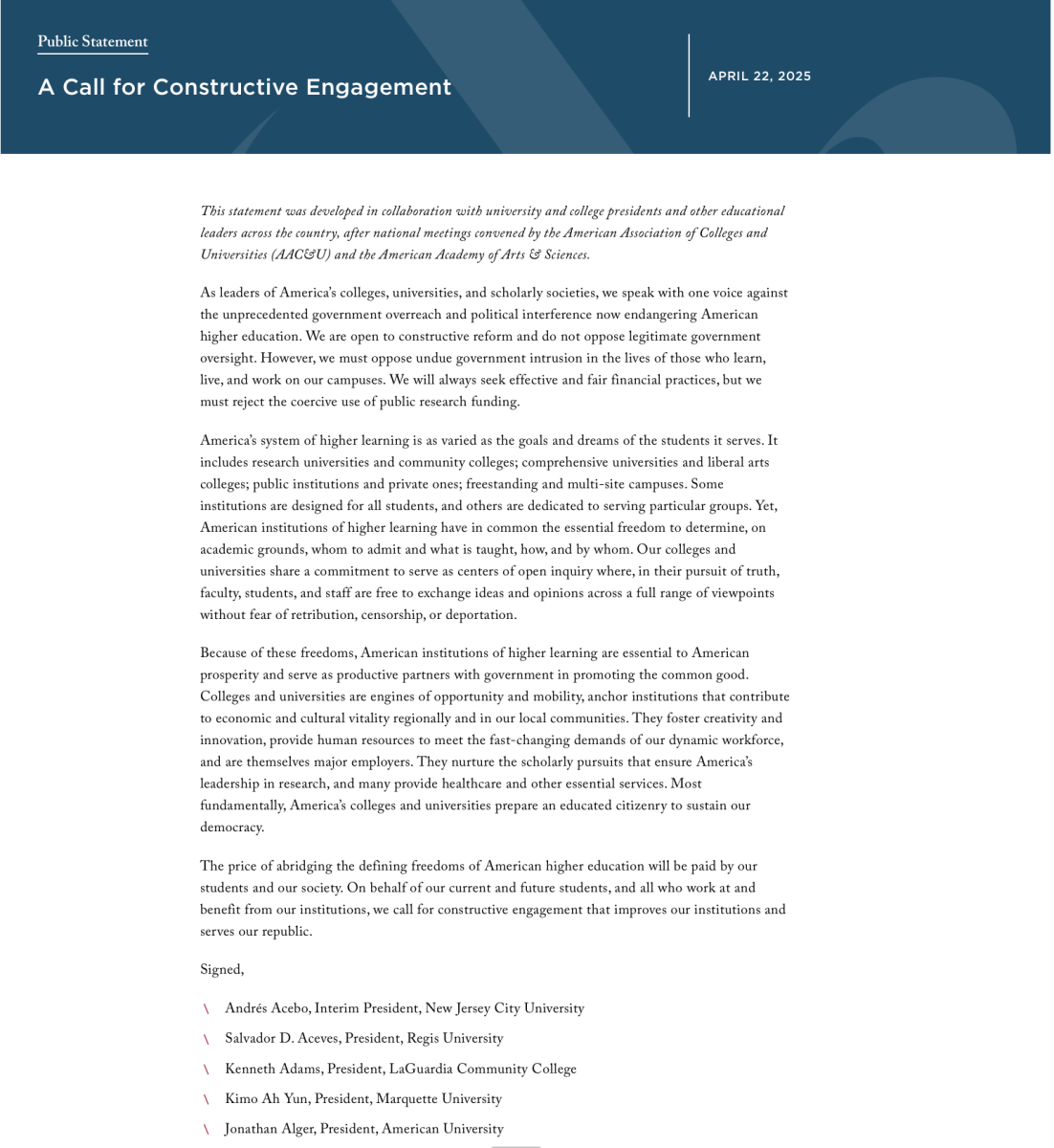
Ten days later, the Trump administration threatened to withhold nearly $9 billion in federal funding from Harvard University unless it dismantled its DEI programs. The administration’s perceived overstep prompted University President Rev. William P. Leahy, S.J., to sign a letter alongside other university leaders condemning what it called “unprecedented overreach and political interference” in higher education.

It would be the last public rebuke of the Trump administration issued by senior BC leadership.
May

As HHS funding cuts to BC research continued into May, the State Department issued a directive suspending visa interviews abroad for students and exchange visitors while it evaluated expanded screening of applicants’ social media activity.

The interviews are required for all students seeking to study in the United States—even those already enrolled often must repeat the process annually.

The move affected a population that makes up roughly 12 percent of BC’s student body, sending international students reeling over their academic futures in the country.

“As of now, I can’t return to the U.S. or to BC this fall,” an international student told The Heights in June. “My parents have helped me look for other options to study abroad because we’re so unsure what’s going to happen. It’s all so up in the air. I’m not even sure I’d even want to come back to the States should the policies reverse.”

June
June

In early June, the Trump administration escalated its restrictions on international travel—a move that compounded months of policy shifts already unsettling global academic mobility.

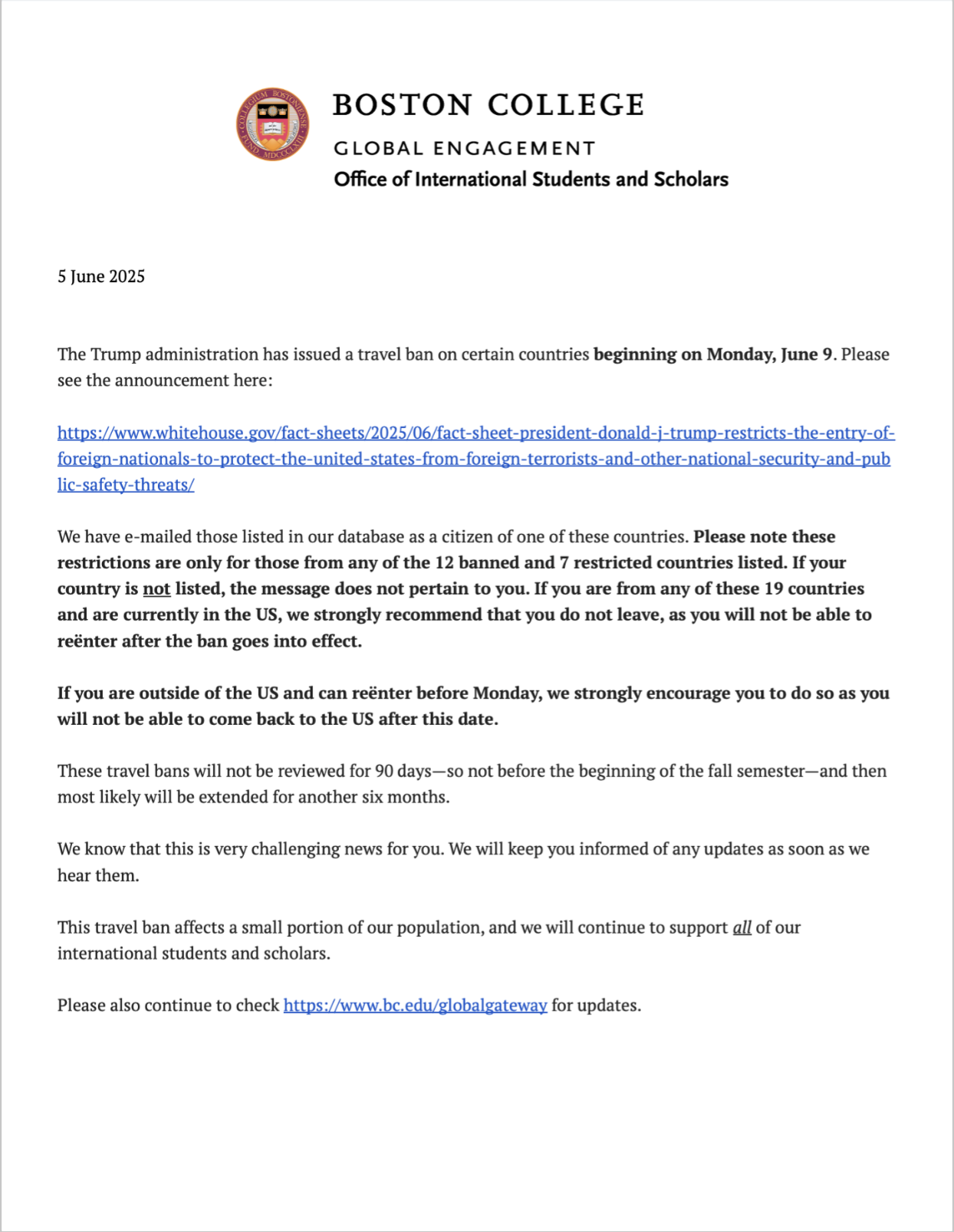
On June 4, Trump signed a broad travel ban that took effect on June 9. 

The proclamation cited national security and public safety concerns and imposed full or partial entry restrictions on nationals from at least 19 countries with perceived deficiencies in screening, vetting, or cooperation with U.S. authorities. 

The measures applied to both immigrant and non-immigrant visas, including student and exchange visitor categories, with few exceptions.

The ban had imposed restrictions on as many as 15 international students at BC.

In response, University administrators issued an advisory on June 5, urging affected students to remain in the country or return to the United States before the ban took effect. 

Administrators acknowledged the fluid policy environment and said BC was developing comprehensive support plans for affected students, even as other universities debated deferral policies for those from restricted countries.

The ban remains in place and was expanded to include additional countries in December. 
July
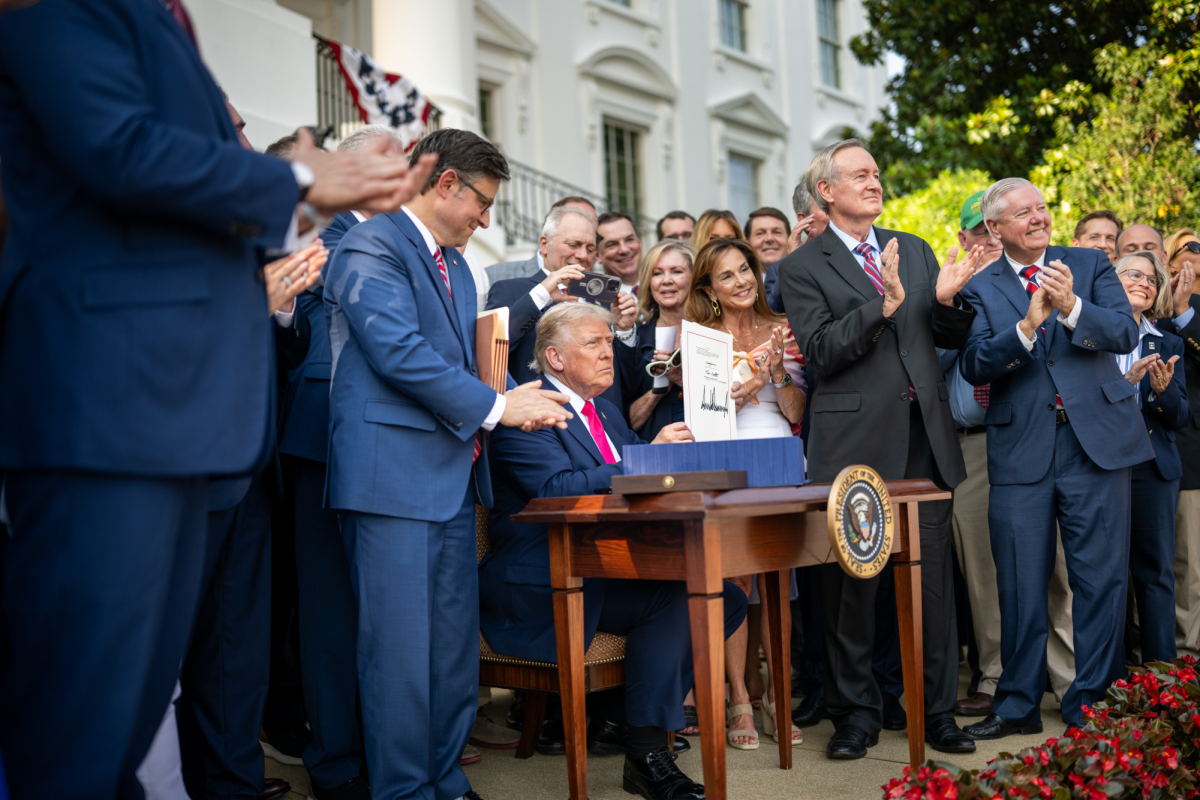
President Donald Trump signs the One Big Beautiful Bill Act on the South Lawn of the White House, Friday, July 4, 2025, during the 4th of July picnic. (Official White House Photo by Daniel Torok)

On July 4, Trump signed the “One Big Beautiful Bill Act,” enacting one of the most significant changes to federal student loan policy in decades.

The law will impose new annual and lifetime caps on how much graduate students and parents can borrow from the federal government. 

Under the legislation, graduate students will be limited to $20,500 per year and $100,000 total in federal unsubsidized loans, and professional students studying medicine or law will face caps of $50,000 per year and $200,000 total. A broader federal lifetime aggregate of $257,500 across all loan types also applies. 

Before the bill’s signing, there were no lifetime or annual caps on student loans. 

Though the limits take effect in 2026, the bill raises uncertainty about future student financial planning, including for current students.
August

In late August, BC restructured and rebranded the OID, expanding on the February revisions made to the office’s website. 

Standalone DEI language was removed from University pages, and the office’s functions were folded into the Office of the Vice President for Human Resources, formally retiring the OID name.

At the University’s convocation, administrators acknowledged that BC had not been immune to the Trump administration’s disruptions, announcing a $69 million budget cut, but said it had avoided the most severe impacts. 

Provost and Dean of Faculties David Quigley revealed, however, that one undergraduate and 10 graduate students were denied visas ahead of the start of the fall semester.

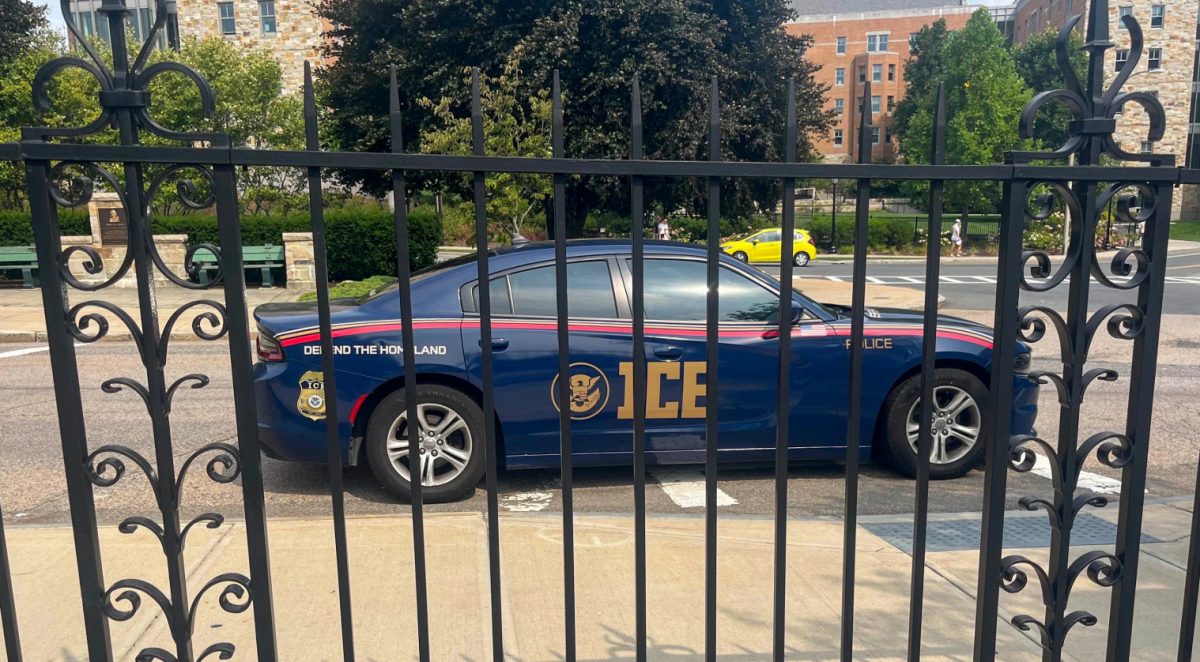
Marked ICE Vehicle Spotted in Front of St. Ignatius Church Amid Heightened Immigration Operations. (Courtesy of Zara Valencius)
September

As the Trump administration expanded Immigration and Customs Enforcement (ICE) operations across the Boston area, a marked ICE vehicle was spotted at the border of campus, outside St. Ignatius Church. 

The sighting—circulated widely by students—sparked anxiety in the community, despite confirmation from University officials that there had been no direct contact with students.

“I don’t know if any of you all are scared, but this is a very serious issue, and we need to be turning that fear into education and appropriate action,” Gabriel Hallberg, MCAS ’26, said to UGBC two days after the sighting. “Saturday was the warning call. Next time ICE is spotted, it’s probably going to be a lot more serious.”

The incident triggered months of public comments calling upon UGBC to issue a statement condemning the sighting. Despite near-unanimous support from student senators, the organization’s leadership blocked the move and ultimately opted to release a post outlining available resources.

October–December

The fall passed in relative quiet for higher education after a turbulent year. While the Department of Education ruled that nursing would not be classified as a professional degree—reducing the annual federal borrowing cap from $50,000 to $20,500—the president largely shifted his focus abroad and toward foreign policy.

“This change from the Department of Education will not fix the cost of higher education,” Katherine Gregory, dean and professor at the Connell School of Nursing, said to NBC Boston. “It will only limit people’s access to excellent and rigorous programs that educate nurses to go out and take care of patients and families.”

A December tax-filing audit showed BC’s finances remained strong compared to peer institutions, lending weight to the reassurances offered at convocation.

(Molly Bruns / Heights Archive)

The calm remains provisional, however, hinging in part on whether the president’s attention will remain elsewhere.