A few places immediately spring to mind when you think of the United States’ hotbeds for hip-hop: New York City, Los Angeles, Chicago, Atlanta, Detroit—maybe even Baltimore. But when it comes to Boston’s rap scene, there is a notable lack of mainstream commercial successes. And as for greater Massachusetts? Forget about it.
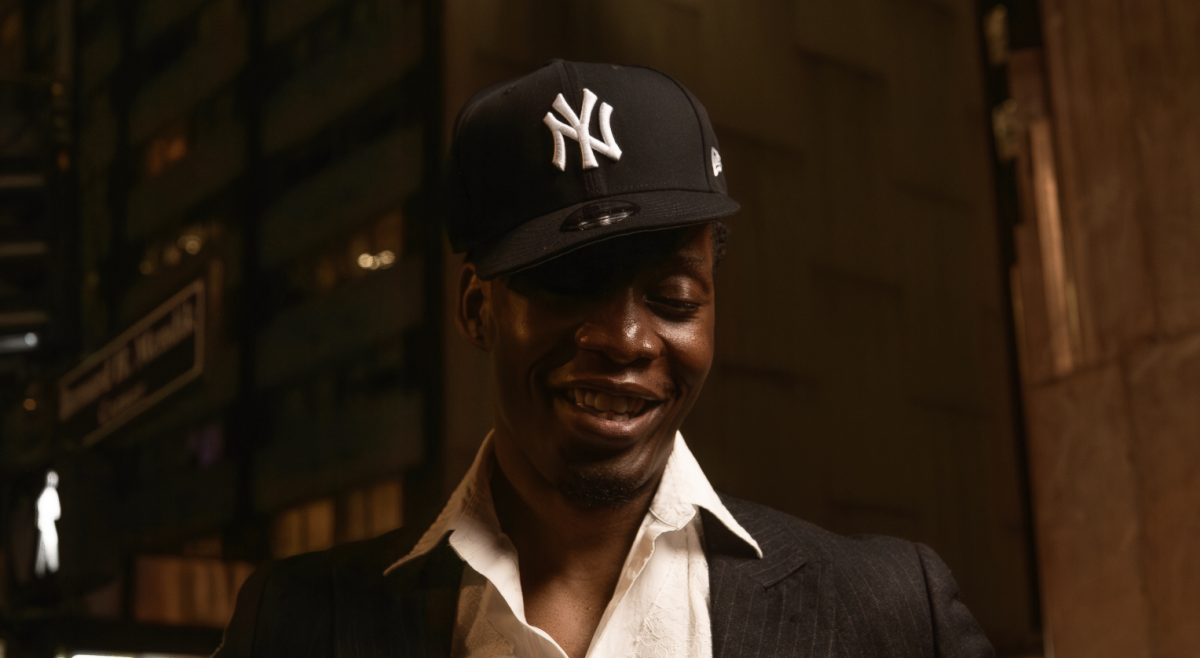
But, Olutimileyin Ogunjobi, a young, emerging, Massachusetts-born artist who goes by the stage name Timi O, is making a real effort to shift that narrative—away from the mistaken assumptions and away from the numbers.
Timi O was born and raised in Worcester, Mass., in a Nigerian household. Living in a diverse community with strong ancestral traditions at home, his upbringing was culturally bountiful.
“I didn’t realize, until I moved to Boston, how many people of color I was around all the time [before],” Timi O said.
Timi O, who started professionally pursuing a career in hip-hop in 2020, never listened to the genre during his early childhood. His love for music was first anchored in Fuji, a variation of Yoruba music which emerged in Nigeria during the 1960s.
By his adolescence, however, Timi O had gotten hooked on artists like Ab-Soul, Kanye, and Kendrick Lamar. With his interest in rap growing, he began experimenting with making his own music, eventually releasing some songs on YouTube in his early teens.
“I was 14. Like, it wasn’t the best,” Timi O said.

What really formed Timi O’s personal artistry and musical consciousness was the SoundCloud era: a time between 2014 and 2019 when the platform became a breeding ground for young, novice rappers to experiment with new sounds without the formal rigidity of releasing under a label.
“The people who define the sound of hip hop right now were in that SoundCloud era,” Timi O said.
SoundCloud, and social media in general, allowed Timi O to connect with people who shared his interests and appreciated different types of music—sounds that may not have been popular in his local environment.
“The music I’m making is not what people wanted to hear when I lived [in Worcester], and lived in Massachusetts,” Timi O said.
On SoundCloud, Timi O built a strong, loyal fanbase and met some of his closest friends in music. The community he created there was more than willing to follow him over to Spotify when he started professionally pursuing music.
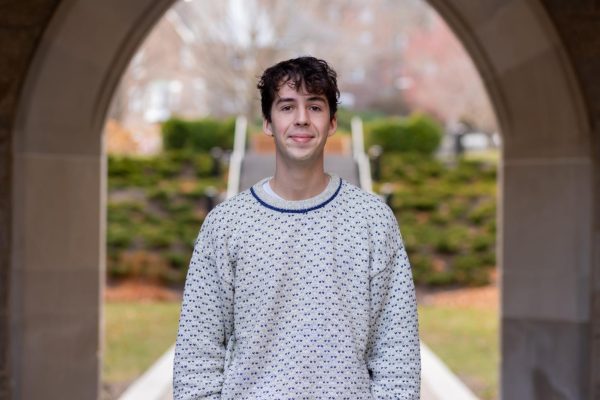
But, in an increasingly digital age, Timi O also emphasized the importance of fostering connections in person. He attended UMass Lowell and studied mechanical engineering, which is where he met l.ucas, who, along with Timi O, is a member of the Junto Music Club, a music collective that aims to support authentic artists from Massachusetts.
When he began officially releasing in 2020, Timi O had already decided that, even if he didn’t profit, he would continue making music. But luckily, in terms of the numbers, his career as Timi O started without a hiccup. His 2021 single “u4u” is still his most-streamed track, with over half a million streams on Spotify.
“I saw how much progress I made in a short period of time, and I was like, yeah, this is what I want to do for real,” Timi O said.
But, as every musician will eventually learn, the numbers fluctuate. For Timi O, understanding that the online statistics aren’t everything was a fundamental step in becoming the kind of artist he is today.
“I’ve had moments where I was at 35,000 monthly listeners, I’ve had moments where I’ve been at 50,000, and I’ve had moments like now where I’m on the lower end,” Timi O said. “But I stopped trying to push so hard on the algorithm, online, and really tapped in with the people who rocked with me on a local level. In doing so, I’ve been able to accomplish so much more.”

Timi O has lived in Brooklyn for over three years now. Based out of Bedford-Stuyvesant, he has become ingrained in the local community, hosting and curating events that bring people together to experience art and culture singularly.
He recently hosted a dinner service series at Madeline’s, a Black-owned restaurant in Greenpoint, where he performed live jazz renditions of songs from his 2025 album Et Tu.
“I think we are missing community events of that nature in [Boston],” Timi O said.
Being active in his locality has allowed Timi O to become a beacon for change. He’s launched discussions on men’s mental health and spread a message of acceptance to ensure people feel safe in their vulnerability.
“The most dangerous thing you can do as a Black man in America is be yourself,” reads Timi O’s website.
Timi O explained how, as a 6-foot-3-inch black man, a large portion of people in the United States immediately have preconceptions about his character based solely on his physical appearance.
But he refuses to change or conform to appease someone else’s bigoted thought process, he explained. Consenting to the status quo through his look, style, or way of expression would be detrimental to his mission of inspiring individuality.
“I would just be a cog in the machine, playing to someone else’s tune,” Timi O said.
Timi O has already recorded a handful of tracks since releasing Et Tu, and has another edition of his dinner series planned for the end of March.
Many believe that succeeding as a musical artist necessitates huge streaming stats and flaunting millions of followers on social media. But the fact is, music thrives in communion. People are more likely to support an artist who is accessible and attentive rather than one whose presence consists of exaggerated appearances without substance.
“People think that numbers being the biggest is what breeds [longevity],” Timi O said. “No, you just need a community of really good people.”