

The recipe is simple.
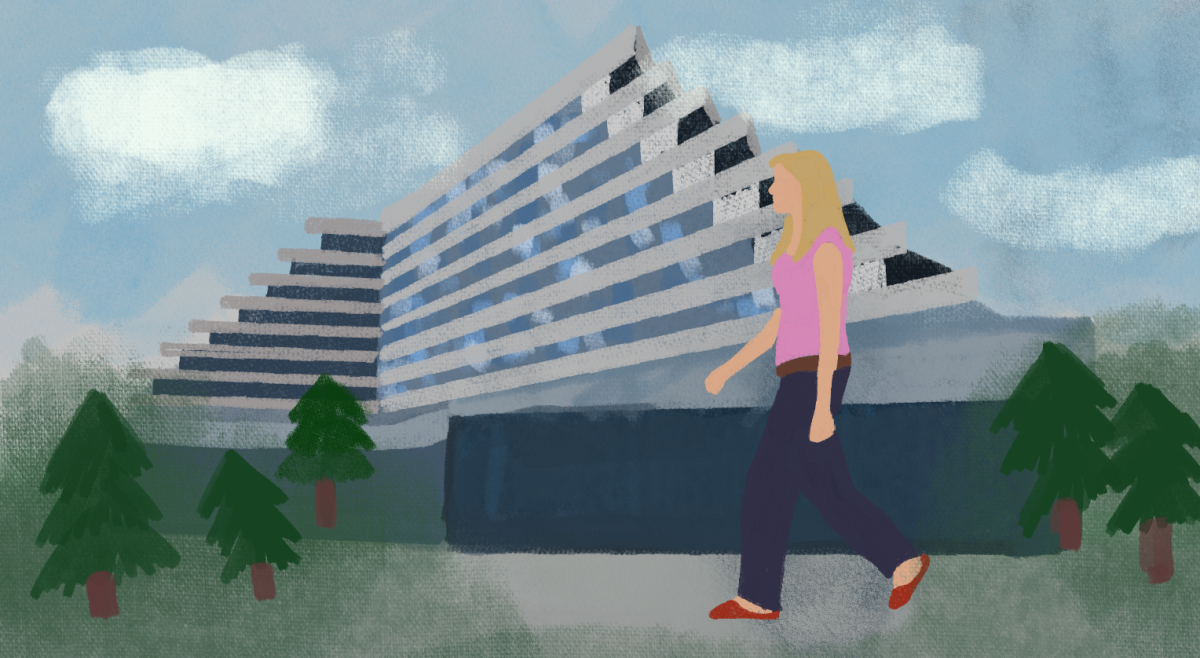
Start with black leggings or perfectly fitting jeans. Fold in a pastel hoodie or sweater and your choice of UGGs or chic sneakers. Mix with a Superpuff, Longchamp bag, and Stanley or Owala. Add long, straight hair (ideally with blonde highlights), though you may substitute with styled, light-brown curls.
Season to taste with a gold cross necklace and subtle, glossy makeup. Chill overnight and bake at 350 degrees. There you have it: perfectly symmetrical Boston College cookies. (The recipe for men is even simpler: Any sweatpants with a hoodie or quarter-zip will do.)
When riding the T, I see dyed hair, artistic makeup, piercings, and statement tees. When back on campus, I see carbon copies.
I’ve failed to be one of them: Though decent in the kitchen, I’ve messed up the recipe. I’m too attached to my funky patterned tops and combat boots, and, unfortunately, I love my unflattering, super-short pseudo-mullet.
My eccentric style makes me feel confident and creative. But among Coach bags and blowouts, it also makes me feel like an outsider. I’ve banished my enamel pin collection, misshapen sweater vests, and over-the-top accessories to forgotten boxes in the back of my closet.
This cultural default extends beyond style. I recall exploring “BC Class of 2029” Instagram pages over the summer. Various bios blended into one: the hobby-free BC character who is down to both stay in or go out and can’t wait to explore campus.
I attributed the lack of individuality to online shyness, so I was dismayed when my efforts to converse about my interests were met with blank, disinterested stares.
While I recognize this as my personal experience, I doubt it’s unique.
This isn’t to say that passion doesn’t exist here at all. It does, especially through our vibrant student organizations. It’s rare, however, to talk about interests outside the context of organizational involvement.
While many of us have found niches of exceptionally passionate, curious people, many more haven’t. Though I’ve met some “weird” peers—artists, collectors, music and film obsessives—it took far more effort than I expected.
It also isn’t to say anything’s wrong with loving Arctic Fox hoodies or blonde highlights. A style does not become less valid merely because it’s more common. My issue isn’t these choices themselves, but their symbolization of the broader suppression of “weird”—by which I mean visibly, unapologetically caring about something specific, even when it doesn’t earn you social capital.
I know my nerds, geeks, and artsy kids are out there, but we’re often quiet about it. Why? I have a handful of theories.
BC’s academic rigor and pre-professional culture leave limited spare time for casual hobbies and niche self-expression. Lack of time is only part of the issue. Our social circles notice and admire marketable passions—ones that sound “prestigious” or can be put on a resume—more than eccentric or personal ones.
Or perhaps it’s merely a first-year phenomenon. People advise that college is a chance to reinvent ourselves, that starting from a blank slate can be a stepping stone to finding our identities. The freshman urge to make friends in unfamiliar social terrain also encourages us to follow the crowd even when we ordinarily would not.
Most of all, it’s a self-reinforcing cycle. The less each BC student expresses their own unique interests, style, and identity, the more unusual it becomes to do so. The less “weird” we are, the more isolating “weirdness” seems. No one is policing us—we are policing ourselves.
To many, this cookie-cutter culture provides a sense of belonging, an easy script for fitting in. To me, it’s pressure to sacrifice my authenticity for reduced social friction.
Countless BC students I’ve met hesitated to mention their passions for weeks or months, reluctant to lead with their niche opinions or expressions of individuality.
This has led to a mistake on my end: initially dismissing peers as “boring” when in reality I hadn’t taken the time to get to know them. Many, I realized, had probably adopted my own strategy of concealing nerdiness from strangers.
It taught me a key lesson: Our campus doesn’t lack “weird” people, only ones who express their weirdness without hesitation. At its heart, it’s about social risk-taking.
We see a lack of visible enthusiasm. We internalize that self-expression is “abnormal” and thus potentially isolating. We hide ourselves.
I also observed that when I dare to talk about what I love first, it acts as an invitation for others. Whether it lands me with a new friend or merely a cringing feeling is a gamble worth taking.
So, this semester, I’ve promised myself to get weirder: to wear the bold clothes I love, keep losing miserably at chess, and talk unabashedly about my favorite trees until someone listens. Writing this honestly, knowing it won’t resonate with everyone, is step one.
I encourage you to do the same. Try a new style. Talk somebody’s ear off about your favorite book or song. Create something for fun, on a weeknight, even if it isn’t “good.” By doing so, you’ll invite others to do the same.
I’ve tried being authentic but isolated, and I’ve tried being sanitized but accepted. The former fulfilled me more than the latter ever has. So, I can confidently advise: Get as weird as you possibly can.






HL • Feb 24, 2026 at 11:14 pm
Love this!
Cindy Doe • Feb 19, 2026 at 10:54 am
Thank you for being so open and genuine. Be yourself or as I think Shakespeare said: “to thine own self be true”. Great article!
Adam • Feb 18, 2026 at 5:11 pm
Great article!
Carolyn • Feb 18, 2026 at 11:55 am
You seem to want a campus that’s more expressive and quirky. BC has a more traditional culture. Most students I’ve met are involved and genuinely committed to the service or causes they care about, and it’s not for resume building. BC is not a school built around eccentricity or counterculture, and many people choose it for exactly that reason. Wanting something different points more to a culture mismatch than a flaw in BC. There are campuses like UVM where that kind of environment is the norm. You have options, but it’s also worth recognizing that BC’s identity is a positive for many people, not something that needs fixing.
Charles • Feb 18, 2026 at 12:52 pm
With all due respect, I think you are missing the point. There are plenty of people who feel like they fit in and are comfortable expressing themselves within BC’s student culture. These students are the majority. This article is aimed at the minority, the “nerds, geeks, and artsy kids” Lex mentions that don’t feel comfortable being who they are. Of course other schools are “quirkier.” That doesn’t mean that students like Lex should be uncomfortable being themselves. Telling these people to just go to a different school is only further contributing to the issue Lex is trying to address.
If you already enjoy BC culture and feel like you fit in, great! This article isn’t meant for you. BC’s identity is absolutely a positive for the majority of people, as you mentioned. That doesn’t mean that it should be an isolating and difficult experience for the rest of us. Simply encouraging people, particularly people who don’t fit the traditional BC mold, to express themselves is in no way threatening to the BC identity you enjoy and will only result in a more positive and welcoming experience for everyone involved.
Lex (Author) • Feb 18, 2026 at 2:31 pm
Charles, thanks for your comment. I couldn’t agree more with your interpretation of my work. In writing this, I intended to reach out not to the comfortable majority, but the uncomfortable minority. I have no intention of changing or criticizing those who fit in. I simply hope those of us who don’t can find community together and dare to be authentic.
Carolyn • Feb 18, 2026 at 4:03 pm
My point was about the culture BC currently has. The article is arguing for students to push that culture in a different direction, to “get weirder.”When I mentioned UVM, I was just noting that some campuses already have that kind of expressive environment. That’s not me telling anyone to transfer, it’s just acknowledging the difference.
Lex (Author) • Feb 18, 2026 at 2:27 pm
Hi Carolyn, thanks for your thoughtful engagement. Hopefully I can help clarify a few points.
We both agree that BC is not an ‘expressive,’ ‘quirky’ campus built around ‘eccentricity or counterculture.’ I concur that this may be appealing to many. But, it doesn’t mean that every student here will fit that mold. I’m writing for students who don’t.
I agree that many students are involved and committed. That’s why I wrote, “This isn’t to say that passion doesn’t exist here at all. It does, especially through our vibrant student organizations.” Student orgs are a great outlet; I don’t deny that. I’m simply talking about subcommunities that don’t see themselves/their interests reflected through student orgs.
I also agree that BC’s identity can be a positive for many. That’s why I wrote that “To many, this cookie-cutter culture provides a sense of belonging, an easy script for fitting in.” I’m not advocating for BC students who truly *do* resonate with this culture to act differently. I have no intention of ‘taking away’ that positive.
And, I agree that this isn’t an inherent flaw needing fixing. That’s why I wrote that “A style does not become less valid merely because it’s more common. My issue isn’t these choices themselves.” I don’t intend any criticism of those who find belonging or self-expression in BC’s ‘normal’ culture. I don’t believe they are causing any harm by existing within BC’s definition of ‘normal.’ My article is meant to provide assurance and visibility towards those who do not.
My claims and yours are not at all contrary. The more ‘traditional’ students of BC are simply not my target audience. I’m not advocating for BC’s non-‘eccentric’ students to change. I’m advocating for BC’s eccentric students to be themselves. Hope this was able to provide some clarity. Once again. thanks for engaging.