When political scientists examine war in Latin America, a peculiar story emerges.
Most Latin American states formed during a time when commerce, rather than war, was the primary driver of state formation. As a result, the region’s emphasis on short-term economic gains outweighed long-term state capacity building.
Without war to incentivize the construction of centralized taxation systems and strong legal institutions, much of Latin America failed to build long-term state capacity. This is typically defined by the government’s ability to enforce laws, collect taxes, and provide public services.
But state capacity only tells part of the story. When present-day historians try to understand the forces that shaped a region centuries earlier, they are navigating a wholly foreign world. Understanding that world requires a high degree of humility to uncover the choices and power dynamics that influenced and molded a state.
For instance, much of the existing scholarship argues that limited state capacity in Latin America led to weak taxation systems and an overreliance on tariffs, which ultimately limited the state’s ability to build social safety nets and key infrastructure.
While this narrative is partly accurate, its capacity-centered bias neglects the many factors that led to limited state capacity in the first place. It overlooks the conditions that shaped Latin America into a region that prioritizes external trade and commerce over internal development.
First, state formation encompasses a nation’s early stages, when territorial divisions and political structures are decided. Decisions made during this early process—including the inclusion or exclusion of certain regions and the consolidation or stripping of power—can have major ramifications for the state’s economic and political trajectory.
Unfortunately, studies with a capacity-centered bias often depend on the assumption that state formation has already occurred. This leaves major gaps in our understanding of a state’s preliminary development. Instead, any serious study of a state’s trajectory must begin with state formation.
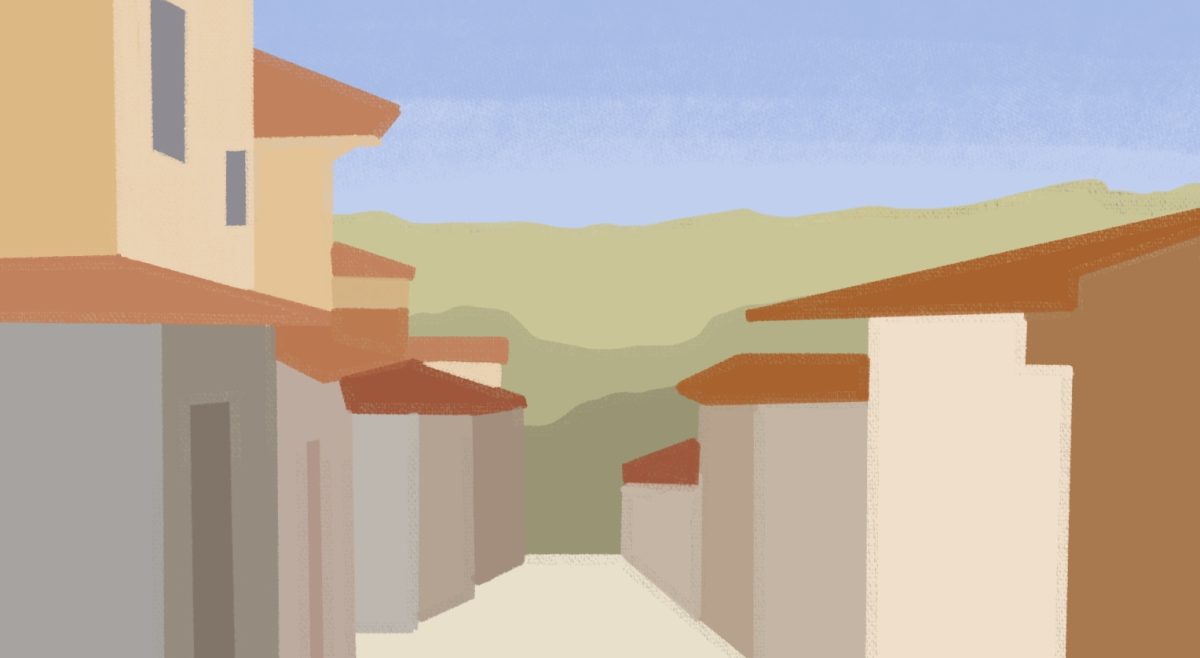
We now turn to the beautifully picturesque Guatemala, a country whose state formation process illustrates how early concessions to peripheral elites led to present-day challenges with state capacity and informal economy.
When Guatemala first formed as a state in the 19th century, the central government relied heavily on peripheral leaders, especially caudillos, to maintain stability and territorial control. As a result, the state allowed caudillos to retain significant autonomy over land, in exchange for nominal loyalty.
This patrimonial structure preserved Guatemala’s highly corrupt, oligarchical agro-export economy during the state formation process. Even with later agricultural redistribution reforms, the state couldn’t strictly enforce those reforms, and they were eventually reversed in a 1950s military coup.
By the 1960s, oligarchic property ownership had intensified once again. Delegated rule, therefore, both undermined and drastically delayed institutional development in Guatemala.
Guatemala’s state consolidation in the late 19th century also coincided with the expansion of the coffee export economy. Unfortunately, because peripheral political elites had strong interests in this agro-export system, Guatemala prioritized short-term economic gains over investments in centralized taxation systems or public goods. The Guatemalan government frequently offered tax breaks and preferential trade agreements for coffee plantation owners while largely disregarding the needs of the rural majority.
Despite increased global demand, Guatemala’s inadequate transport network presented a major obstacle to coffee exports. To facilitate the movement of coffee, Guatemala began constructing railways in the late 19th century, linking coffee-growing regions to Pacific ports such as San José. Another railway built in 1877 connected San José and Escuintla, a regional coffee hub on the road to Guatemala City.
By the 1880s, Guatemala had developed enough infrastructure to ship coffee to Europe by boat. Because this capacity building was extractive and driven by private profit incentives, most of the population did not benefit from the coffee boom.
Instead, the coffee economy further entrenched inequality, with large landowners amassing wealth while much of the rural population remained disenfranchised.
The repercussions of the harms embedded in Guatemala’s state formation process persist to the present day. Delegated rule, concessions to political elites, and export-driven incentives weakened the country’s ability to provide public goods, regulate the economy, and enforce laws.
Today, informal economies dominate the vocational landscape, as just under 70 percent of Guatemalan citizens participate in unregulated and unprotected labor, leaving them vulnerable to financial crashes or political instability without a social safety net to rely on when disaster strikes. Guatemala’s early political context has also contributed to deeply entrenched inequality, as 2 percent of the population currently owns 72 percent of agricultural land.
Guatemala exemplifies how state capacity alone doesn’t capture the full picture of a nation’s trajectory. A solely capacity-centered approach might measure the central state’s surface-level taxation and public good provision while overlooking the active resistance of caudillos to reforms and the challenges of transforming the periphery. It would also bypass the political trade-offs made to prioritize certain forms of state capacity over others.
In contrast, examining both the pre- and post-formation context of Guatemala allows for a fuller understanding of its present-day condition.
Currently, much of Latin American political scholarship maintains a capacity-centered bias in which studies are periodized after state formation and therefore fail to investigate the complex range of factors that produced current conditions. State formation, however, encompasses the power dynamics and compromises that shaped the region, making it a vital component of understanding the root causes of present-day Latin America.
Shifting our perspective in this way is important not only academically but also humanistically. Too often, history is painted in broad black-and-white strokes, reducing a state’s trajectory to a single narrative.
A formation-first perspective encourages empathy and a more nuanced understanding of the many forces and pressures placed on a state during its earliest years, as well as how the effects of those forces persist.