

There is nothing more human than art.
Art is, and has always been, inextricably intertwined with emotion. Themes of love and lust, longing and belonging, or peace and conflict are at the heart of nearly all great works of art.
From Renaissance paintings to modern pop music, art has always reflected human dreams and desires, turning these feelings into something tangible that can shape how we experience and understand the world.
At its core, art’s impact comes from the sense of shared humanity it fosters. Whether through a song’s lyrics, a novel’s pages, or a painting’s textures, art tells a story that stretches far beyond the artist. It enables us to spin emotions, lived experiences, or far-off dreams into a distributable medium, one that others can uniquely interpret to fill a longing in their own lives.
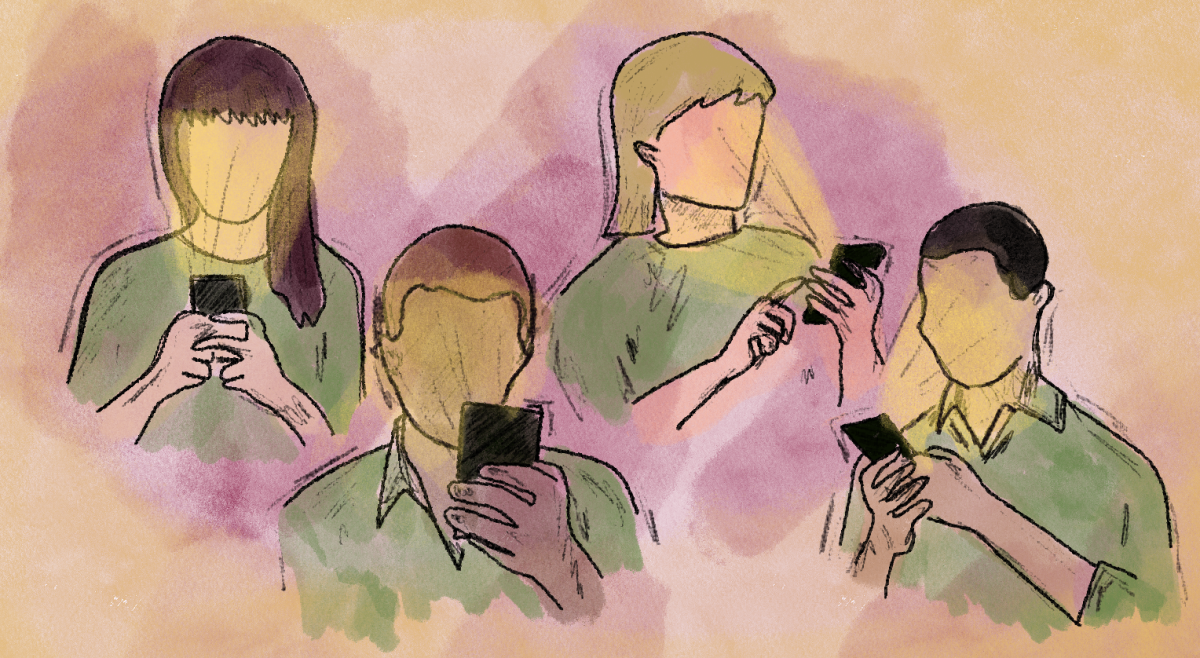
But as artificial intelligence (AI) infiltrates the world around us, and technology becomes a fixture of daily life, art’s human essence is slowly vanishing.
AI images are taking over billboards, and stories written without any human touch are flooding our social media feeds. What was once a craft driven by human emotion and inspiration is now being overtaken by the digital world in unsettling ways.
Instead of being carefully created with authentic emotional intention, pseudo-art is now churned out in mass quantities for often meaningless aesthetic and entertainment purposes.
This isn’t to say that art made for enjoyment or entertainment has no value—it’s often some of the most culturally influential media. Even when it’s meant to appeal to consumers, films and novels are still shaped by their creators’ perspectives, giving them meaning beyond the surface. In contrast, replacing commissioned artwork with AI-generated images takes away from the emotional depth and human intention that make art feel alive.
I’ve been drawn to the idea of intentionality in art for as long as I can remember. Whether it was watching the Oasis: Supersonic documentary more times than I can count or watching Dominic Fike interviews with my best friend in high school, I’ve always been interested in understanding why an album was created and what emotions went into the songwriting process. And getting a glimpse into an artist’s life paints the picture so much more clearly, helping to humanize the creators behind what would otherwise just be harmonies in my headphones.
If you scroll to the beginning of my camera roll, you’ll find snapshots of Museum of Fine Arts placards from visits I made in elementary school. I was particularly fascinated by the art inspired by Greek mythology, always digging deeper to understand what stories inspired sculptors to carve such breathtakingly intricate figures.
And I think my desire to understand the mind of an artist is exactly why autobiographies are my beach read of choice. Authors like Eve Babitz, who openly shared the experiences behind her work, flaws and all, offer a glimpse into the vulnerability that shapes storytelling.
It is the intrinsic, authentic humanity behind art that makes it so moving and has allowed works to captivate audiences for decades and even centuries. Looking beyond an artistic contribution to understand what led to its inspiration and creation only makes the piece all the more moving and opens new avenues for connecting with art.
There’s something special about knowing that someone, no matter how far away in distance or time, created something that ends up feeling so emblematic of our own lives. It makes us feel a little less alone, bringing us closer to humanity and reminding us that, at the end of the day, we’re all human and imperfect.
Art is derived from us, and that derivation of something so beautiful from the mind alone is exactly why its humanity needs to be preserved. In knowing that songs, films, or paintings are underlaid with lived experiences, they have the capacity to change how we see the world. When we recognize that both the art and the artist are imperfect, we can weave our own experiences into those cracks and find deeply personal meaning.
Without having lived in our world, how could technology possibly create a work of art as meaningfully moving as those that are the result of humankind, flaws and all? Without human touch and the interweaving of emotion, art is not art at all.



Ethan Ott • Apr 1, 2026 at 7:27 am
Woah Eve Babitz in the article and Pirosmani in the graphic this is awesome
Adithya Yogesh • Mar 30, 2026 at 9:46 pm
Counterpoint: Most art is not particularly profound or meaningful. This is exactly why AI has disrupted commissioned artwork in particular. If you’ve ever tried to commission a piece you would find that the vast vast majority of artists are thoroughly mediocre, consistently fail to meet your expectations/requirements and were only sustained because they were gatekeepers in an inefficient market. AI has drastically increased access to art and raised the lowest common denominator. Individuals and small businesses who were either shut out of the art community because they could not afford it or for vindictive reasons now have access to graphics that are better than 80% of the “art” churned out by people that have saturated the industry lately.
To be a successful artist you now need put in the work/talent needed to truly evoke those human emotions you describe. Artists that do so will always have a market that chooses them over AI. Other blue/white color workers throughout history adapted with productivity increases as a result of technology. Artists must do so as well. And if they refuse I won’t be shedding any tears for them.