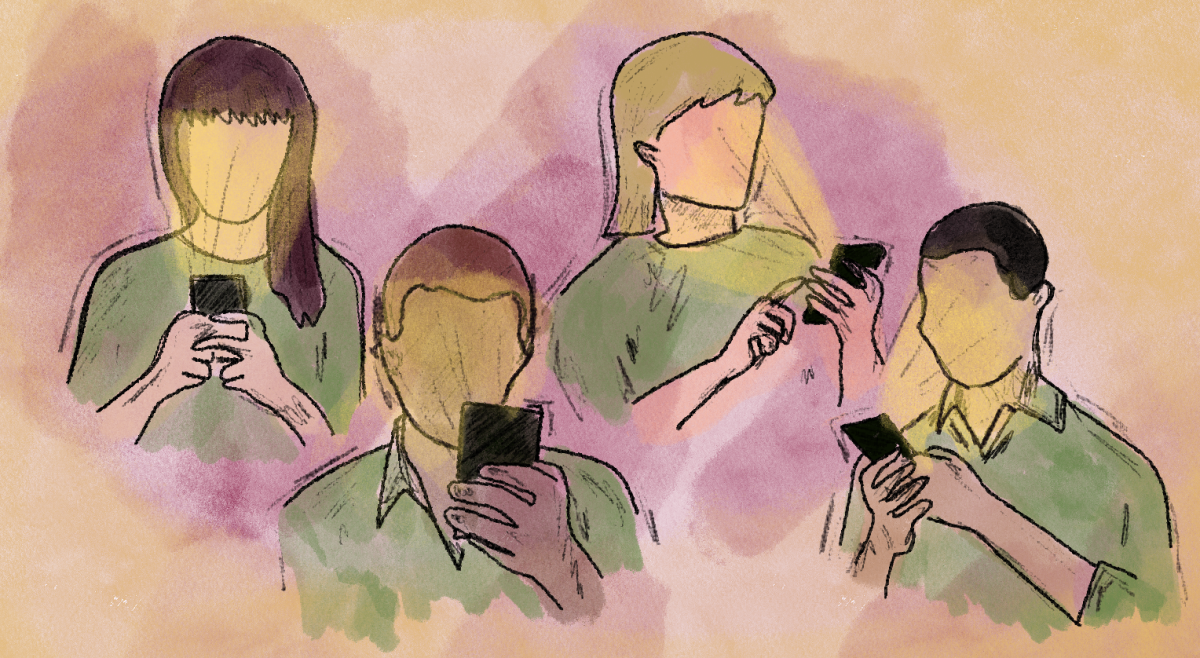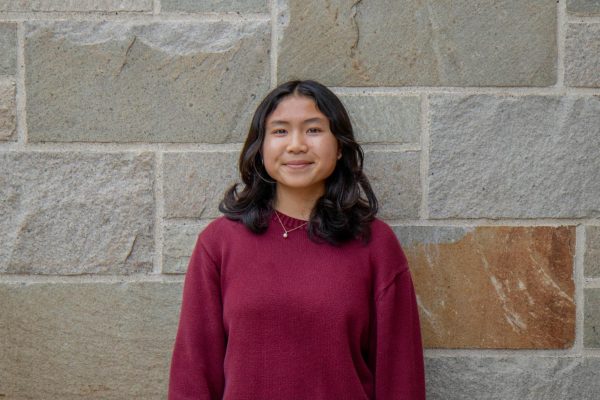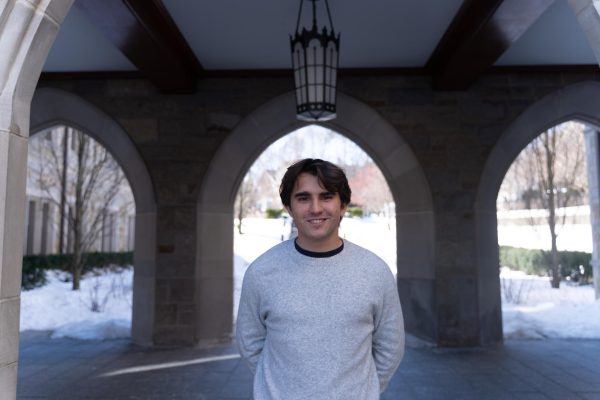
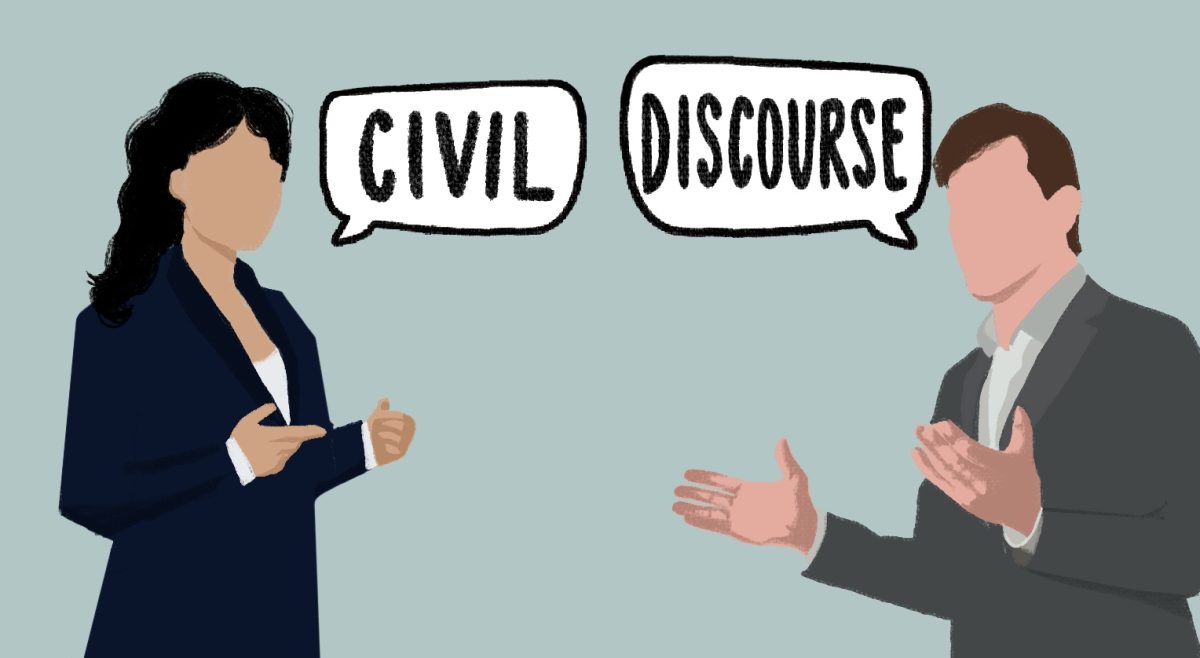
Editor’s Note: This is the third installment of Civil Discourse, a column in which columnists Helen Nguyen and Aidan Quealy share their perspectives on a political story or event covered by The Heights. In this edition of Civil Discourse, Nguyen and Quealy reflect on the place of civil discourse at Boston College.
Helen Nguyen:
Our favorite karate kid once asked, “Can we talk about the political and economic state of the world right now?”—and Jaden Smith never quite escaped the ridicule that followed.
To be honest, I quote this all the time. His supercilious tone, as a celebrity wholly apart from the political and economic sectors, was laughable. Nevertheless, the response to Smith’s comment is telling of a larger culture of revulsion to civil discourse.
There is something seemingly uncool about being “too woke.” Meaningful political engagement takes notable effort. It takes circumventing or succumbing to news outlet paywalls. It takes controversy and a tolerance for criticism. Instead of being seen as curiosity or passion, this effort is dismissed as being a try-hard and a buzzkill.
There are also obvious reasons for avoiding civil discourse: worry of social consequences for unpopular beliefs and a lack of confidence in political opinions. Even as young adults exercising independence in college, much of our political awareness and affiliations up to now have been shaped by family, geography, and upbringing.
It is difficult to know what we truly believe in. It is more difficult to discern how “correct” our opinions may be by the standards of our social environments.
Yet civil discourse is meant to be a learning experience, not a competition to be won. It often feels like engaging in political discussion requires a PhD or an exceptionally loud voice. All it really requires is care for the community and an openness to expanding one’s understanding.
Still, receptive engagement and an eagerness to broaden perspectives are not exemplified where they matter most.
We have a president who uses generative artificial intelligence images and inflammatory tweets to push a narrow-minded and aggressive campaign. International diplomatic agreements are consistently snubbed. Anonymous online forums take political conversations as material for rage bait. Our politicians and politically involved media personalities are teaching disrespect.
It is becoming increasingly difficult to conduct mannerly discourse in our daily lives. And to avoid anger and escalation, we fall back on easy, mindless conversations about lunch menus and bad classes.
Despite all these factors, civil discourse is not absent from all spaces. So, why is Boston College exceptionally poor at fostering civil discourse?
Although there is no single explanation, one major factor is that the BC microenvironment is too comfortable. Chestnut Hill is tucked away from urban life, secluded in a unique bubble of academia. The content of breaking news headlines manifests as abstract concerns to be philosophized about rather than faced. So that when those larger issues from the headlines arrived at our gates in October—when Immigration and Customs Enforcement was spotted near campus—we were unable to respond appropriately.
Though BC students come from various backgrounds and life experiences, the general affluence of the school’s location and student population oversaturates campus discourse. Promoting the kind of civil discourse that is both productive and necessary on any college campus starts with stepping out of the bubble, recognizing global concerns as our own, and having those uncomfortable conversations.
Aidan Quealy:
BC has a civil discourse issue, one that reflects a brutally judgmental and impatient campus environment that has co-opted the liberal arts education to encourage students to be “men and women against others.”
The impetus for change on campus increasingly favors reactionary ardor toward boogeymen rather than productive, tangible calls to action grounded in values that exist apart from cancel culture. Sensationalism, social media activism, and imprecise platitudes do not constitute values, nor discourse, nor justice.
This fray, which has yet to be productive, exhausts well-intentioned students and sidelines worthy, achievable measures in favor of arbitrary moralizing, such as the frequent angst over our peers in The Carroll School of Management because of their alleged moral ineptitude.
Discourse will not occur in an environment where interlocutors neither respect nor view one another as co-equals and decent people. This reappraisal of the “other” not only requires little effort but also provides the precondition for true cura personalis.
This is a distinct message from asking students to simply be more positive or stop speaking up—advice that would be awful for any serious matter. Rather, it is a call to recognize that, among BC students, productive dialogue cannot come from a cycle of ideological supposition, total social and political indictment, and fortification against the “other” on campus. This exchange only breeds misunderstanding and a tendency to perceive differing viewpoints as opaque, irrational, and ostensibly dangerous anathemas.
Certainly, some deal in hate, fear, and violence throughout public life—those for whom wariness and distance are advisable. Drawing a clear line between free speech and hate speech is necessary to protect civil discourse alongside the respect and dignity every person on this campus deserves.
Yet the prevalent belief that any pocket of the student body that reveals degrees of political difference—which is not equivalent to moral bankruptcy or invariance—is inherently errant or should be admonished weakens this University and endangers the Jesuit mission.
This transient campus foe is, in nearly every case, a paper tiger. If complicity is a sin, then we are most complicit in holding ourselves back from achieving justice through partnership by clinging to the arid values of partisan politics.
When we are men, women, and people for one another, and especially with the other, we foster a broader good that tangibly improves the lives of our peers and the many facets of the University. Without trust and the willingness to engage, or at least a propensity for uncomfortable conversations, civil discourse will wither, and BC’s reputation will become that of a University too self-concerned and prideful to advance the common good.