Since as far back as the 1970s, Saturday Night Live (SNL) has been criticized for losing its touch. According to IMDb, the highest-rated season aired in 1973, and since then, ratings have oscillated between poor and average.
Perhaps SNL will never return to the success of its premature peak, but despite this, the British production company Sky One decided now was as good a time as ever to launch their own version: Saturday Night Live UK.
The show opened by putting a slight twist on an iconic statement, “Live from London, it’s Saturday night!” This somewhat classic line, however, felt all too American.
Cast member George Fouracres portrayed the UK’s Prime Minister, Sir Keir Starmer, as having a cowardly phone conversation with Donald Trump. To be frank, the sketch felt like a rip-off of something from the original SNL. Opening with humor that was very America-centric was a poor way to set the tone of the show, as it now just feels like an imitation rather than its own being.
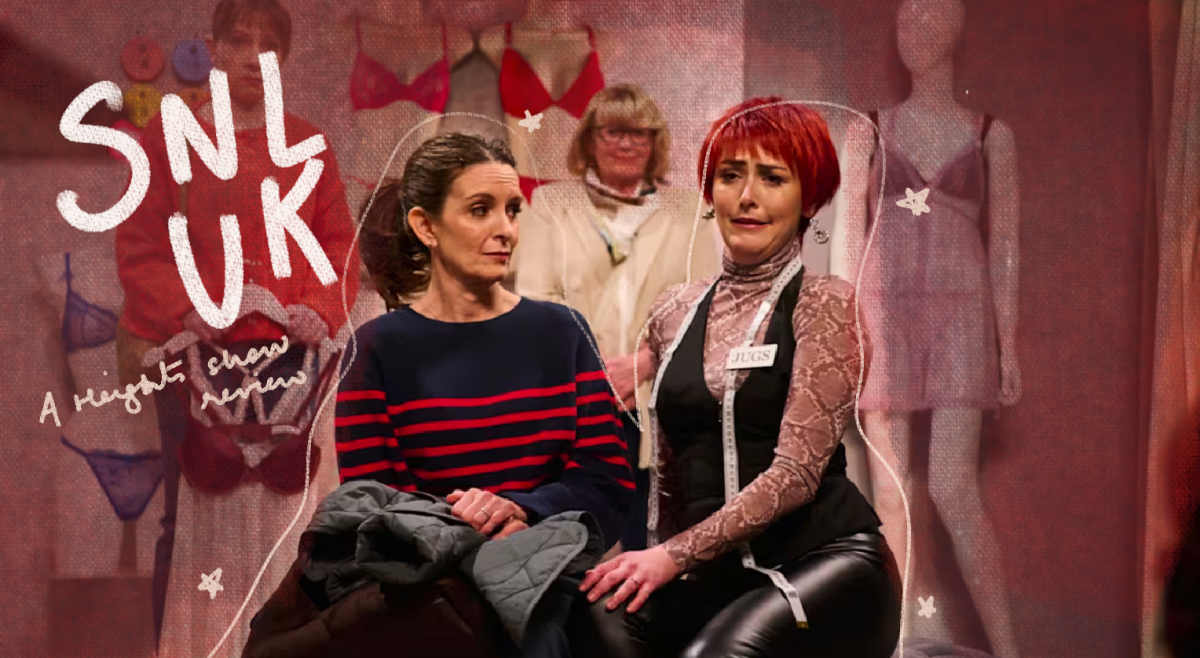
This dynamic only worsened when the night’s host, SNL legend Tina Fey, came out to present the opening monologue. For starters, the main stage looked like the result of asking an amateur artist to draw Radio City from memory—it was like a typical SNL broadcast, but slightly off.
Fey proceeded to crack a few jokes about the United States, which once again set an odd tone. This is not at all to suggest that the show should never make fun of U.S. politics, but a particularly “British” joke could have been more effective and established a unique identity. So far, accents were just about the only thing distinguishing the show as being a product of the United Kingdom.
After Fey’s monologue, you could argue that the sketches showed the cast owning their identity as Brits, but it would be more accurate to say that they stereotyped themselves to further garner American attention.
One sketch featured a BBC-style production featuring a crew of British icons at a twist on the Last Supper. The writing felt like an American staff was attempting to make fun of British people by throwing out the only references and stereotypes they knew. It once again made the show feel like it was targeted at an American audience who were already fans of SNL.
Weekend Update was the high point of the episode in terms of maintaining originality. The humor was tailored to a British audience—jokes were topical to UK news, and delivery was quick, dry, and often bolder than its American predecessor.
Another sketch that felt distinct was a mockumentary-style digital short about office workers for an internet browser company. The sketch itself was cognizant of the British version of The Office, and packed a good amount of jokes within a two-and-a-half-minute frame.
Overall, the premiere episode was decent. With an IMDb rating of 6.1/10, the show is nearly on par with the average episode rating of the classic SNL. Perhaps the obvious attempt to appeal to Americans was simply a way to garner international attention before easing into a more natural, unique flow.
None of this is to say that Saturday Night Live UK must be abundantly and exclusively British in its humor and references. In the long run, it could be wise to broaden its scope. For it to brand itself as different from the U.S. version, however, it should stray away from serving as an imitation, which is, unfortunately, how the premiere felt.